Humans
- Health & Medicine
Scientists Say: Quarantine
This is a restriction on where people or animals who are sick — or suspected of being sick — can go. Doctors use quarantine to try to prevent a disease from spreading.
- Brain
Less screentime linked to better memory, learning in kids
Kids ages eight to 11 spend an average of 3.6 hours a day on screens, a new study shows. But the best thinking scores come from kids who average fewer than two hours a day of screen time.
- Archaeology
Ancient child’s ‘vampire burial’ suggests Romans feared the walking dead
A 10-year-old skeleton in a Roman cemetery had a stone placed in its mouth. It was to prevent this child from rising from the dead, a study reports.
- Health & Medicine
Bacteria and bugs will save us from the zombie apocalypse
Don’t fear the undead. Here’s how the body’s cells, microbes and insects will eat a zombie before it ever goes looking for brains.
- Health & Medicine
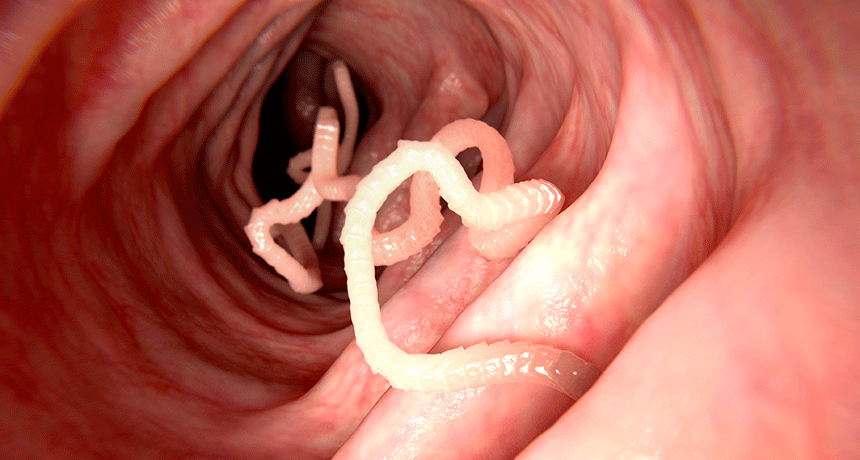
Scientists Say: Parasite
Lots of organisms live in pairs, benefitting from each other. But when one organism benefits while the other suffers? That first organism is a parasite.
- Animals
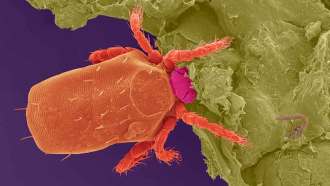
Chigger ‘bites’ may trigger an allergy to red meat
Some people develop a food allergy to red meat, and researchers suspect chiggers bites are to blame.
- Health & Medicine
Teen vaping of marijuana raises concerns about addiction
A new study estimates that nearly 1 in 11 middle and high school students in the United States has vaped marijuana, raising concerns about addiction.
- Brain
Teens’ cell phone use linked to memory problems
A new study suggests teens who get more exposure to cell-phone radiation — and hold their phones up to their right ear — do worse on one type of memory test.
- Health & Medicine
Here’s what puts teen drivers at greatest risk of a crash
Most teen car crashes trace to distraction and a driver’s inexperience. New studies point to how easily we can be distracted and by which activities.
- Health & Medicine
Analyze This: A good reason to drive with an adult in the car
Teens are much safer drivers during their “learner” stage, when there’s an adult in the car. Once they get a license and begin to drive solo, they exhibit more reckless behaviors.
- Health & Medicine
Studies report new risks to teens from secondhand smoke
Teens exposed to secondhand smoke are more vulnerable to getting sick, one study finds. Another suggests that later, in adulthood, these individuals may be at risk for premature death from lung disease.
- Health & Medicine
Explainer: What are proteins?
In the body, proteins act as biochemical machines to carry out the work of cells.