Life
- Brain
Want to improve your reading skills? You might just need more space
A simple change by publishers and Web designers could help kids — both with and without dyslexia — read faster and better.
- Ecosystems
Leaky sewer pipes pollute urban streams and bays with drugs
Scientists find that leaking sewer pipes around Baltimore, Md., spew thousands of doses of medicines into the Chesapeake Bay and other waterways.
- Plants
Let’s learn about meat-eating plants
Carnivorous plants use a variety of strategies to lure in and capture their prey, from sticky traps to jawlike leaves.
- Climate
Here’s how some sea-loving trees ended up far from the coast
This “relict ecosystem” that’s more than thousands of years old moved inland due to warming and a rise in sea levels.
- Animals
Here’s why ducklings swim in a row behind mom
Baby ducks save energy by surfing their mother’s waves, but only if they do it in an orderly line.
- Brain
Concussion patients should avoid screen time for first two days
Teens may find it hard to avoid screen time, but data from a new study suggest it can speed their recovery.
- Plants
Scientists Say: Phloem
Phloem is tissue that delivers food, made in leaves during photosynthesis, to the rest of a plant.
- Animals
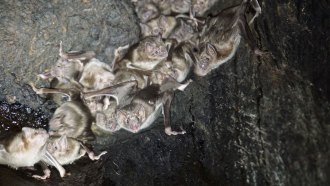
Bloodthirsty vampire bats prefer drinking with friends
Vampire bats were known to bond with others in their roost. Now, research suggests bonded bats often drink blood from animals together.
- Brain
Ask the experts: How to create a top-notch science fair project
Five finalists in the Broadcom MASTERS middle-school competition reveal how they created nationally competitive projects.
- Animals
Bacteria make ‘spider silk’ that’s stronger than steel
Part spider silk, the material is better than what some spiders make. Researchers think it might make the basis for surgical threads or unusually strong fabrics.
- Animals
Let’s learn about the creatures of Halloween
Check out the real-life vampires and zombies of the animal kingdom, and learn why people think ghosts and mummy curses are real.
- Animals
Cockatoos learn from each other how to open garbage bins
The bin-opening behavior is an example of social learning. It’s also the basis of a foraging culture. Learn more in this web comic.