Life
- Brain
Teeny tiny hairs on brain cells could have big jobs
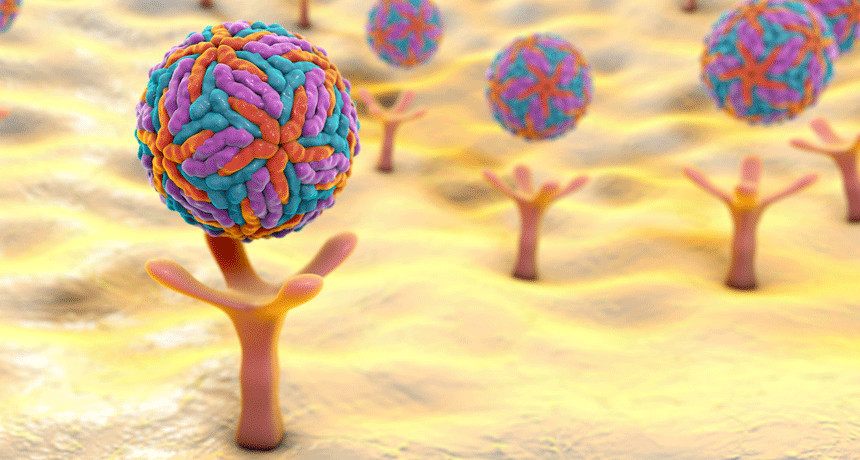
Brain cells have tiny antennae called cilia. But no one really seemed to know what they did. Now, scientists have shown they could play a role in obesity.
- Animals
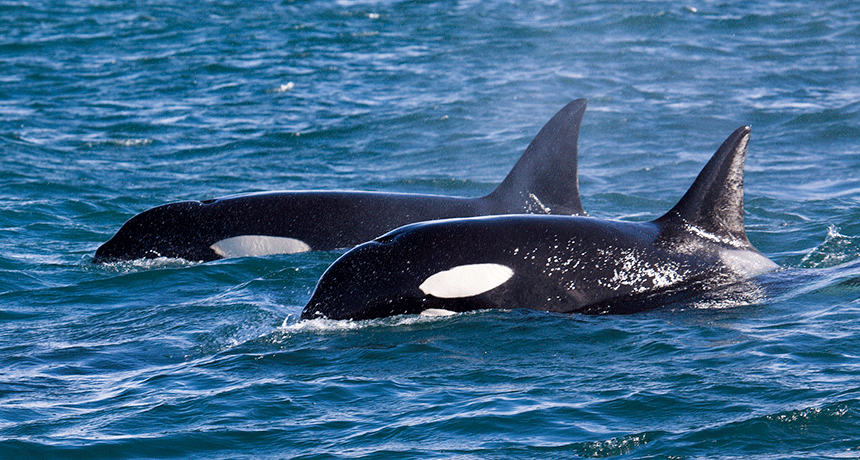
Killer whale blows a raspberry, says ‘hello’
Orcas can mimic a range of sounds, including human speech — sort of.
- Brain
Scientists Say: Receptor
This molecule is a chemical messenger’s docking station. A receptor serves as a lock for cell activity.
- Brain
Cool Jobs: Decoding how your brain ‘reads’
For some stroke victims and people with dyslexia, reading is nearly impossible. These researchers are working to understand why.
- Animals
Tricky turns give prey a chance against lions and cheetahs
A bonanza of running data on wild predators shows that a successful hunt requires more than sprinting.
- Animals
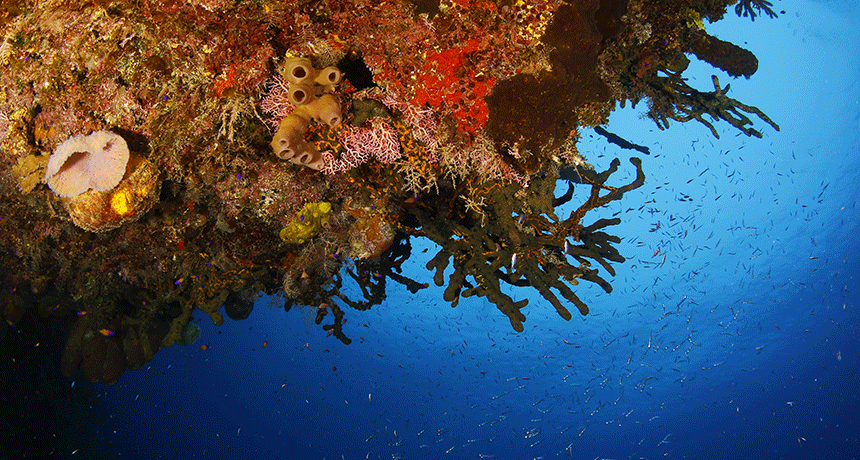
Exploring the mysteries of Cuba’s coral reefs
Researchers are studying the mysterious lives of creatures in and near Cuba’s coral reefs. What they learn could help protect ocean life globally.
- Animals
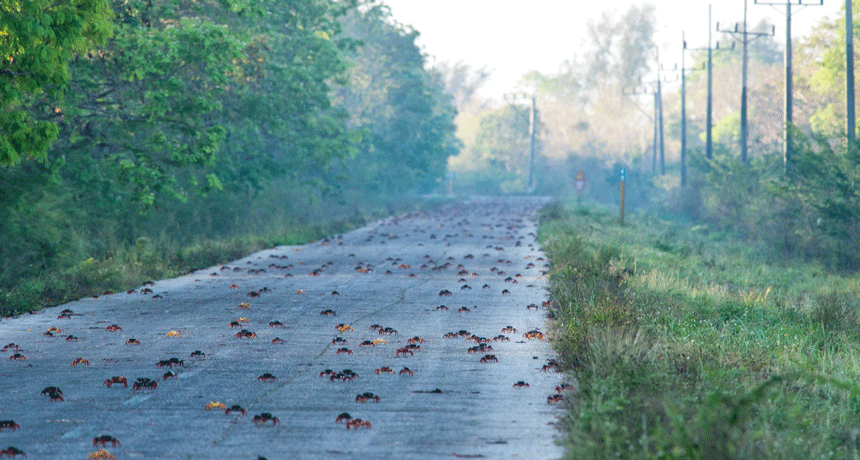
Migrating crabs take their eggs to the sea
Cuba’s colorful land crabs connect swamp and sea with their yearly mass migrations. Protecting their routes can help other animals too.
- Health & Medicine
Teens win big prizes for research on potato killer, vaping and a rare disease
The Regeneron Science Talent Search awarded more than $2 million in prizes this year. This year’s top winners tackled plant disease, vaping and more.
- Animals
Scientists recruit bloodsucking leeches as research assistants
By analyzing a slimy, bloodsucking leech’s last meal, scientists can identify which animals had been living near it.
- Animals
Explainer: DNA hunters
Snippets of DNA can be left behind by a passing organism. Some researchers now act as wildlife detectives to identify the sources of such cast-off DNA.
- Animals
Venus flytraps tend not to eat their pollinators
A first-ever study of what pollinates a Venus flytrap finds little overlap between the critters that serve as pollinators and those that are prey.
- Animals
Scientists Say: Ectoparasite
Many people think of parasites as organisms that live inside their hosts. But some of them can be found on the outside instead.