Microbes
- Health & Medicine
Bacteria and bugs will save us from the zombie apocalypse
Don’t fear the undead. Here’s how the body’s cells, microbes and insects will eat a zombie before it ever goes looking for brains.
- Life
Bacteria are all around us — and that’s okay
Scientists may have identified less than one percent of all bacteria on Earth. But there’s a reason to keep up the hunt. These microbes could help us understand and protect our planet.
- Animals
Parasitic worms sicken people in the mainland United States
A worm native to Asia has sickened at least 12 people in eight continental U.S. states since 2011, a new report finds.
- Health & Medicine
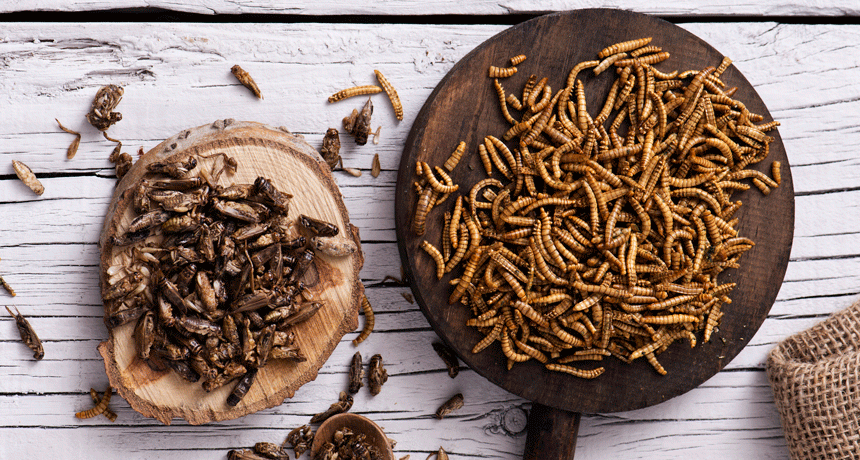
Crickets for breakfast?
In a small trial, levels of beneficial gut bacteria rose in young adults who ate a breakfast that included crickets every day for two weeks.
- Microbes
Finding living Martians just got a bit more believable
What might a real Martian look like? Scientists have a better idea after identifying a buried liquid lake on the Red Planet.
- Health & Medicine
Dogs carry a grab bag of flu viruses
Dogs carry a mix of flu viruses, including some that came from pigs. But there’s no reason to worry just yet.
- Chemistry
Nom, nom! These bacteria eat antibiotics for lunch
Some soil microbes don’t just break down antibiotics, they can eat them too. Scientists have found one way they do it.
- Microbes
Analyze This: These viruses are behemoths
Scientists keep finding larger and larger viruses. Just how big can these microbes get?
- Brain
Belly bacteria can shape mood and behavior
Our guts and our brains are in constant communication with the goal of managing a whole lot more than food digestion. Their conversations can affect stress, behaviors — even memory.
- Health & Medicine
Bad food? New sensors will show with a glow
Sensors that glow around dangerous germs could be built into packaging to warn people of tainted foods.
- Health & Medicine
Scientists discover how norovirus hijacks the gut
Noroviruses make people vomit, but scientists didn’t actually know why. It now turns out that those viruses cause their misery by attacking special “tuft” cells in the gut.
- Health & Medicine
Which bacteria hang out in belly buttons? Here’s a who’s who
Bacteria are everywhere — even in our belly buttons. One teen at Intel ISEF decided to find out what types people were harboring in their navels.