Planets
- Physics
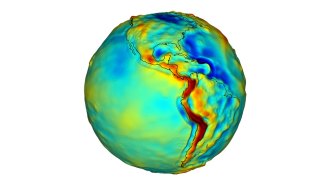
Scientists Say: Gravity
Gravity is a fundamental force that attracts objects with mass to other objects with mass. It decreases with distance.
- Planets
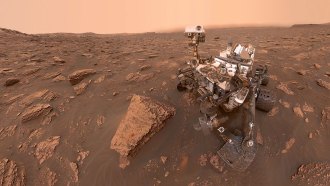
Let’s learn about space robots
Space robots can take pictures of other planets, analyze samples of their surface and even peer into their interiors.
- Planets
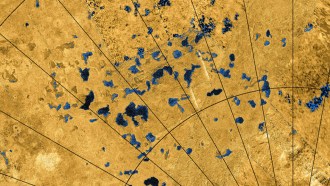
Saturn’s moon Titan may host lots of dried lakes
Suspicious spots around the moon’s middle could be the beds of ancient lakes. If so, this might solve a 20-year-old mystery.
- Planets
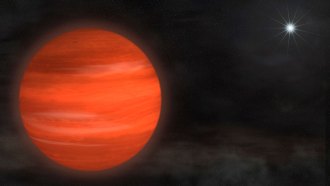
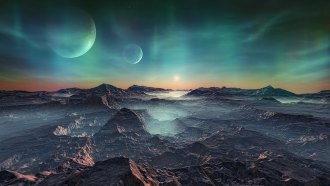
Let’s learn about exoplanets
Exoplanets are planets outside of our solar system. Scientists are finding out more about them than ever before.
- Planets
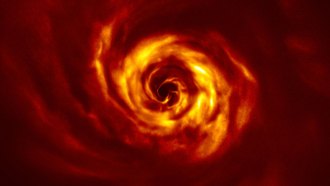
Developing planet emerges in a swirl of gas
Images of a young star 520 light-years away show a spiral of gas and dust swirling around it. A twist inside the spiral appears to be a planet forming.
- Planets
Wiggly wheels might help rovers plow through loose lunar soils
New design lets wheels ascend hills too steep for regular robots and paddle through loose soils without getting stuck.
- Life
Planets with hydrogen skies could harbor life
Microbes can live in a hydrogen atmosphere. This points to new space worlds that host alien life.
- Planets
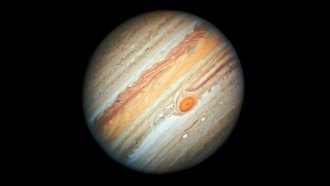
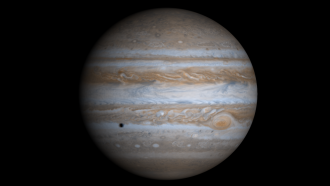
Let’s learn about Jupiter
This gas giant is home to a massive storm that has lasted hundreds of years. It’s also surrounded by dozens of moons.
- Earth
Weight lifting is this planetary scientist’s pastime
Beck Strauss uses magnetic fields to explore the makeup of Earth and other planets.
- Planets
Scientists Say: Gas giant
These gargantuan planets, such as Jupiter and Saturn, are mostly made up of hydrogen and helium gas.
- Physics
Glass beads help scientists puzzle out how baby planets grow
Researchers have mimicked the first stages of planet formation in the lab. All they needed were glass beads and a catapult.
- Climate
Astronomers spot new type of storm on Saturn
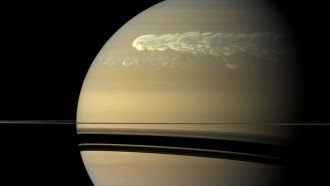
These storms are bigger and longer lasting than squalls but not nearly as massive as this planet's Great White Spots.