Space
- Physics
Explainer: Telescopes see light — and sometimes ancient history
Different kinds of telescopes on Earth and in space help us to see all wavelengths of light. Some can even peer billions of years back in time.
- Planets
The long-awaited James Webb Space Telescope has a big to-do list
The James Webb Space Telescope has been in the works for so long that new fields of science have emerged for it to study.
- Space
Scientists Say: Solar wind
This is a powerful gust of charged particles that flows out from the sun through the solar system.
- Planets
Astronomers may have found first known planet in another galaxy
The spiral-shaped Whirlpool galaxy may be home to the first planet spotted outside our own Milky Way galaxy.
- Life
Let’s learn about the hunt for alien life
Finding any extraterrestrials, from advanced alien civilizations to simple microbes, would be an unmatched discovery.
- Space
Explainer: Calculating a star’s age
Scientists can figure out a star's mass or composition pretty easily. Determining how old that star is, however, is a lot harder.
- Earth
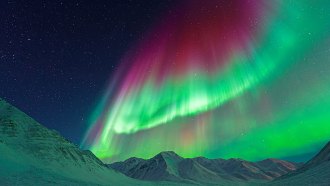
Let’s learn about auroras
A gust of charged particles from the sun called the solar wind lights up auroras on Earth — and on other planets.
- Planets
NASA’s Perseverance rover grabbed its first Martian rocks
Two finger-sized pieces of stone drilled from a basalt rock are the first bits of Mars ready to be brought to Earth.
- Planets
Pluto is no longer a planet — or is it?
In the 15 years since Pluto lost its status as a planet, some scientists continue to use whatever definition works best for them.
- Space
Here’s an easier new way to weigh a black hole
The timing of flickers in the gas and dust of a black hole’s accretion disk correlates to its mass, a new study finds.
- Earth
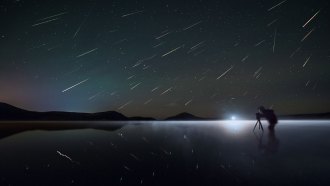
Let’s learn about meteor showers
Meteor showers happen when Earth’s orbit passes through trails of debris left behind by comets or asteroids.
- Planets
Jupiter’s intense auroras heat up its atmosphere
Jupiter’s hotter-than-expected upper atmosphere may be warmed by charged particles slamming into the air above the poles.