Space
- Space
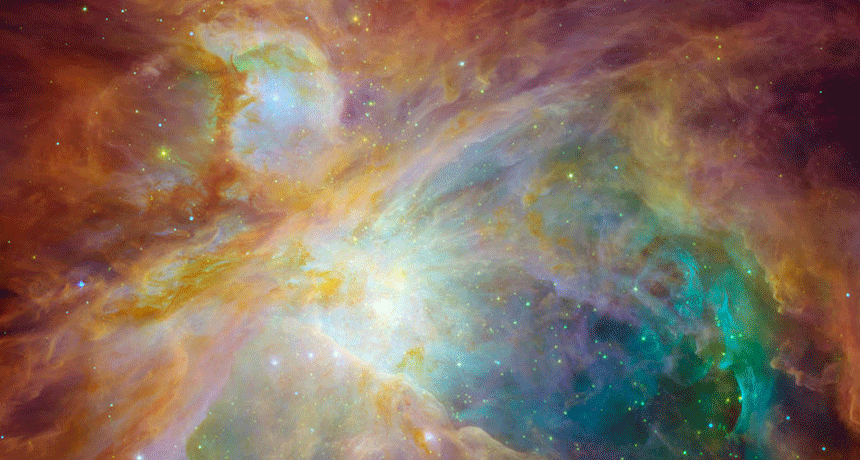
Scientists Say: Nebula
Nebulae are huge dust clouds in space. Some come from dying stars. Others are places where stars are born.
- Chemistry
Diamonds and more suggest unusual origins for asteroids
Inside a meteorite, scientists found sulfur and iron wrapped in tiny diamonds. Those gems hint the rock formed inside a long-lost planet.
-
- Chemistry
Asteroids may have delivered water to early Earth
Scientists shot mineral pellets at a simulated planet. It showed an impact wouldn’t have boiled off all of an asteroid’s water.
- Physics
Wireless devices crowd out cosmic radio signals and more
Cell phones and other devices emit radio waves that can interfere with important scientific research. That’s why researchers are seeking ways to share the radio spectrum.
- Physics
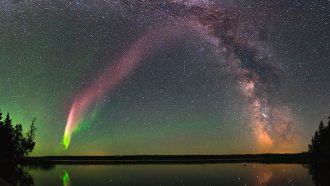
Meet STEVE, the northern lights in mauve
STEVE is a nontraditional aurora. It might be a visible version of usually invisible charged particles drifting through Earth’s upper atmosphere.
- Space
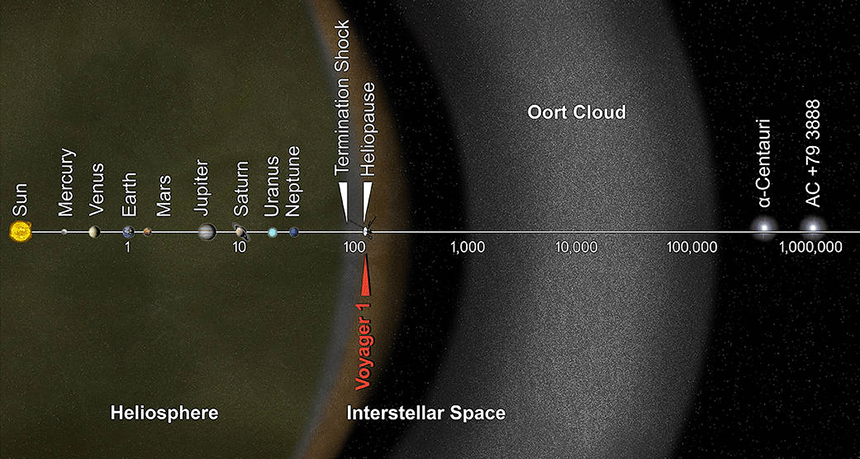
Scientists Say: Oort cloud
The very edge of our solar system is a crowded place. It’s full of ice and rocks in a bubble called the Oort cloud.
- Planets
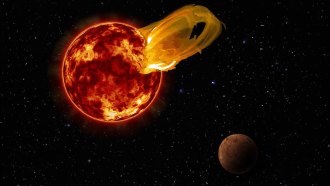
Flared! How a planetary ‘neighbor’ may have been fried
Hoping for life on the planet our stellar neighbor Proxima Centauri? Don’t hold your breath. Its star may have sterilized its Earthlike exoplanet.
- Planets
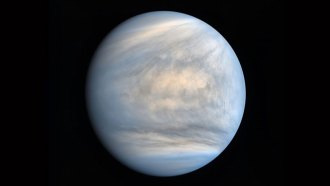
Here’s why Venus is so unwelcoming
Venus is hard to study. Scientists also find it hard to get money to send spacecraft there. But researchers have ideas about how to tackle both challenges.
- Physics
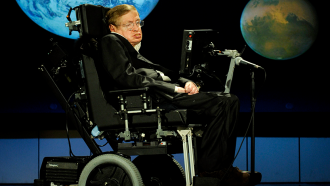
Legendary physicist Stephen Hawking dies at 76
Theoretical research by Stephen Hawking helped shape how scientists and the public alike would come to understand black holes and other facets of astrophysics.
- Brain
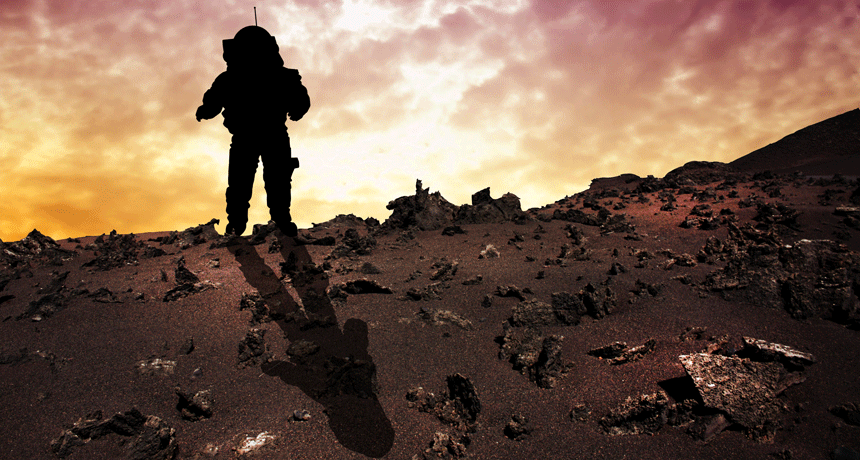
En route to Mars, astronauts may face big health risks
Going into space brings the thrill of a new frontier — and risks that scientists are racing to understand, from radiation to isolation.
- Chemistry
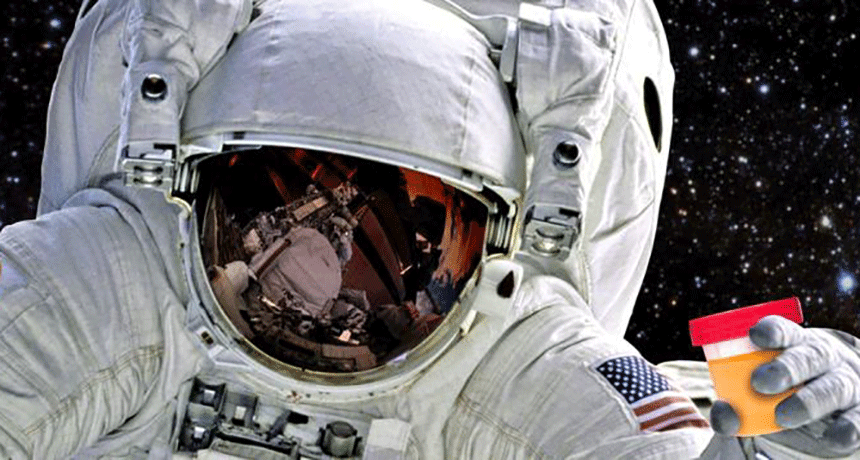
Human waste could power plastic-making in space
Someday recycled urine and exhaled breath could feed specially engineered yeast to make plastics and other useful chemicals on long space missions.