Space
- Planets
Space toilet may teach scientists how to scout for life on distant icy moons
Lessons learned from flushing space toilets may help plan life-hunting missions on distant icy moons.
- Earth
Middle-school scientists take home big prizes
Top finalists in the 2017 Broadcom MASTERS competition shared awards worth $100,000.
- Physics
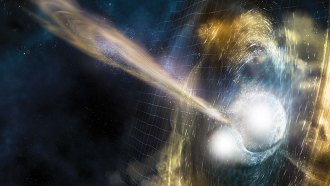
Astronomers finally find the cosmic source of gold and silver
After a collision between neutron stars is caught rippling spacetime, telescopes home in on where the ripples came from. The afterglow of light they found provided interesting new science.
- Physics
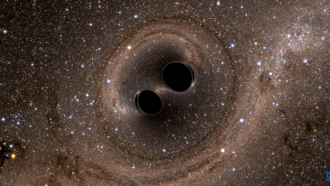
Trio wins physics Nobel for detecting gravity waves
The 2017 Nobel Prize in physics went to three physicists for helping figure out how to search for ripples in spacetime — which launched a new field of astronomy.
- Physics
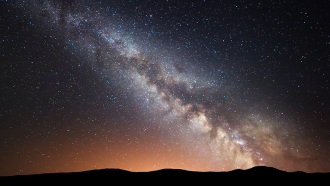
The Milky Way galaxy houses 100 million black holes
Astronomers are estimating the number of black holes in galaxies of all sizes.
- Planets
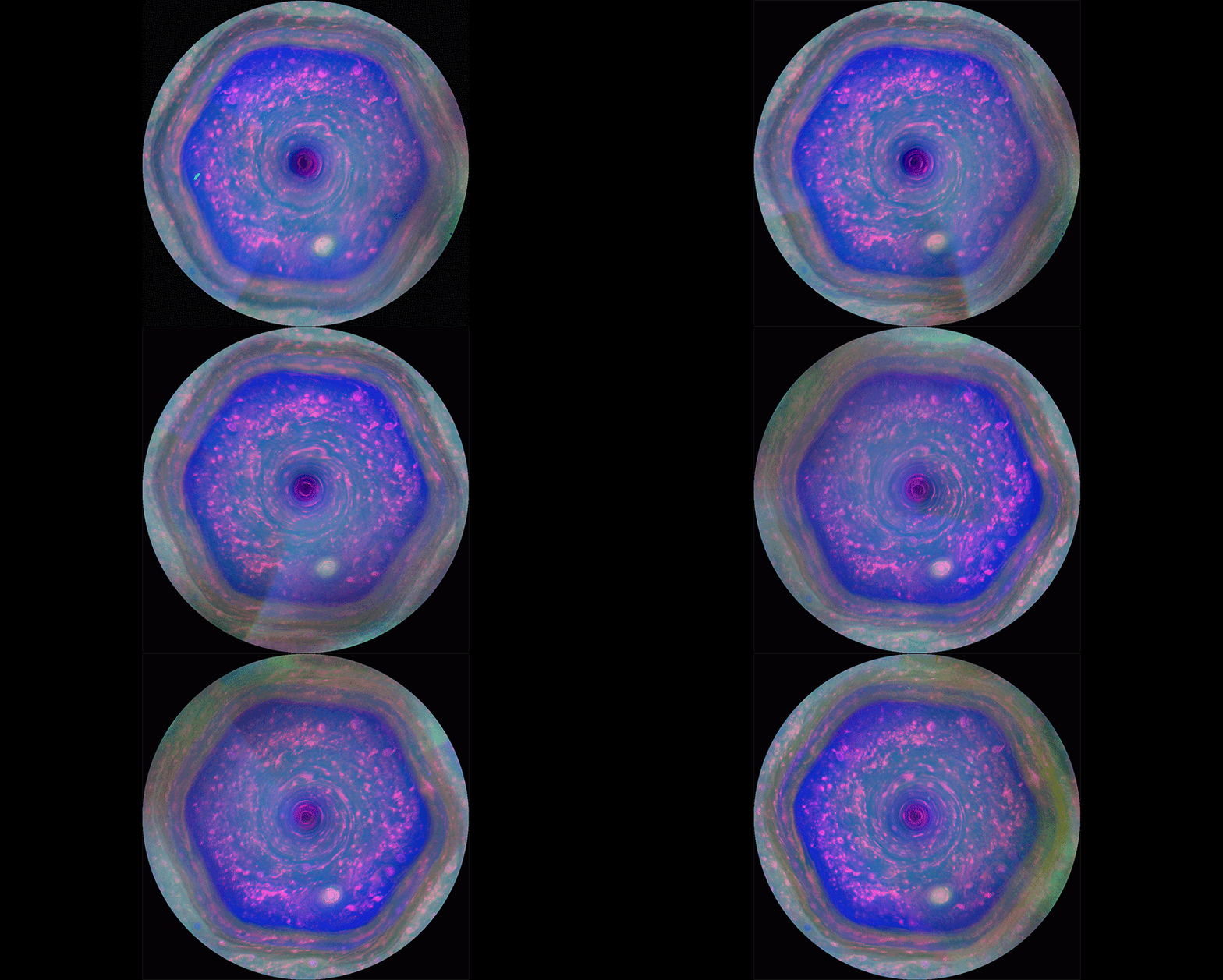
Cassini spacecraft takes its final bow
Twenty years after it left Earth, NASA’s Cassini mission is about to end — with a crash into Saturn.
- Math
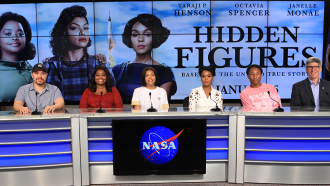
Meet the people behind the film Hidden Figures
Hidden Figures a true story. So is the math and physics in the movie. Meet experts who kept the movie accurate, as well as an engineer now working at NASA.
- Physics
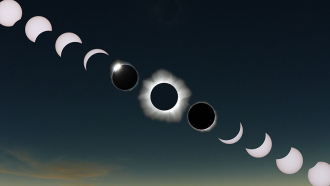
What scientists hope to learn from Great American Eclipse
A solar eclipse will travel across North America on August 21. Scientists will use that opportunity to learn more about our home star.
- Space
Scientists Say: Transit
When an object in space passes in front of a star and looks big enough to block out all the light, it’s an eclipse. When it’s smaller, it’s called a transit.
- Earth
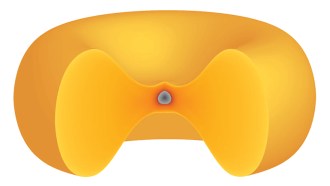
Early Earth may have been a hot doughnut
Synestia is the name some scientists are giving to the smooshed shape Earth might have developed after undergoing a violent cosmic smashup early in its infancy.
- Animals
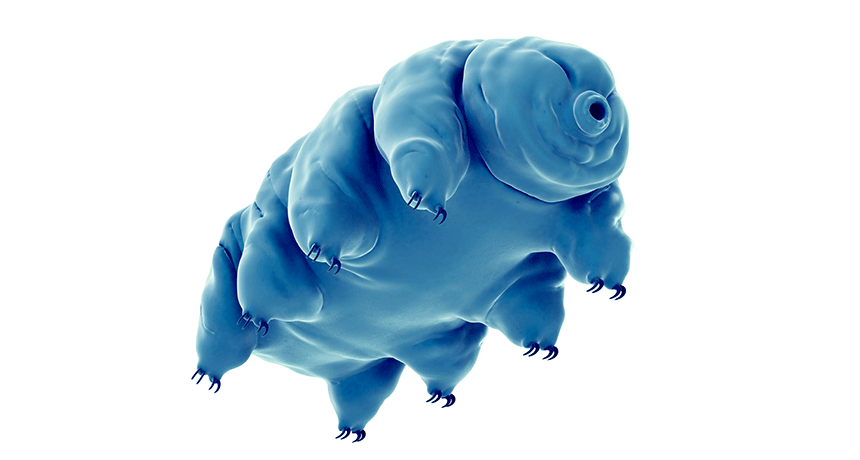
This tiny animal is apocalypse-proof
Microscopic animals called water bears can survive nearly any kind of apocalypse, from asteroids and nuclear war to exploding stars.
- Space
Half the Milky Way may be stolen material
A galaxy may import up to half of its atoms from other celestial bodies. That suggests much of our Milky Way has foreign origins, new simulations suggest.