Space
- Animals
Nine big stories you may have missed this summer
We hope you enjoyed time off from school this summer. But you may have missed some scientific developments, from mega-eruptions to Martian lakes.
- Planets
Jupiter has 12 more moons than we knew about — and one is a weirdo
Astronomers found a dozen previously unknown moons of Jupiter. One may be a remnant of a larger moon that was all but ground to dust.
- Climate
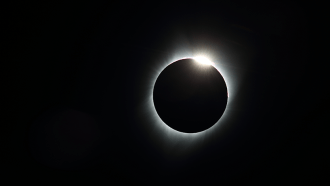
When the moon throws shade, the weather can change
Scientists have been puzzled about how a solar eclipse can impact weather. Here’s some of what they learned during the August 2017 event.
- Planets
New Horizons data reveal first global maps of Pluto and Charon
Astronomers have made new charts of Pluto and its moon Charon. They show high peaks, deep depressions and strange ridges.
- Earth
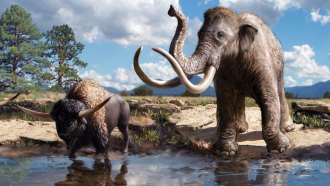
An ancient cold snap causes heated debate
Despite criticism from fellow scientists, some researchers won’t let go of the idea that a comet caused a prehistoric cold snap.
- Physics
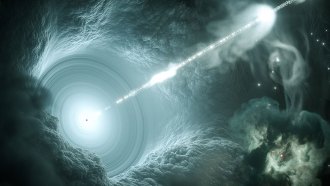
Scientists traced an incoming neutrino back to its galactic birthplace
The high-energy particle was born in a blazar 4 billion light-years away, scientists now report.
- Space
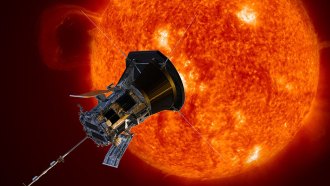
The Parker Solar Probe aims to touch the sun
The Parker Solar Probe is about to make a historic voyage to the sun.
- Microbes
Finding living Martians just got a bit more believable
What might a real Martian look like? Scientists have a better idea after identifying a buried liquid lake on the Red Planet.
- Physics
Mars appears to have a lake of liquid water
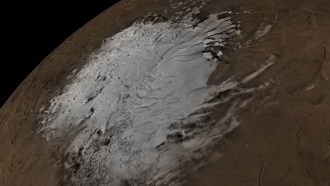
A 15-year-old Mars orbiter has spotted signs of a salty lake beneath the Red Planet’s southern polar ice sheets.
- Planets
Thick atmosphere boosts how fast Venus spins
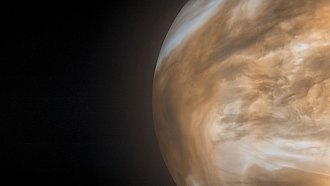
The thick atmosphere on Venus can change by a few minutes every day how long it takes the planet to rotate.
- Physics
An active sun is a somewhat smaller sun
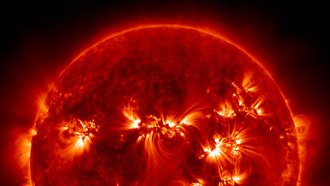
The sun grows and contracts a little over cycles lasting around 11 years, new data show. Changes in the strength of its magnetic fields may help explain this.
- Planets
Pluto’s heart has dunes of methane ice
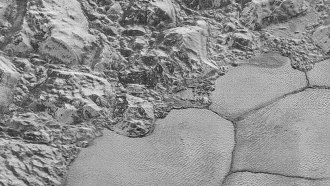
Pluto’s heart-shaped plains are striped with sand dunes. The sand is made of methane ice.