All Stories
- Chemistry
Stinky success: Scientists identify the chemistry of B.O.
They turned up the enzyme in bacteria behind that underarm stench. Understanding how it works could pave the way to new types of deodorant.
- Archaeology
Let’s learn about ancient technology
Ancient people didn’t have the internet. Instead, they performed surgeries, made weapons and built monuments with wood, stones, rope and fire.
- Chemistry
Scientists say: Chemical
A chemical is anything made of two or more atoms bonded together in a fixed structure. Chemicals make up the world around us.
- Animals
Quacks and toots help young honeybee queens avoid deadly duels
It’s not just ducks that quack. Honey bees do it too. They also toot. Researchers eavesdropped on hives to find out why.
- Health & Medicine
Healthy screen time is one challenge of distance learning
How you use screens is more important than the amount of time you spend on them. Sit less, experts say, and use those screens mainly to learn and engage with others.
- Brain
A secret of science: Mistakes boost understanding
Everyone makes mistakes. It turns out that how you view them says a lot about how — and how much — you’ll learn.
- Science & Society
Top 10 tips on how to study smarter, not longer
Here are 10 tips — all based on science — about what tends to help us learn and remember most effectively.
- Health & Medicine
Four summer camps show how to limit COVID-19 outbreak
Schools might take a lesson from these overnight facilities in Maine. They kept infection rates low by testing a lot and grouping kids into ‘bubbles.’
- Health & Medicine
Here’s how COVID-19 is changing classes this year
To keep students and teachers safe from COVID-19, some things in the classroom are changing — and sometimes entire schools are being kept closed.
- Space
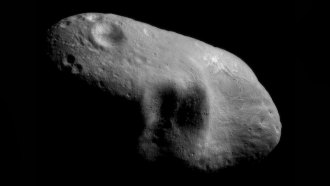
Scientists Say: Asteroid, meteor and meteorite
Asteroids, meteors and meteorites are all space rocks. But one is in orbit, another is in the atmosphere and the third is on the ground on Earth.
- Animals
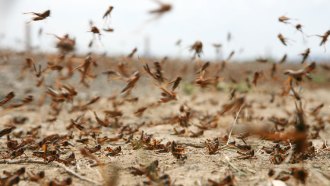
A single chemical may draw lonely locusts into a hungry swarm
Swarms of locusts can destroy crops. Scientists have discovered a chemical that might make locusts come together in huge hungry swarms.
- Animals
Some beetles can be eaten by a frog, then walk out the other end
After being eaten by a frog, some water beetles can scurry through the digestive tract and emerge on the other side — alive and well.