All Stories
- Earth
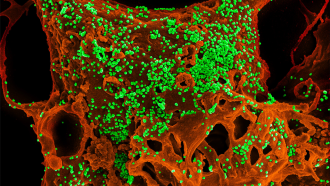
Newfound desert soil community lives on sips of fog
Lichens and other fungi and algae team up to form a 'grit-crust' on the parched soil of Chile’s Atacama Desert. Those species slake their thirst with moisture from coastal fog.
- Earth
Scientists Say: Estuary
This is where a freshwater river meets a salty sea. This environment has brackish water, a mix of saltwater and freshwater.
- Animals
Small T. rex ‘cousins’ may actually have been growing teens
Dinosaurs once thought to be mini cousins of Tyrannosaurus rex may have been merely adolescent members of the famous species, a new study suggests.
- Health & Medicine
Explainer: What is a coronavirus?
Coronaviruses are a diverse family of disease-causing agents. Some cause the common cold. Newer ones have emerged to pose more serious threats to people.
- Genetics
Serious virus emerges in China and is spreading globally
A new viral infection emerged in December 2019 among people in Wuhan, China. The mystery illness has already killed at least 17 people and sickened many hundreds.
- Science & Society
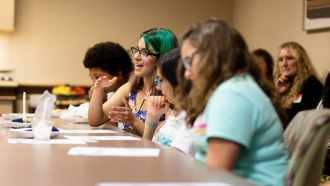
A first: Kids advise hospital researchers on their medical studies
When the Mayo Clinic realized it was missing key voices, the hospital recruited kids to advise doctors about their research.
- Animals
Australian fires have imperiled up to 100 species
As massive wildfires consume huge swaths of Australia’s bush, untold species — many of them found nowhere else — are now threatened with extinction.
- Materials Science
Self-powered surface may evaluate table-tennis play
Scientists at the Georgia Institute of Technology built a 'smart' surface on which to play table tennis. It can track the location, speed and direction of the ball.
- Animals
Why some whales become giants and others are only big
Being big helps whales access more food. But just how big a whale can get is influenced by whether it hunts or filter-feeds.
- Brain
Scientists’ brains shrank after a long stay in Antarctica
The isolation of a long-term mission at an Antarctic research station shrunk part of crew members’ brains, a small study suggests.
- Physics
Scientists Say: Quark
These subatomic particles are the building blocks of bigger particles, including the protons and neutrons found in an atom’s nucleus.
- Health & Medicine
Globetrotting microbes in airplane sewage may spread antibiotic resistance
Along with harder-to-kill microbes, airplane sewage contains a diverse set of the genes that let bacteria evade antibiotics.