All Stories
- Physics
Giving Notre Dame back her unique voice
A 2019 fire robbed Paris’ Notre Dame cathedral of more than her roof. She also lost her voice. Now scientists are using acoustics to return her unique soundscape.
- Physics
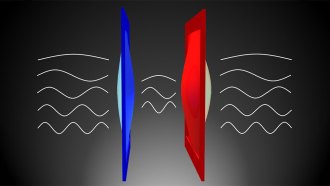
Here’s how quantum mechanics lets heat cross a vacuum
Heat can move across a vacuum if the span is small enough. As in really, really small. In a new experiment, the gap was only a few hundred nanometers.
- Archaeology
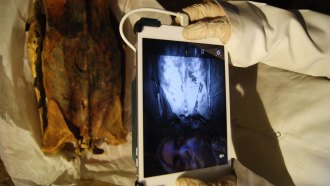
Ancient Egyptian mummy tattoos come to light
A range of markings discovered on female mummies are challenging ideas about tattoo traditions in ancient Egypt.
- Physics
Glass beads help scientists puzzle out how baby planets grow
Researchers have mimicked the first stages of planet formation in the lab. All they needed were glass beads and a catapult.
-
- Health & Medicine
Viewing virtual reality of icy landscapes may relieve pain
Traveling to polar vistas via virtual reality eased a temporary burning in the viewers’ skin. The same VR also lessened simulated chronic pain.
- Computing
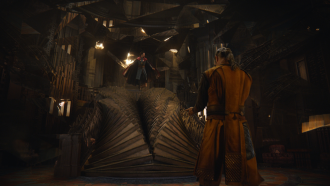
How math makes movies like Doctor Strange so otherworldly
In the 1970s, a mathematician introduced geometric patterns that he named fractals. Moviemakers are now using those patterns to create dazzling digital effects.
- Physics
NASA’s Parker probe spots rogue waves and magnetic islands on the sun
The Parker probe’s first data is giving scientists a look at what’s to come as the craft moves closer to the sun over the next few years.
- Materials Science
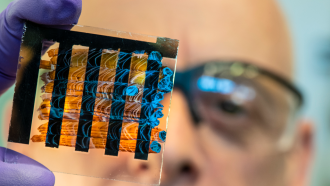
The future of crystal-based solar energy just got brighter
Researchers have upped the efficiency of layered solar cells that could be printed or painted onto surfaces. Now they are working to make them more rugged.
- Science & Society
Our great journalism just got a new look
Finding the stories, videos, collections and more has just gotten easier.
- Climate
5 things to know about the climate-saving benefits of tree planting
A recent analysis of the benefits of massive efforts to plant more trees triggered a firestorm of controversy.
- Earth
Scientists Say: Firewhirl and Firenado
Firewhirls are smallish vortices of ash and flame; firenadoes are true twisters set off by the conditions that come with a wildfire.