All Stories
- Animals
Elephants’ trunks: These leaf-blowers snag food
Researchers at a Japanese zoo filmed two elephants using their trunks as leaf-blowers, pulling food toward them with puffs of air.
- Genetics
Expert panel approves human gene editing
Scientists have recently been reporting big advances in the ability to tweak the genes of living organisms, including people. But some question the ethics of doing that. A panel of experts now says such research can go ahead — with one major exception.
- Agriculture
Banana threat: Attack of the clones
Researchers find that disease-causing fungi — all clones of one another — will continue to infect banana plants unless new steps are taken to stop their spread.
- Health & Medicine
Heart damage linked to obesity in kids
Doctors are finding signs of heart damage in obese children as young as 8 years old.
- Environment
Engineers consider liquid salt to generate power
A new type of power plant, a molten salt reactor, might provide electricity in a cleaner and safer way than current nuclear technology.
- Animals
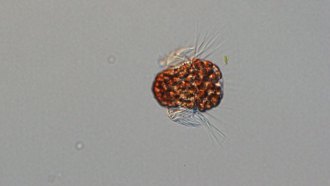
Scientists identify plankton from space
Plankton are often too tiny for our eyes to see. But when huge numbers bloom at once, they now can be ID’d from space, a new study shows.
- Health & Medicine
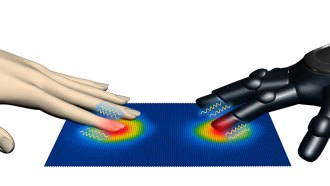
New e-skin feels heat, textures and more
Two new developments in electronic “skin” hold promise for making prosthetic devices that can provide a better sense of touch. One gets its great sensitivity from being modeled on the human fingertip.
- Chemistry
Scientists Say: Radioactive
Some atoms have unstable centers. They periodically give off energy. This activity has a special description.
- Humans
News Brief: Ancient teeth point to Neandertal relatives
New analyses of some teeth found in Siberia indicate that Neandertal cousins known as Denisovans lived there for at least 60,000 years. That would have had them around the same place as modern humans — and at nearly the same time.
- Fossils
Predatory dinos were truly big-mouths
Large meat-eating dinosaurs could open their mouths wide to grab big prey. Vegetarians would have had a more limited gape, a new study suggests.
- Climate
Concerns about Earth’s fever
Burning fossil fuels is causing the planet to heat up, causing weather patterns to change, sea levels to rise and diseases to spread.
- Climate
Explainer: How scientists know Earth is warming
Scientists can calculate global temperatures, both present and past. Their findings show that the planet is rapidly heating up.