All Stories
- Science & Society
Analyze This: Do bad childhoods make movie villains?
In DC and Marvel movies, a rough childhood doesn’t always mean that characters become villains.
- Planets
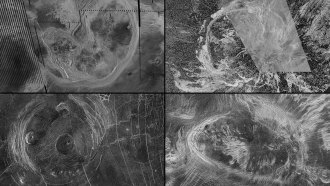
The surface of Venus is morphing
Circular landforms speckling Venus' surface may be the work of tectonics — similar to the forces that reshape Earth’s surface.
- Animals
Loss inspired this biologist to study aging
Juan Manuel Vazquez studies the anti-aging genes that have allowed some animals to evolve to live remarkably long lives.
- Health & Medicine
This medicine could help teens quit vaping
The drug varenicline, paired with counseling and text messaging support, helped young people stop vaping in a new study.
- Physics
Scientists Say: Tauonium
No protons, neutrons or electrons. And yet, based on what scientists know about fundamental particles, this variety of atom just might exist.
- Genetics
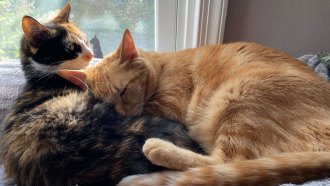
Orange cats get their ginger color from a single gene ‘cutout’
The variant gene is found on the X chromosome. This sex-linked trait for orange fur is found only in domesticated cats.
- Physics
Here’s why your blood vessels don’t burst under pressure
Cells lining the blood vessels reorganize their inner structures to handle stressful boosts in pressure.
- Space
A rogue black hole is on the loose in our galaxy
Astronomers now agree there’s a lone black hole wandering around the Milky Way — the first solitary black hole ever detected.
- Tech
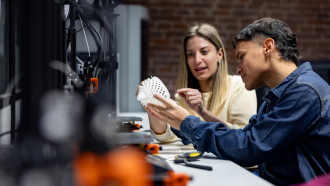
Scientists Say: Prototype
These rough draft models help engineers test how a concept translates from theory to reality.
- Physics
Here’s how rainwater might one day power some of your lights
In tests, the electricity that water droplets made was small, but kept a dozen LEDs lit. This tech might one day power clean energy for wet or rainy places.
- Plants
Pollinators send out good vibrations — and plants respond sweetly
Snapdragon blooms can distinguish between the sounds of pollinators and thieves. They boost or drop the sugar in their nectar depending who’s arriving.
- Humans
After every soak, fingers wrinkle — and always the same way
Fingertip folds aren’t super swollen. Blood vessels constrict and pull skin inward, forming wrinkles.