All Stories
- Genetics
DNA reveals the origin of East Asia’s favorite sweet bean
Where those red beans — also called adzuki — came from had been murky. A new study says it all started in Japan.
- Genetics
Scientists Say: Genome
This complete set of DNA carries all the basic “how-to” instructions an organism needs to grow, develop and live.
- Fossils
New clues about dino speed come from birds strutting through mud
Fossilized footprints can help calculate how fast dinosaurs moved. But tests with guinea fowl show that past estimates might not be right.
- Space
35 years on, Hubble continues to revolutionize astronomy
The Hubble Space Telescope is an icon in astronomy. Here are some of its most out-of-this-world images.
- Tech
Lasers can eavesdrop on microbes, including viruses
They can sometimes identify not only the types, but also how many there are. One day, lasers might be able to keep track of what germs are around us.
- Space
A new dwarf planet may skirt the edge of our solar system
For the distant object, one trip around the sun takes over 24,000 years. Its orbit challenges a proposed path for a hypothetical “Planet Nine.”
- Life
Fungi have been ‘zombifying’ insects for 99 million years
Two bits of ancient amber sitting in a lab basement hold evidence of a fungus that’s become famous for controlling the minds of its victims.
- Environment
Scientists Say: Steppe
Expansive, windswept grasslands offer ample grazing for roaming herd animals and more.
- Physics
This device creates rainbows of sound
A plastic structure separates the pitches in mixed sounds like white noise, much like a rainbow spreads out colors of light.
- Tech
Pickleballs inspire a new way to reduce drag on vehicles
Dimples in a skin can be adjusted on demand to reduce drag or to steer where a vehicle goes.
- Chemistry
Newfound ‘anti-spice’ compounds tame chili peppers’ heat
Five compounds make some chili peppers taste less spicy than others. Scientists are still figuring out why.
- Space
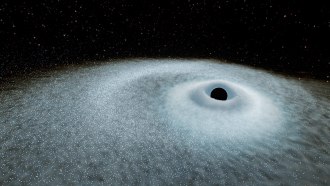
Megastars shredded by black holes offer new type of cosmic explosion
Called extreme nuclear transients, these events are 30 to 1,000 times as bright as supernovas — and their glow may persist for a year or more.