All Stories
-
Students find science answers through Twitter
By submitting questions on Twitter to the hashtag #scistuchat, students can connect with scientists and talk about science.
- Fossils
Scary ‘chicken’ roamed Earth with T. rex
Scientists have just pieced together evidence of a weird new dinosaur that sported sharp claws, feathers and a beak. And it just may have been one of the last dinos to roam Earth about 67 million years ago.
- Animals
Pythons seem to have an internal compass
The giant, Burmese pythons living in Florida’s Everglades like their adopted home. And new research shows they can find their way back to it if people try to move them somewhere else. Not all snakes will do this.
- Earth
The quake that shook up geology
North America’s biggest earthquake struck 50 years ago. Here’s what science has learned about Earth since the 1964 Great Alaskan Earthquake.
- Earth
Explainer: Telling a tsunami from a seiche
Waves that hit coastlines with ferocious power, tsunamis are one of the planet’s most devastating forces of nature. And seiches: They’re tsunamis little, but still potentially deadly, cousins.
- Animals
Quieter vibes for city spiders
How much a web vibrates affects how well a spider senses when that web has captured prey. But webs attached to concrete, plastic and other artificial materials vibrate less than do those built on natural materials, such as twigs or leaves.
- Health & Medicine
Intel STS finalist uses math to predict breast cancer spread
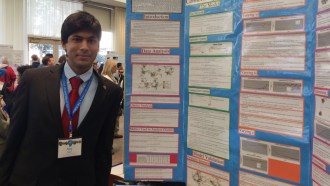
Intel STS finalist Esha Maiti developed a model to calculate the probability of cancer spreading to different areas of the body.
- Microbes
Return of the giant zombie virus
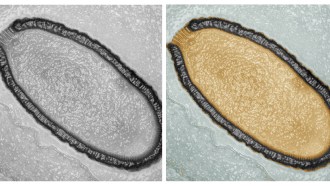
Scientists have discovered a new type of virus in Siberian soils. It's the largest virus ever discovered. And guess what: It could infect cells even after 30,000 years in cold storage.
- Space
Waves from the birth of time
Inflation is the idea that in the split-second after the Big Bang, the universe exploded into huge-ness. Although the hypothesis is 30 years old, evidence to confirm it had been lacking. Until now.
- Health & Medicine
Some of chocolate’s health benefits may trace to ‘bugs’
Dark chocolate offers people a number of health benefits. A new study finds that the breakdown of chocolate by microbes in the human gut be behind some benefits.
- Computing
Intel STS finalist’s computer program models social life
Ajay Saini has brought together math and computer science to show how habits spread within social groups. His new computer program could help promote healthy habits.
- Health & Medicine
The dangerous rise of electronic cigarettes
Electronic cigarettes were originally advertised as a way for smokers to wean themselves off of cigarettes. In fact, e-cigarettes are helping hook a whole new generation of young people on nicotine — an addiction that may transition back to tobacco.