All Stories
- Environment
Poisonings linked to e-cigarettes
A federal survey finds electronic cigarettes and the chemicals they burn are an increasing cause of reports of harm made to poison-control centers. Young children are often the victims.
-
Mayim Bialik shares her STEM inspiration
The Big Bang Theory’s neuroscientist Amy Farrah Fowler is played by a real neuroscientist. Mayim Bialik told educators at the National Science Teachers Association meeting what inspired her to go into science: an inspiring biology tutor.
- Health & Medicine
The nose knows a trillion scents
There's a long-standing claim that people can identify 10,000 different odors. But a new study suggests that people can actually identify at least 10,000 times that many scents.
-
Teachers’ meeting brings birds, bones and robots
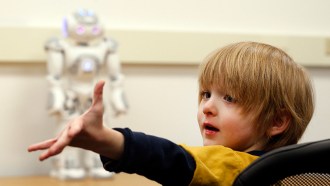
The National Science Teachers Association meeting draws educators from all over the country. Exhibitors brought in everything from robots to iguanas to steal their attention.
-
A wheelchair doesn’t stop this scientist from soaring to the treetops
Rebecca Tripp talks about studying tardigrades, extreme organisms that live in the tallest of trees, and how she continues to pursue her dream to be a conservation biologist.
- Brain
Understanding Autism
Genetics appears to play some role in this disorder, which affects more than one percent of all Americans.
- Brain
Getting a head start on autism
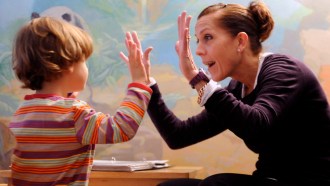
Early diagnosis followed by early treatment may reduce autism’s impact on kids — and help them to communicate better.
- Animals
Kangaroos have ‘green’ farts
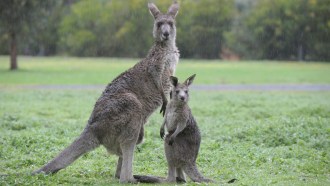
The farts and belches of these animals contain less methane than do those from other big grass grazers. Microbes in their digestive tract appear to explain the ‘roos lower production of this greenhouse gas, a new study finds.
-
Cartoons help make basic genetics fun
Genetics is far more than the letters in your textbook. A former high school aims to bring some fun to learning about your DNA.
- Brain
Autism unlocked
Experts are learning how to diagnose this brain disorder in infancy. That may be early enough to allow nerve cells in the brain to develop new connections — ones that form detours around autism-affected areas.
- Fossils
Lobster’s ancient ‘cousin’ was gentle giant
Some 500 million years ago, this top predator would have likely netted its meals with long bristly limbs.
- Planets
Surprising rings circle comet-asteroid hybrid
It’s too small to be a planet. Yet this planet wannabe still resembles Saturn-like giants. It’s the smallest solar system inhabitant to, like them, host rings of orbiting ice.