All Stories
- Animals
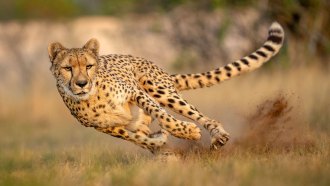
Analyze This: Why the fastest creatures are neither tiny or huge
The “Goldilocks zone” for fast animal speed seems to depend on a body not being too small or so big it gets in the way of its own strength.
- Agriculture
A secret climate superhero lies beneath our farms
Agriculture contributes to climate change. But changes to how farms manage soil might help remove carbon and other greenhouse gases from the air.
- Physics
Physics finally explains the sound of clapping
The “Helmholtz resonator” concept is responsible for the sound produced by hand-clapping.
- Animals
Lab-grown mosquitoes could help protect Hawaii’s native birds
To curb the spread of avian malaria, a teen researcher found a way to make those mosquitoes grow faster and stronger.
- Chemistry
Scientists Say: Vitamin
Our bodies can’t make enough of these tiny but mighty worker molecules. That’s what makes them a dietary essential.
- Animals
Butts of these fly larvae mimic a termite’s face
Young blowflies found in Morocco look — and smell — like the termites they hide amongst. These tricks help the larvae survive amongst the killers.
- Microbes
Living lenses? Glass-coated microbes might take better photos
Bacteria with a gene from sea sponges can coat themselves in glass. Working as tiny, bendable lenses, they could lead to thinner cameras or sensors.
- Space
The universe: How will it end?
The Big Bang likely brought our universe into existence. What will mark its grand finale? Scientists blend imagination and data to make predictions.
- Health & Medicine
Scratching an itch has both good effects and bad
Mice that scratch itchy ears trigger more redness and swelling — but also may combat harmful bacteria.
- Physics
This weird ice may exist on alien planets
Scientists used high pressure and heat to create plastic ice, which has qualities of both ordinary ice and liquid water.
- Earth
Let’s learn about the carbon cycle
The total amount of carbon on Earth doesn’t change. But what form those carbon atoms take is constantly changing.
- Physics
Scientists Say: Lift
An airplane wing’s unique shape creates air pressure differences that result in this gravity-defying force.