All Stories
- Psychology
This scientist knows how to frighten you
Margee Kerr studies how and why people seek out frightening situations. She aims to use fear to help people lead happier and more empowered lives.
- Animals
Scientists Say: Vertebrate
Animals with spines, or vertebrates, come in all shapes and sizes.
- Earth
To get diamonds perfect for Barbie, make and break a supercontinent
Most pink diamonds may have formed billions of years ago during the tectonics that led to formation and breakup of Nuna, Earth’s first supercontinent.
- Brain
‘Lucid’ dreamers could solve mysteries about sleeping minds
People who know they’re asleep while dreaming could help study how sleeping minds create elaborate alternate realities.
- Tech
New tech 3-D prints ouchless COVID-19 vaccine patches
A new compact 3-D printer can produce COVID-19 vaccine patches. These are less painful than the jab and can be stored more easily than liquid vaccines.
- Animals
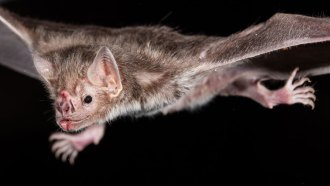
Let’s learn about vampire bats
Vampire bats rarely bite people, instead preferring to feed on animals like cows and horses.
- Physics
Scientists Say: Ultrasonic
This word describes sound waves that have frequencies too high for human ears to hear.
- Tech
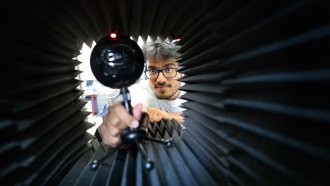
Talking through a tube can trick AI into mistaking one voice for another
Researchers crafted tubes that can trick AI into mistaking one person’s voice for another’s. Bad guys could use such tricks to hack into accounts.
- Animals
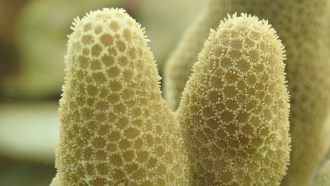
Adult corals have been frozen and revived for the first time
Living corals could be frozen for safekeeping. Scientists could later revive them to restore reef ecosystems that are withering in warming seas.
- Tech
Human teleportation? This century we’re stuck doing it virtually
If teleportation is defined as being transported instantly to another place, then it’s already happening — via extended reality and holograms.
- Physics
Skipping stone physics could aid net-tangled whales and more
The unexpected movement of buoys and spheres in water could lead to redesigns for fishing nets and ships.
- Chemistry
Scientists turn plastic wastes into soap
Chemists developed a way to turn plastic waste into surfactants. Those chemicals could one day become key recruits in a greener war on grime.