All Stories
- Plants
Scientists Say: Fertilize
This word describes both a stage of sexual reproduction and the agricultural practice of adding nutrients to soil.
- Environment
This ecologist is looking at the Amazon’s past to save its future
Carolina Levis researches how local communities influence the Amazon. She’s interested in how Indigenous knowledge can help protect the rainforest.
- Animals
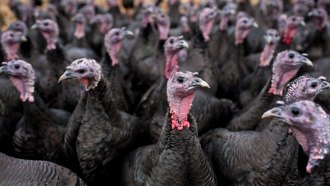
Let’s learn about why turkeys are dinosaurs
Modern birds are the only dinosaurs that survived an apocalyptic extinction event 66 million years ago.
- Math
A twisty mystery about Möbius strips has been solved at last
Turning to paper and scissors helped one mathematician finally figure out just how short the twisted loops can be.
- Brain
Scientists Say: Deep brain stimulation
Through wires implanted in a person’s brain, this medical treatment can help treat various conditions.
- Planets
In a first, astronomers spot the aftermath of an exoplanet smashup
Infrared light from a distant star appears to be leftovers of an impact between a pair of Neptune-sized worlds.
- Animals
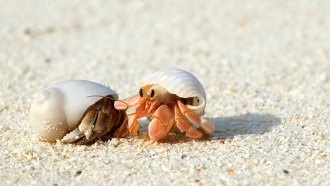
Invertebrates are pretty clever, but are they conscious?
Scientists are designing experiments to test whether these animals have self-aware experiences as we do.
- Humans
Senses help the brain interpret our world — and our own bodies
Most people are familiar with sight, hearing, smell, taste and touch –– but there are others. Learn about them here.
- Tech
How to prevent the robot replication apocalypse
Today’s bot-building robots aren’t set on world domination. But scientists and philosophers want to keep future tech in check.
- Physics
Experiment: How well do different materials create static electricity?
Why are some materials more susceptible to static cling than others? Investigate by making your own electroscope.
- Animals
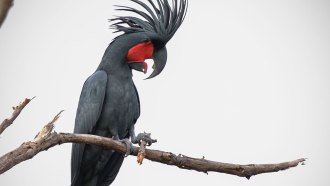
Some cockatoos craft drumsticks, then woo mates like a rockstar
To win over a gal, these flashy males craft and use their signature instruments in a musical display akin to a human rock concert.
- Humans
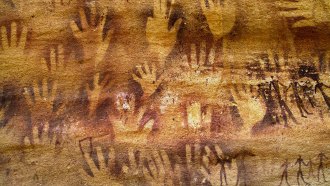
Scientists Say: Prehistoric
Researchers rely on prehistoric tools and other artifacts to study the vast stretches of time before recorded history.