Scientists Say
A weekly word defined, in a sentence and in context. Click here to find the alphabetized list.
- Chemistry
Scientists Say: PFAS
Non-stick coatings, stain-resistant cloth and other common materials leach long-lived PFAS into soil and water.
- Earth
Scientists Say: Altitude
Altitude is used to describe heights in geography, astronomy and math.
- Space
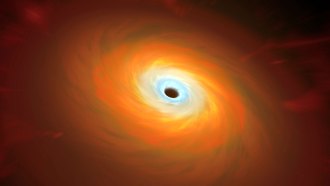
Scientists Say: Accretion Disk
Cosmic swirls of gas, dust and plasma, accretion disks reveal the shadowy silhouettes of black holes and more.
- Physics
Scientists Say: Magnetism
Magnetism is an aspect of one of the four fundamental forces of nature: electromagnetism.
- Computing
Scientists Say: Hardware and Software
Hardware includes all the physical parts of a device you can hold. Software includes all the coded instructions to make that hardware work.
- Health & Medicine
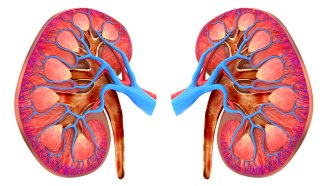
Scientists Say: Kidney
The kidneys remove waste and excess water from the blood, forming urine.
-
- Earth
Scientists Say: Equinox and Solstice
Equinoxes and solstices mark the maximums, minimums and mediums of hours spent in daylight.
- Math
Scientists Say: Calculus
Calculus is math that deals with curves, from their changing slopes to the areas they enclose.
- Computing
Scientists Say: Code
Writing code allows people to tell computers and other smart devices what to do.
- Chemistry
Scientists Say: Rubisco
Rubisco is a key protein in the process of photosynthesis, which feeds plants — and, in turn, us.
- Earth
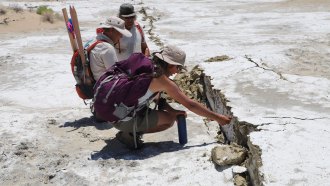
Scientists Say: Seismology
Seismology is the branch of science focused on seismic waves — vibrations that run through or around Earth.