Uncategorized
- Animals
Tiny T. rex arms were built for combat
The fearsome T. rex had more than a mouth full of killer teeth. Its relatively tiny arms also could have served in close combat as powerful slashers.
- Archaeology
Scientists detect mystery void in Great Pyramid of Giza
Using high-tech tools normally reserved for studies in particle physics, scientists have found a large, hidden void inside Egypt’s Great Pyramid of Giza.
- Physics
Ancient light may point to where the cosmos’ missing matter hides
The universe is missing some of its matter. Now astronomers may have a way to find it.
- Health & Medicine
Scientists Say: Vestigial
This adjective is used to describe something — like a body part or organ — that doesn’t have a function. Often it is smaller or less developed than the functional version in another species.
- Climate
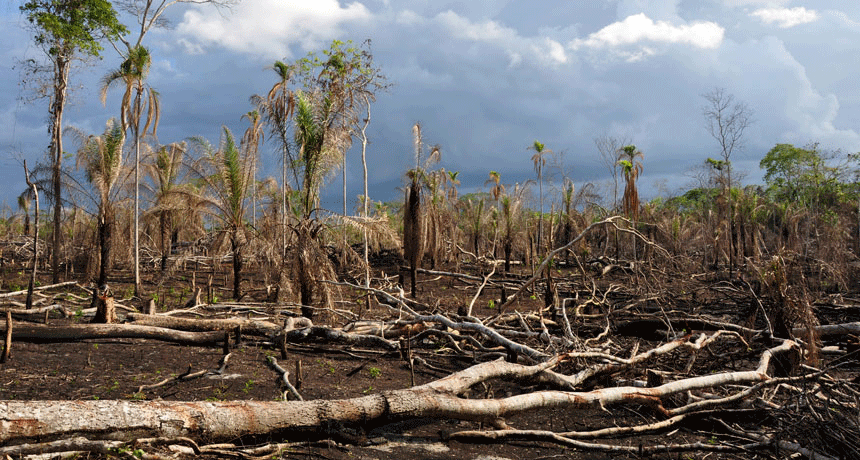
Tropics may now emit more carbon dioxide than they absorb
Analyses of satellite images suggest that degraded forests now release more carbon than they store.
- Chemistry
Touching receipts can lead to lengthy pollutant exposures
The chemical BPA, which coats some cash-register receipts, may linger in the body for far longer than if someone had ingested it.
- Chemistry
Explainer: Store receipts and BPA
The chemical BPA may become trapped in the skin, causing it to linger in the body for a week or more after touching receipt paper.
- Health & Medicine
For teens, a good mood depends on good sleep
Teens need eight to 10 hours of sleep at night to feel good and function well the next day, a new data show.
- Climate
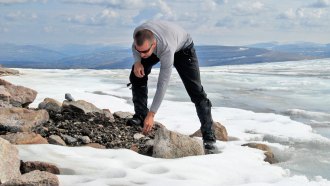
Thawing mosses tell a climate change tale
Plants long entombed beneath Canadian ice are now emerging. They’re telling a story of warming unprecedented in the history of human civilization.
- Health & Medicine
Student invents 3-in-1 hygiene powder
A teen who volunteers at a homeless center has developed a powdery product that can serve as dry shampoo, body powder and toothpaste.
- Animals
How these poison frogs avoid poisoning themselves
Genetic changes protect poison dart frogs from a toxin, but those changes also cause ripple effects.
- Earth
Scientists Say: Ionosphere
The ionosphere is a region of the Earth’s upper atmosphere. The molecules there absorb ultraviolet light and reflect radio waves.