Uncategorized
- Computing
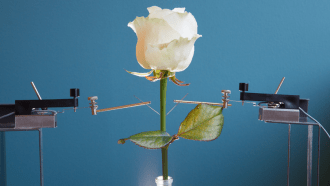
Wired and weird: Meet the cyborg plants
By mixing electronics with greenery, engineers have made plants that conduct electricity, detect bombs and send email.
- Genetics
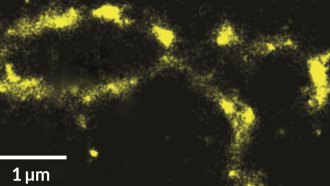
How to view tiny parts of DNA? Make them ‘blink’
A new technique can image nanoscale structures in cells without hurting them. No dyes needed. All you have to do is stimulate them with the right color of light.
- Brain
Chewing or breathing sounds make you seethe? Blame your brain
People who can’t stand everyday sounds, such as chewing and breathing. The reason traces to how their brains are wired, new research finds.
- Genetics
How to make a ‘three-parent’ baby
Scientists combined an egg, sperm and some donor DNA: The end result: what appears to be healthy babies.
- Science & Society
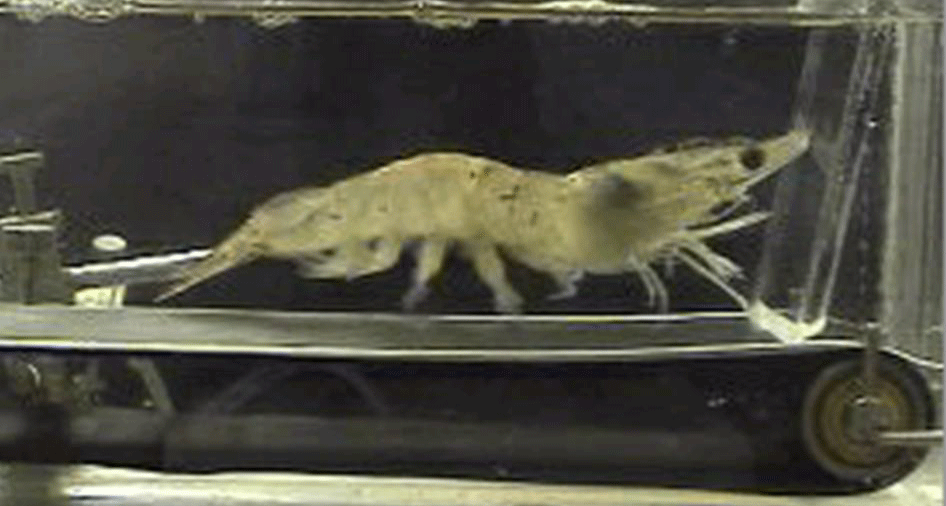
Shrimp on treadmills? Some science only sounds silly
Research that may seem silly, at first glance, often has a rewarding aim. Here are some examples.
- Physics
Strange X-rays point to possible ‘dark’ matter
Scientists have been looking for “dark” matter. It’s supposed to make up most of the universe — but it’s also invisible. X-rays may now point to where some of this weird stuff is.
- Animals
Scientists Say: Hibernation
Hibernation is more than a deep sleep. Animals that hibernate lower their body temperature and reduce their body activities for months.
- Ecosystems
Underwater meadows appear to fight ocean germs
The seagrasses that sway in coastal currents are more than aquatic groundcover. They can reduce harmful bacteria that might otherwise sicken neighboring animals, new data show.
- Climate
Sea ice around Antarctica shrinks to record low
Just two years after reaching a record high, the Antarctic sea ice extent has reached a new low.
- Physics
How to chill an object by sending its heat into space
Researchers have designed a device that can cool an object by radiating its energy into outer space. Think of it as a solar panel in reverse.
- Planets
Cool Jobs: Probing Pluto
The New Horizons mission captivated the world as it flew by Pluto. Here are some of the people who made that possible.
- Health & Medicine
Sexist attitudes about smarts may emerge by first grade
People often think women can be smart, but that men are more likely to be brilliant. This stereotype may form as young as age six, new data show.