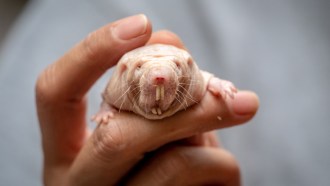
Radioactive animals don’t glow — but do show the power of radiation
From wolves to wasps, wild species at nuclear sites help reveal risks of radiation exposure
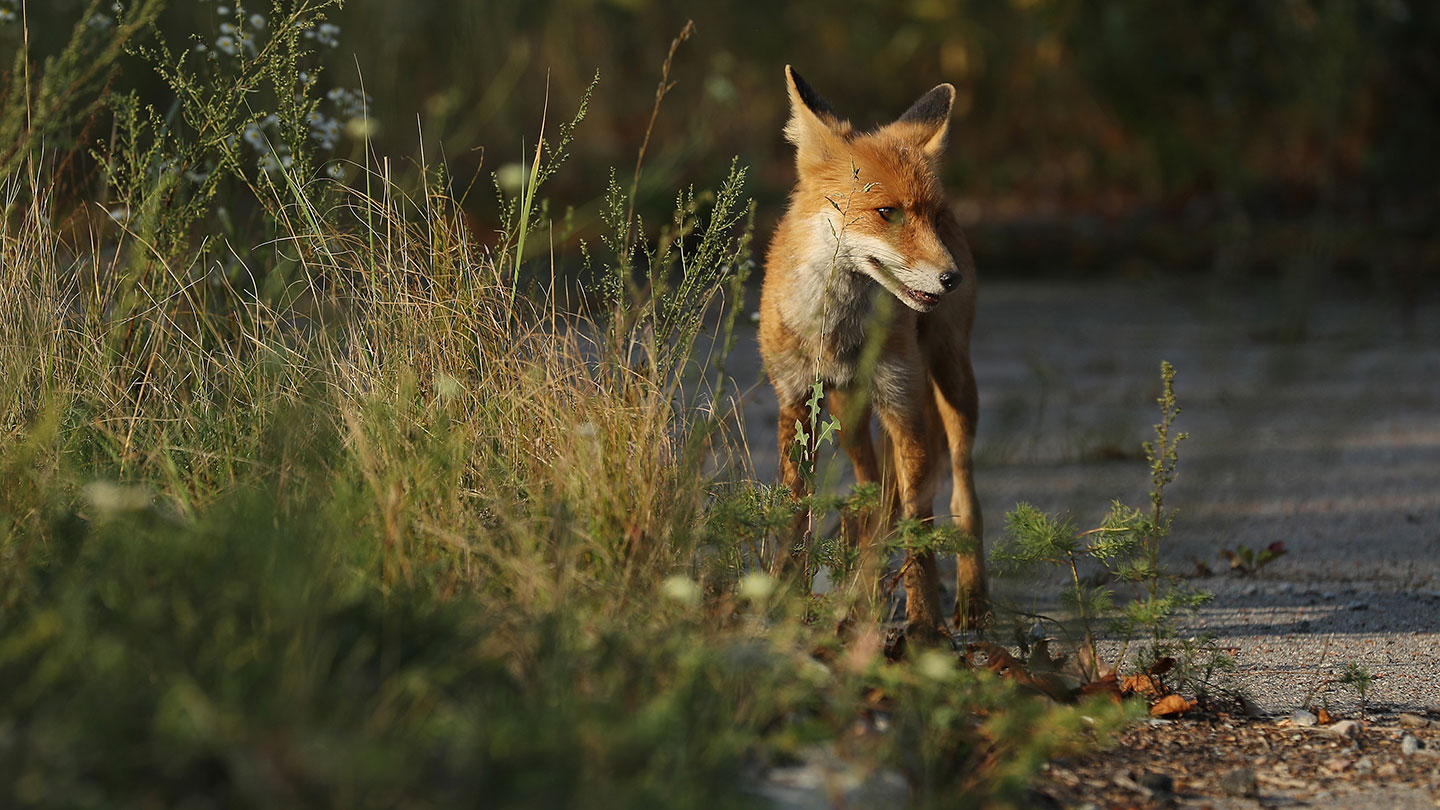
This fox was spotted in 2017 in the deserted town of Pripyat. It’s near the former Chernobyl nuclear power plant. The area is still closed to most people due to the radiation there.
Sean Gallup/Staff/Getty Images News
This is a human-written story voiced by AI. Got feedback? Take our survey . (See our AI policy here .)
In comic books and movies, radiation can be a source of superpowers. The bite of a radioactive spider turned Peter Parker into Spider-Man, allowing him to spin webs and swing between buildings. After a dose of gamma radiation, Bruce Banner could transform into the powerful Hulk.
Real-life creatures can pick up radiation on or in their bodies, too. When this happens, though, they don’t get or pass along superpowers. Nor do they glow, as is often shown in popular media.
Animals exposed to radiation may look healthy and act normal. But radiation can damage cells and tissues. And once in the environment, radioactive materials can pose risks that last a long time. Scientists want to understand where these are and what threats they pose.
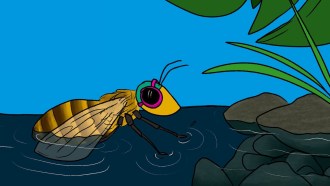
Consider the July 2025 case of four radioactive wasp nests. Workers found them at a South Carolina site that once made ingredients used in nuclear weapons. Scientists say the wasps might have touched radioactive materials that had not been properly sealed off. This area is being cleaned up. And the nests were far inside the site’s borders, so they didn’t threaten the public.
But these nests do raise questions about how wild animals — and maybe people — get exposed to radiation.
Some places, such as damaged nuclear power plants, are so radioactive that people can’t go near them without heavy protection (and even then, not for long). Fortunately, signs tend to warn us to steer clear of such sites. But wild animals can’t read those signs.
As with the wasps, studying where and how they become exposed can help pinpoint risky spots. And knowing how radioactivity affects wildlife may offer tips that will better protect us, too.
Radiation is risky
Some elements are naturally unstable. They attempt to become stable by shedding energy as tiny, subatomic particles and/or light. This process is called radioactive decay. And the energy they release is known as ionizing radiation.
Radioactivity is natural — and everywhere, notes Kathryn Higley. She works at Oregon State University in Corvallis. As a radioecologist, she studies how radiation affects living things in the wild.

Unstable elements — or radioactive isotopes — exist all around us. They’re found in rocks, soil and rainwater. They’re in the ocean and even the air we breathe. As we eat, drink and inhale these materials, our bodies will become slightly radioactive, too. But this “isn’t necessarily cause for alarm,” says Higley. Our bodies can repair some of the damage small doses of radiation can produce.
Too much ionizing radiation, however, can overwhelm those repair systems. Then its harm to our cells and their DNA — the chemical instructions for making each of us unique — can become permanent.
Exposure to low levels of radiation may not cause visible harm. But over time, hidden damage can build up. So over many years, even small amounts may increase our risk of getting cancer.
If you’ve had X-rays taken of your teeth at the dentist, you may have had a heavy blanket placed over your torso. It contains the metal lead. That lead protects unscanned organs from the X-ray radiation.
Risk of radiation exposure is also why people in some regions test their basements for radon. This radioactive gas is released by radioactive isotopes in soil. It can seep into homes. Breathing it can, over time, increase someone’s risk of lung cancer.
High doses of radiation can prove deadly. Intense exposures might come from an accident at a nuclear power plant or indirect exposure to the effects of a nuclear weapon.
Nuclear wastelands
In the past 40 years, two big radiation disasters contaminated enormous areas. Even today, they continue to threaten the health of people and wildlife.
The 1986 explosion and fire at Ukraine’s nuclear power plant in Chernobyl, in what was then the Soviet Union, blasted out huge quantities of toxic debris. Much of the material fell nearby. A lot also traveled as fallout — radioactive dust and gas — into Europe and what is now Russia.
Another big accident, in Japan, was triggered by a 2011 earthquake and the tsunami — powerful ocean wave — it unleashed. The quake and devastating water wave damaged a coastal nuclear power plant at Fukushima. Three of its reactors suffered catastrophic damage. They spewed radioactive fallout that spread through the air and ocean. Though not as large as Chernobyl, this disaster was still quite serious.
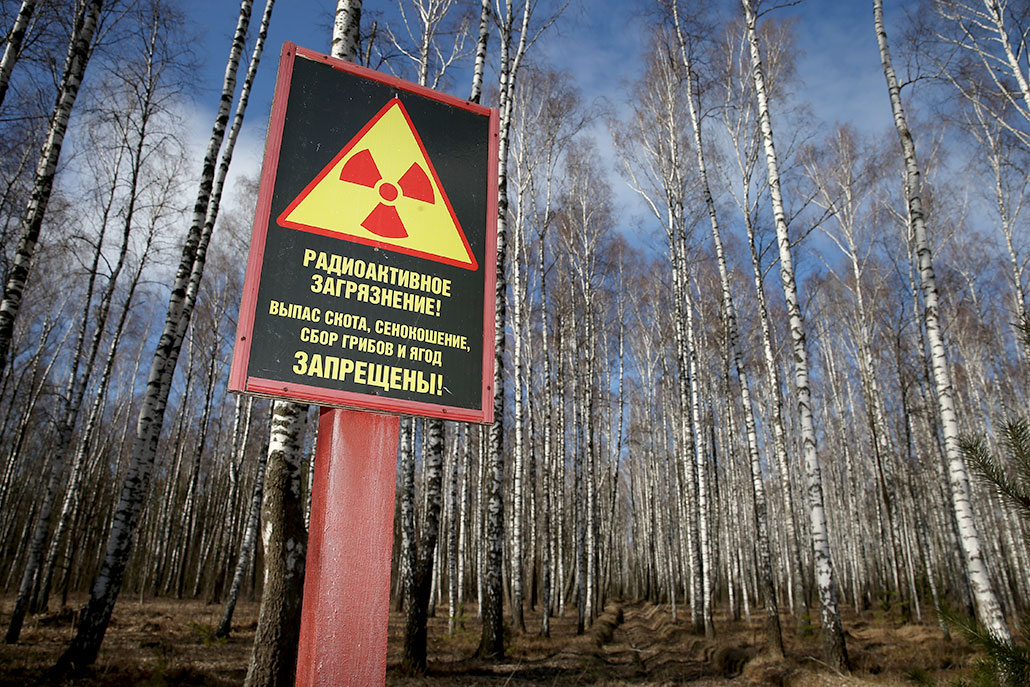
At both Chernobyl and Fukushima, government officials evacuated thousands of people from large areas. They created these so-called exclusion zones to keep the public safe. Signs and other announcements warned the public to steer clear of the contaminated regions.
The Chernobyl exclusion zone initially covered some 2,600 square kilometers (1,000 square miles). As more contamination was found, it was expanded to about 4,150 square kilometers (1,600 square miles). That’s bigger than Rhode Island.
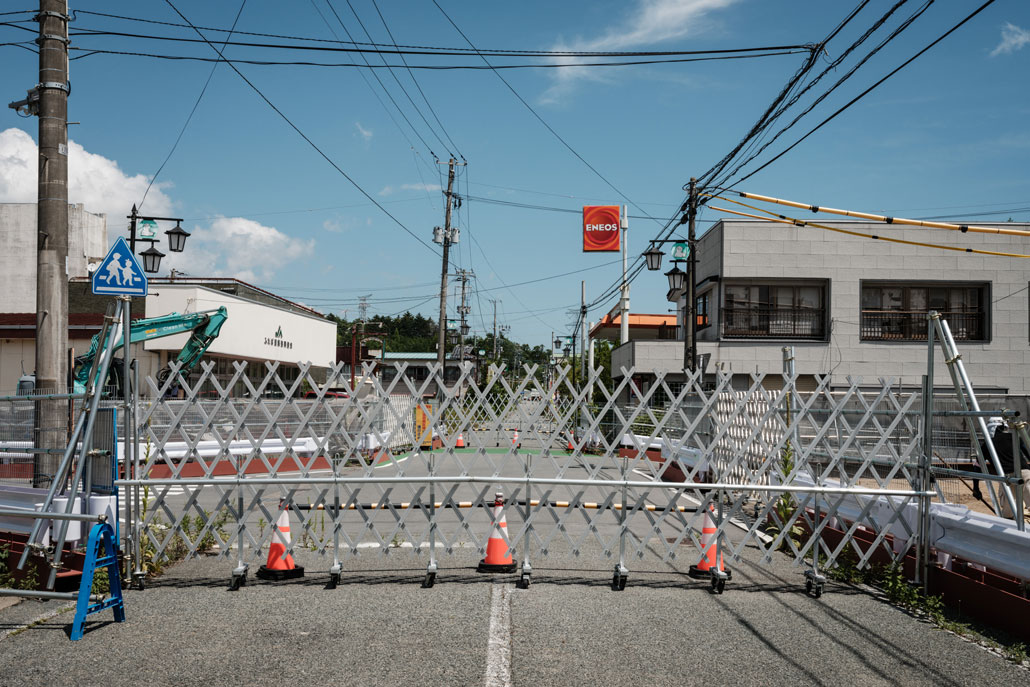
People still can’t legally live in the exclusion zone, although tourists can visit it on special tours. “As humans, we like to test our boundaries,” observes Kate Brown. “Visiting places like Chernobyl is an example.” A historian at the Massachusetts Institute of Technology in Cambridge, Brown has studied the health of people exposed to nuclear fallout.
The Fukushima exclusion zone covered about 800 square kilometers. That’s an area about the size of New York City. As radiation levels decreased over time, Japanese officials shrank the exclusion zone. People who once lived in parts of it can now visit their homes. Some can even move back. But only a small number have chosen to do so.
Wildlife warning signs
Exclusion zones protect people. But animals don’t understand boundaries or visiting limits. So they may hang out in these landscapes and become contaminated.
Consider a wolf, says Higley. It might pick up radioactive material if it “walked through a contaminated landscape,” she says. Or “by eating smaller radioactive animals,” such as mice. That could transfer radioactive material to its own body.
Different materials get stored in different body parts. Cesium-137 is one such radioactive isotope. The body can mistake it for potassium, a muscle-building nutrient. As a result, cesium-137 can build up in animals’ muscles. Another radioactive isotope, strontium-90, looks and behaves like calcium, used in making bones. So strontium-90 that gets picked up can be stored in bones.
In 2023, scientists reported traces of a radioactive uranium isotope in the shells of desert tortoises in the southwestern United States. Some was also found in sea turtles in the South Pacific. The animals might have eaten plants that had absorbed radioactive isotopes left from nuclear weapon tests (see sidebar). Or they might have dug into radioactive sand.
Radiation is a well-known risk at the Hanford site. It’s in central Washington. For more than 40 years, the U.S. government produced plutonium here. That radioactive element powers some nuclear weapons. The work ended in the late 1980s. But workers are still cleaning up and securing dangerous radioactive wastes.
Some of those wastes were dumped into the soil. Some are now leaching into the nearby Columbia River. More wastes are stored in underground tanks. Quite old, many of these are leaking. This soil will remain hazardous for thousands of years.
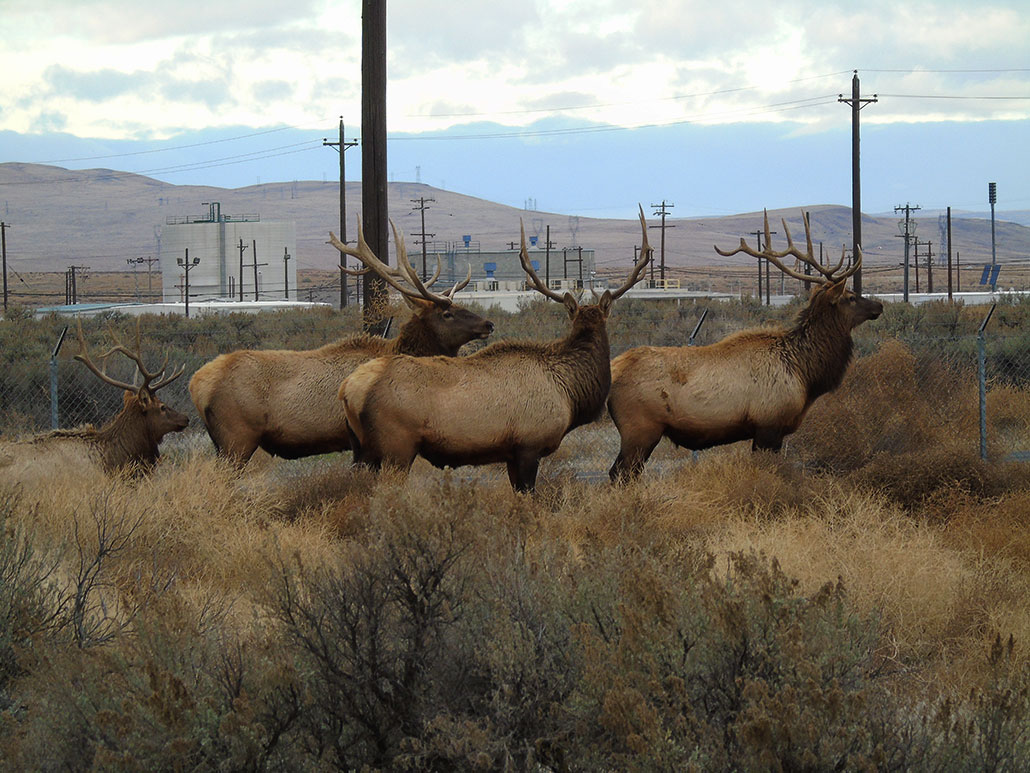
Higley studied radiation and health risks during part of the Hanford cleanup. Burrowing animals sometimes dug into low-level nuclear-waste sites, she recalls. And some plants, like tumbleweeds, had long taproots that could penetrate into nuclear-storage areas. That could move radioactive isotopes into their tissues, where they might be eaten by foraging animals.
Scientists have found radioactivity in mice, rabbits, coyotes and other animals at Hanford. Cleanup crews even turned up radioactive rabbit poop. It had to be buried with other low-level radioactive trash.
Findings like these have shaped safety practices here and elsewhere.
Near nuclear power plants, monitors “regularly go out and sample in the area,” Higley says. They may test people’s garden vegetables or farm animals, as well as soil, air and water. That can show whether the greenery, produce or livestock is radioactive. Inspectors also take milk samples from local dairy cows and fish from nearby waters.

Tatsujiro Suzuki was a member of Japan’s Atomic Energy Commission when the Fukushima disaster happened. Now he leads Peace Depot. It’s a nonprofit group that works to reduce nuclear risks. Suzuki wants this type of sampling done around Fukushima. People who move back there need to know what risks still exist.
Around Fukushima, “mountains and forests near those areas have not been decontaminated and will never be,” he explains. “Wildlife in those areas can still be affected by higher radioactivity” and leftover radioactive materials.
Samples show that wild boar and mushrooms from those areas contain radioactive contamination, he reports. The levels are higher than Japan’s government deems safe to eat, Suzuki says. He worries that food chains pose long-term concerns.
Food-related risks can emerge anywhere radioactive materials do — and even affect people. In fall 2025, for instance, the U.S. Food and Drug Administration was investigating frozen shrimp. The shrimp had been imported from Indonesia. Some were tainted with cesium-137. Officials worry that could have harmed diners.
Harm or help?
Like humans, wildlife exposed to radiation can suffer DNA and cell damage. Our “systems are very much affected by ionizing radiation,” says Timothy Mousseau.
Mousseau is a biologist at the University of South Carolina in Columbia. He has spent years studying wildlife at Chernobyl, Fukushima and other radioactive sites. “Genetic damage is widespread and shows up in nearly every study that’s looked for it,” he says. But species and individual animals don’t all respond in the same ways.
Mousseau is part of a team that found fewer birds and insects in areas at Chernobyl with more radiation. These hotspots also had fewer large and small mammals, such as foxes and hares.
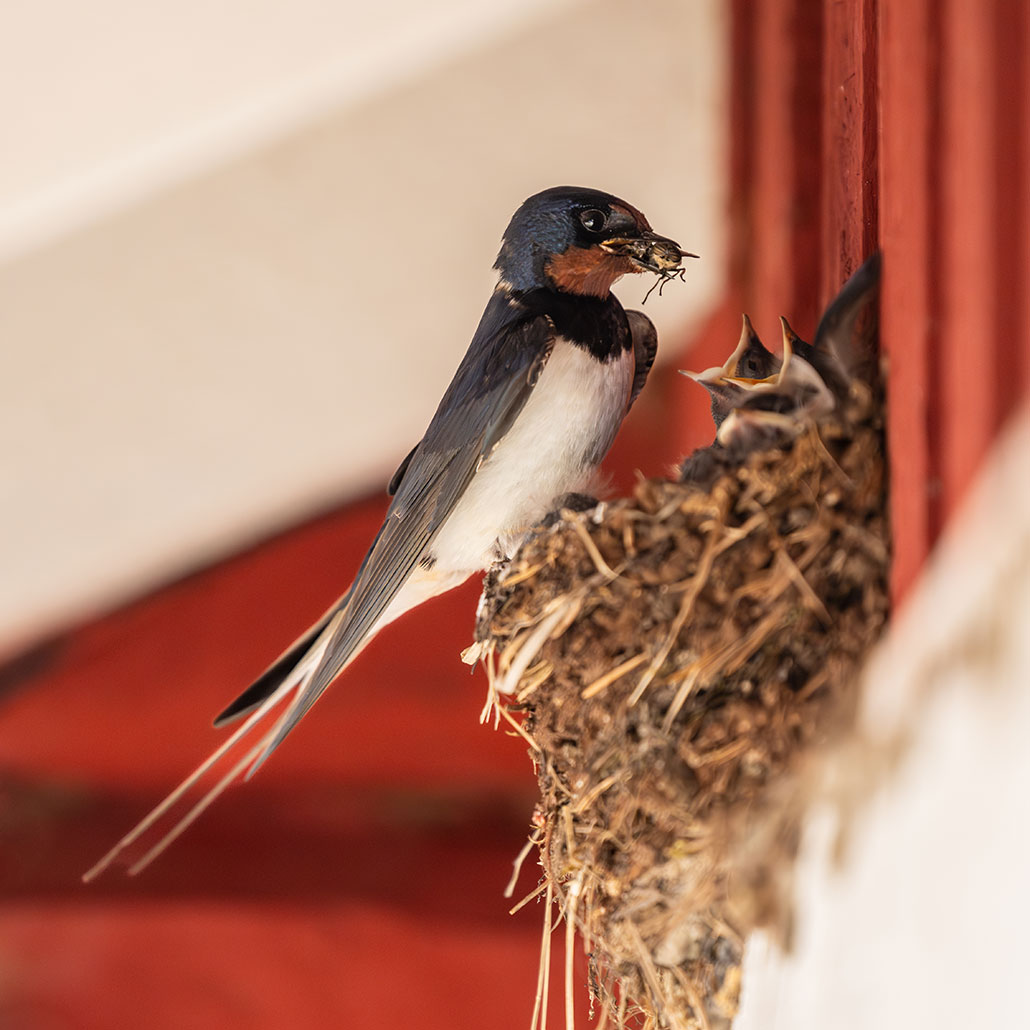
He’s also seen strong effects on barn swallows at both Chernobyl and Fukushima. “Most of the barn swallows in the most-contaminated areas at Fukushima disappeared within the first two years,” he says. Birds at Chernobyl showed abnormal effects, “like white patches of feathers.”
A closer look at those birds revealed damage to their DNA. Gene mutations may explain the albino feathers in some patches. Male swallows also made fewer sperm — the reproductive cells that combine with eggs to make offspring. This could make it harder for affected swallows to produce young.
For one 2020 study, researchers mounted more than 100 cameras to track wildlife near Fukushima. These captured thousands of photos of boar, raccoons, foxes, weasels, deer and other animals. Many species were more abundant in the area after the disaster.
At Chernobyl, too, many animals roam freely in the exclusion zone. These include wolves, deer, lynx, brown bear and bison. Wild plants are growing in zones that once were tree farms.
Higley isn’t surprised to see animals abounding in such regions. “Radioactivity is a stressor” for animals, she notes. “Just like harsh temperatures or a lack of water.” But, she adds. “the presence of people is also a stressor for plants and wildlife.” Keeping people out made it easier for some species to enter.
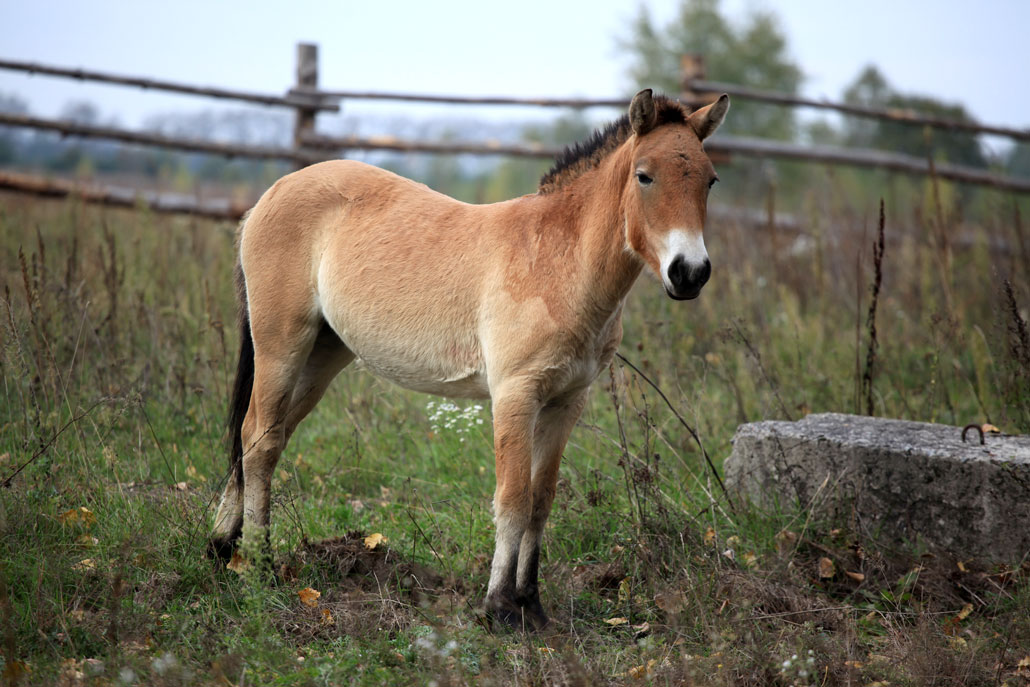
Mousseau agrees that excluding people helps wildlife thrive. “Animals that range widely, like wolves, don’t show significant effects because they don’t stay in the same place for long,” he says. “But in areas [where there’s] high radiation, there are dramatic, negative impacts” on many species.”
There’s no magic tool like kryptonite to neutralize radioactivity’s power. Some tainted sites are unlikely to ever be safe places for people to live. But studying creatures that range, burrow and hunt in those areas can help scientists learn more about radiation’s lasting impacts. Some, like the South Carolina wasps, may even serve as sentinels — helping spotlight danger zones so they can be cleaned up.
Editor’s note: This story was updated on February 4, 2026, to better reflect sources’ statements.
Do you have a science question? We can help!
Submit your question here, and we might answer it an upcoming issue of Science News Explores