Feeling nervous? Work that system to calm it down
Take a deep breath — there are tons of ways to regulate your nervous system
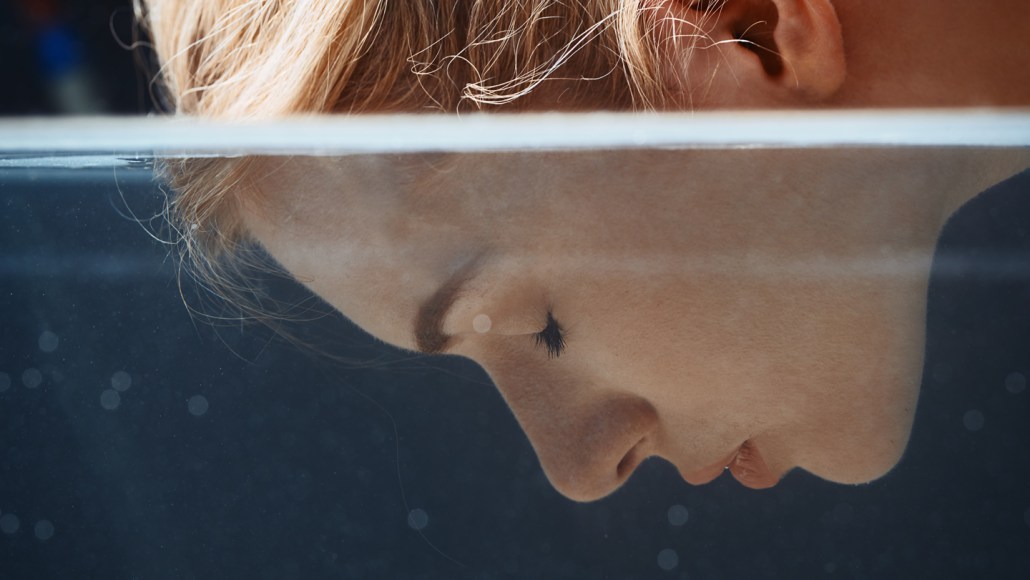
Cold water on the face seems to reduce the body’s stress responses to tough tasks. Scientists are studying this and other ways to help people regulate how their nervous system responds to stressful situations.
Arman Zhenikeyev/Corbis/Getty Images
Share this:
- Share via email (Opens in new window) Email
- Share on Facebook (Opens in new window) Facebook
- Share on X (Opens in new window) X
- Share on Pinterest (Opens in new window) Pinterest
- Share on Reddit (Opens in new window) Reddit
- Share to Google Classroom (Opens in new window) Google Classroom
- Print (Opens in new window) Print
When you’re stressed, you lose some control. Stress hormones flood your bloodstream. Your heart rate and blood pressure go up. You breathe faster. These changes happen without thought. They’re run by what’s known as your sympathetic nervous system. And they kick in whether you’re facing true danger or just a big exam. But scientists are learning how to guide our nervous systems out of that fight-or-flight mode and into relaxation.
Some calming techniques come naturally. Maybe you’ve already used slow, deep breaths to recenter yourself. Now, though, there’s mounting data to support a range of zanier approaches. Ever tried humming, or tapping on your skin? What about dunking your face in cold water?
“Consciously, you can’t tell your heart to slow down,” explains Patricio Millar Vernetti. He’s a neurologist at NYU Langone Health in New York City. “But by doing these interventions, you have a little bit more control.”
On social media, these practices are often described as ways to “regulate” your nervous system. But it’s really about balancing two branches of your nervous system. That “sympathetic” branch is in charge of stress responses. It gets you ready for action, pumping blood to your brain and muscles. Its counterpart — the parasympathetic nervous system — calms things down.
Getting that parasympathetic nervous system to kick in can help calm us back to a resting state. It lowers stress hormone levels. It slows the heart and lowers blood pressure.
Being able to control this back-and-forth may yield big health benefits. Over time, an over-active stress response can contribute to a range of problems. These include high blood pressure, strain on the heart, inflammation and other issues.
These systems normally work without our giving them thought. But research is finding ways to turn on the parasympathetic nervous system when we feel it’s needed.
Calling for calm
Stimulating the vagus nerve is one way. This nerve runs from the base of the brain (or brain stem) to the abdomen. Breathing exercises can fire up this nerve. So might cold therapy, research suggests.
In one small study, scientists observed 25 people doing math in their heads. Before this, 12 participants had worn a face-cooling mask. It was meant to mimic submerging their face in cold water; that’s a known way to stimulate the vagus nerve.
Everyone got stressed by the math task. But those who had first worn cooling masks didn’t release as much cortisol. It’s a stress hormone. These recruits also recovered from their stress faster. The researchers shared their findings several years ago in Scientific Reports.
Humming may also turn on the parasympathetic nervous system. In October 2025, for instance, scientists showed slow breathing plus humming can boost heart-rate variability. It’s a measure of the fluctuating time between heartbeats. That humming finding appeared in Physiology & Behavior.
High heart-rate variability is one sign of a well-regulated nervous system. It signals “your body is doing less fighting itself on the inside,” explains physical therapist Karin Steere. It’s now better able to switch between stress and relaxation. Steere works at the University of Puget Sound in Tacoma, Wash.
Tapping in, not out
Tapping on specific spots on the skin has also been shown to lower stress-hormone levels. It can also reduce heart rate and blood pressure. Tapping is even used as a type of therapy for some conditions, such as post-traumatic stress disorder (PTSD). Science is still exploring why this method works. A 2025 review suggests those taps may send signals to the brain that tell the parasympathetic nervous system it’s time to take over.
When it comes to regulating your nervous system, there’s really no one best way, says Darshan Mehta. He works at the Benson-Henry Institute for Mind Body Medicine. It’s part of Massachusetts General Hospital in Boston. It’s possible to find small, one-off studies that support nearly every viral technique you see, he notes. The most important thing, he says, is to find what works for you and stick to it.
“It’s not important which practice [people adopt],” Mehta says. What’s important, he adds, is “that people do practice [it].”
Some of these habits, Vernetti notes, have been in use a long time. Chanting and humming, for instance, are part of some ancient spiritual practices. “This is one of those things that science has caught up with relatively recently,” he says. In fact, “people have been doing [them] for centuries.”
Do you have a science question? We can help!
Submit your question here, and we might answer it an upcoming issue of Science News Explores