Cells
- Health & Medicine
New problem linked to ‘jet lag’
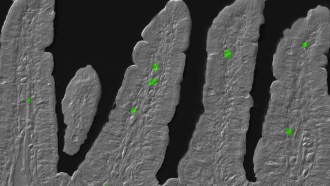
The body’s internal clock can be thrown off when people alter their day and night routines. That mix-up may lead to a buildup of immune cells that can cause inflammation, according to a new study on mice.
- Life
Building an almost-brain
Special cells can weave themselves together into blobs that, under a microscope, look a lot like the brain tissue in a developing fetus. You might think of these cellular masses as “brains-under-development.” Madeline Lancaster and Jürgen Knoblich offer a more technical name for them: “cerebral organoids.”
- Health & Medicine
Meet the new meat
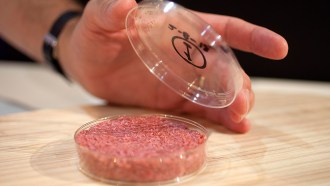
Scientists made a hamburger without harming animals; but it cost as much as a house.
- Life
Explainer: What is a stem cell?
Special cells have ability to turn into several different types
- Life
Stem cells: The secret to change
Unusual, versatile cells hold the key to regrowing lost tissues.
- Health & Medicine
Magnets that kill cancer cells
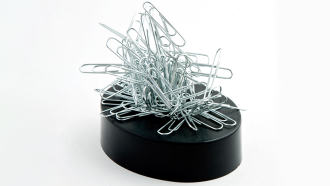
Researchers devise a way to use magnets to make cells self-destruct.
-
-
-
- Animals
Open eyes, dozing minds
Scientists find that rats that stay up late are neither fully asleep nor fully awake.
- Life
Full-body taste
Turns out that the tongue isn’t the only place where the body can taste what you ate.
-