Human evolution
- Health & Medicine
Cool Jobs: Soaking in sweat
These three scientists are using sweat to hunt killers, detect illness and find out just how our species became such hairless, perspiring apes.
- Archaeology
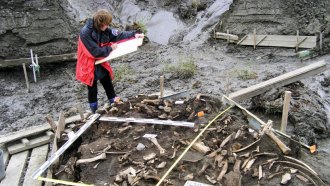
DNA reveals clues to the Siberian ancestors of the first Americans
Researchers discovered a previously unknown population of Ice Age people who crossed the Asia-North America land bridge.
- Archaeology
Fossils from a Philippine cave may come from a new human-like species
Ancient fossils from a Philippine cave may come from a new human-like species, which scientists have dubbed Homo luzonensis.
- Humans
Grandmother can be good for grandkids — up to a point
Women who live past their child-bearing years often help their grandchildren survive, data now suggest. But that help may depend on her age and how close by she lives.
- Fossils
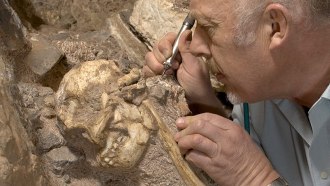
A skeleton named ‘Little Foot’ causes big debate
New studies suggest a fossil hominid called Little Foot belongs to the species Australopithecus prometheus. Other scientists question whether such a species exists.
- Archaeology
Fossils hint ancient humans passed through a green Arabia
Hundreds of thousands of years ago, migrating humans passed through the Arabian Peninsula, a study shows. Instead of desert, they found green grass.
- Humans
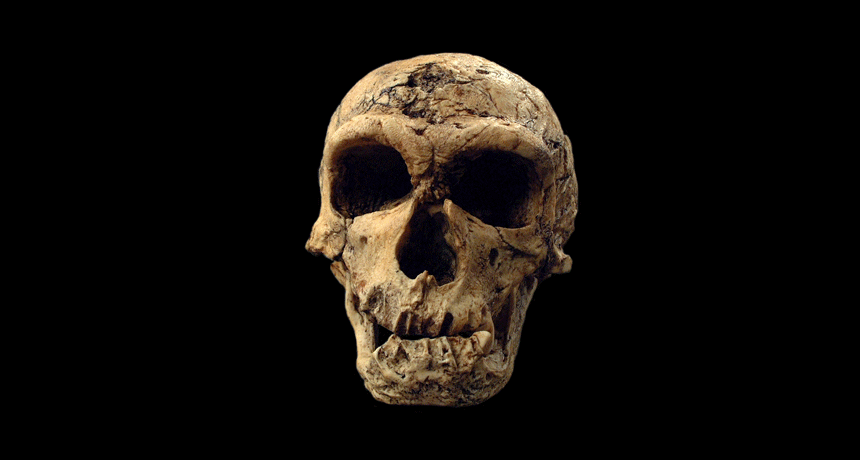
Scientists Say: Neandertal
This extinct species is a close relative of modern humans. Neandertals lived in Europe and Asia, and made tools and jewelry — just like us.
- Fossils
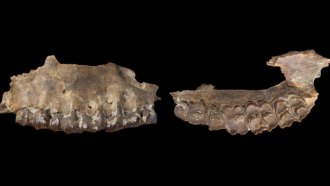
Ancient jaw suggests humans left Africa earlier than thought
A fossil jaw found in a cave in Israel is at least 177,000 years old. The scientists who found it think it shows humans left Africa much earlier than thought.
- Archaeology
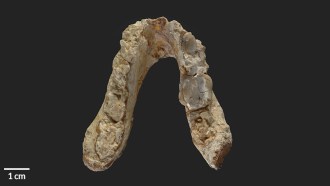
European fossils may belong to earliest known hominid
New fossils suggest that the earliest non-ape human ancestors may have evolved in Europe, not Africa.
- Fossils
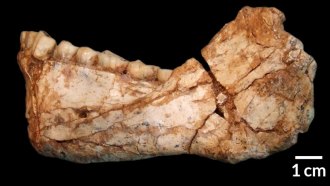
Study claims to have found oldest human fossils
Humans, as a species, may be much older than previously thought. They also may have evolved further North and West of the suspected cradle of human evolution.
- Archaeology
This hominid may have shared Earth with humans
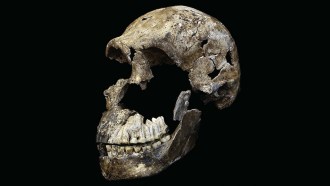
Newfound fossils in South Africa point to a far more recent age for Homo naledi than had been accepted. If correct, this hominid might have coexisted with humans — even interacted with our species.
- Genetics
Human DNA carries hints of unknown extinct ancestor
A new study suggests people today carry genetic traces of now-extinct species unknown to science.