Air pollution might harm children’s eye health
Exposure to cleaner air could improve vision, especially for younger children
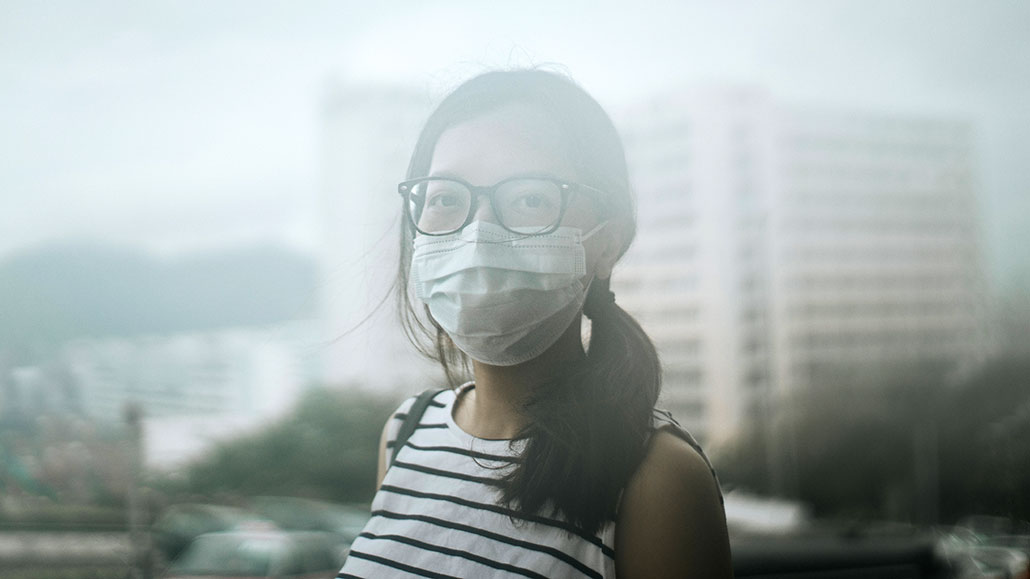
Many children wear glasses for nearsightedness. New research links this vision problem with air pollution.
d3sign/Moment/Getty Images
This is a human-written story voiced by AI. Got feedback? Take our survey . (See our AI policy here .)
Polluted air is bad for your lungs. That dirty air might also be why many kids need glasses, new data show.
This observation comes from a study of vision in about 30,000 school-age children. Kids had better eyesight when air pollution levels were lower, scientists found.
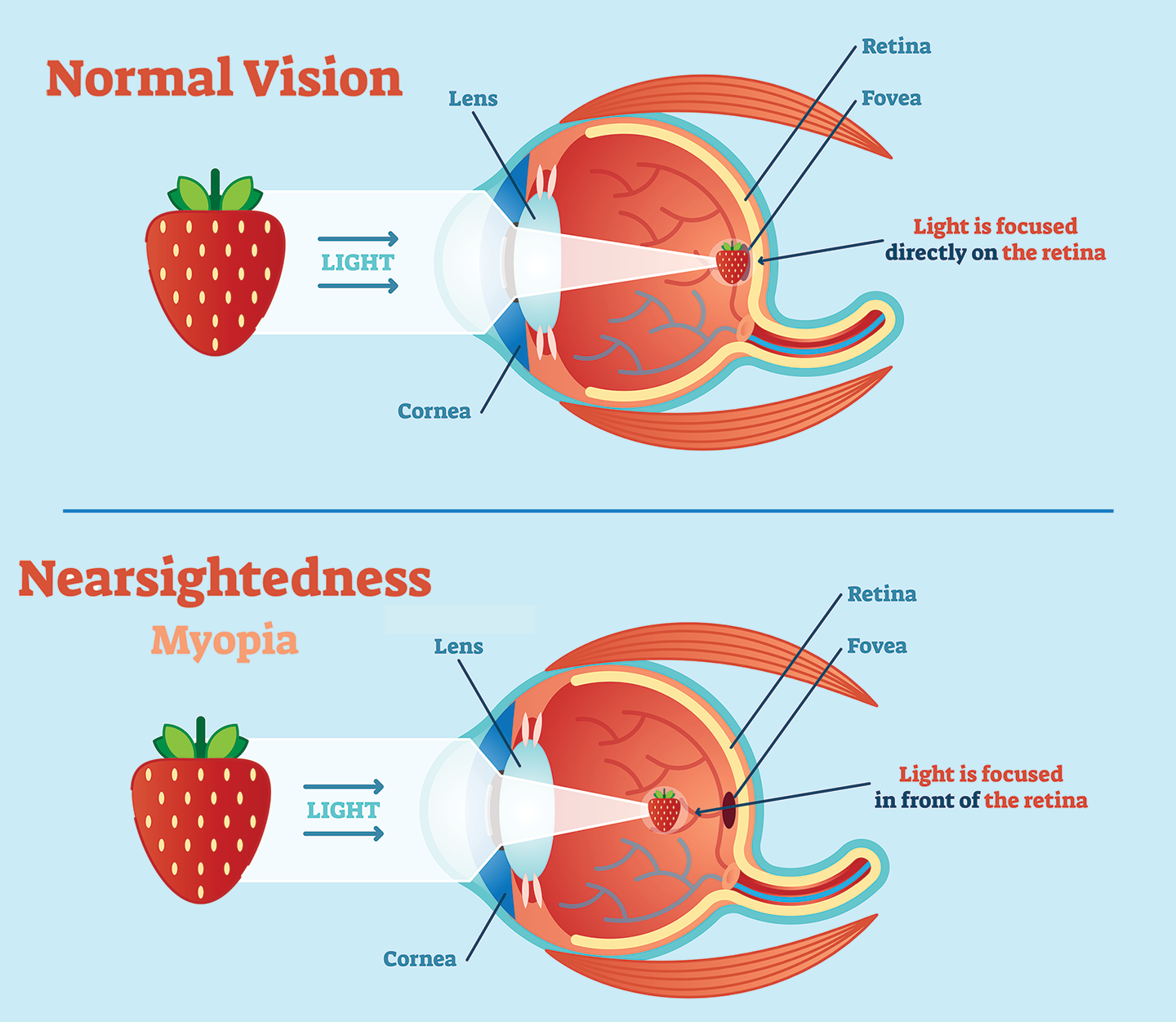
The researchers focused on myopia. People with this eye condition — also known as nearsightedness — have trouble seeing faraway objects. It’s a really big problem in East Asia. In China, for instance, more than four in every five teens are nearsighted by the time they finish high school. One in 10 are severely myopic.
Many things can contribute to someone becoming nearsighted. Genetics play a big role. Daily habits matter too, such as how much time you spend staring at screens or whether you play outside. Even what you eat can affect vision.
“We know air pollution is a factor in eye health,” too, notes Zongbo Shi. A coauthor of the new study, he’s a scientist who looks at how atmospheric processes affect human health and the environment. He works at the University of Birmingham in England.
But scientists didn’t know which things had the biggest impact, Shi says. So they decided to investigate the role of air quality.
Looking for patterns
His team used data from 29,971 elementary, middle and high school students in Tianjin, China. These data came from a survey on myopia. It asked kids or their families about the kids’ age and sex, health history and family background. This survey also asked about their habits, including how much the kids slept, what they ate, their school environment and more.
Shi’s team also gathered environmental data for Tianjin. This ranged from air pollution to the amount of green space and nighttime lighting.
To make sense of all these data, the researchers turned to machine learning. They trained this form of artificial intelligence (AI) to identify which aspects of the survey data seemed to have the strongest link to eye health. And levels of two air pollutants stood out: nitrogen dioxide gas and ultra-fine airborne particles. The AI model linked lower levels of both of these to better vision.
Shi’s team shared its findings in the September 2025 issue of PNAS Nexus.
Air quality and the eyes
Earlier studies suggested a link between air pollution and eye disorders in adults, says Paul Foster. An ophthalmologist, he studies eye health at University College London in England. It’s possible, he says, that pollution causes narrowing of the blood vessels in the retina. That’s the layer of light-sensitive cells at the back of the eye. “[This] may lead to a greater risk of children becoming myopic.” In fact, data have shown that elementary-school-age children are especially sensitive to air pollution.
“Every body function — every organ system — is affected by air pollution,” says Judith Klein-Seetharaman. She did not take part in the new study. A biochemist, she works at Arizona State University in Phoenix. There, she studies what happens in our bodies at the molecular level.
“We might think the lungs are affected more because we breathe in those substances,” she says. “But the eye is particularly vulnerable,” too, she points out, “because it’s so exposed.”
Imagine a dusty day. If there are a lot of particles in the air, they can get into our eyes and irritate them. Hurt or damaged cells will send out distress signals. This brings immune cells rushing to the area. It can trigger an increase in blood flow to the site, leaving it red and swollen. It might get itchy too. This is called inflammation.

Oxidative stress can also develop, Klein-Seetharaman notes. This is when imbalances in certain chemicals damage affected cells. Both inflammation and oxidative stress can increase the risk of myopia.
Inhaled pollutants can lead to more cell damage — and inflammation. From the lungs, pollutants can get into the blood and be transported throughout the body. This can affect every part of our body, including the eyes, the World Health Organization says.
“It’s really complicated,” Shi says. “And there may be other [affected] pathways that we don’t know very well yet.”
Shi’s team also ran computer models that asked what would happen if children had been breathing and viewing the world through less polluted air. They predicted that fewer children would develop serious myopia.
Correlation is not causation
The study shows how many different things affect eye health, Klein-Seetharaman says. However, correlation isn’t causation, she adds. Just because two things happen at the same time doesn’t mean one caused the other.
Shi agrees. “I can say, generally speaking, improving air pollution would improve eyesight,” he says. “But I can’t say if you improve your air pollution level [by some particular amount], how much that will improve your eyesight.”
He notes other limitations, too. The study relied on self-reported data, which is not always accurate. The researchers also defined pollution exposures using data collected near the kids’ schools. This approach isn’t perfect because kids don’t spend their entire day at school, much less weekends.
This study, however, suggests some options for improving eye health. Since children spend a lot of time at school, the researchers recommend creating clean-air zones around schools. This might involve closing streets to cars during school drop-offs and pick-ups. Putting air purifiers in classrooms is another option.
Such changes might work alongside local or regional pollution-fighting efforts, the researchers say. For kids everywhere, cleaner air could mean better vision, too.
Do you have a science question? We can help!
Submit your question here, and we might answer it an upcoming issue of Science News Explores