Nuclear weapons tests many decades ago have left a radioactive legacy
Aboveground testing rained radioactive cesium across the planet
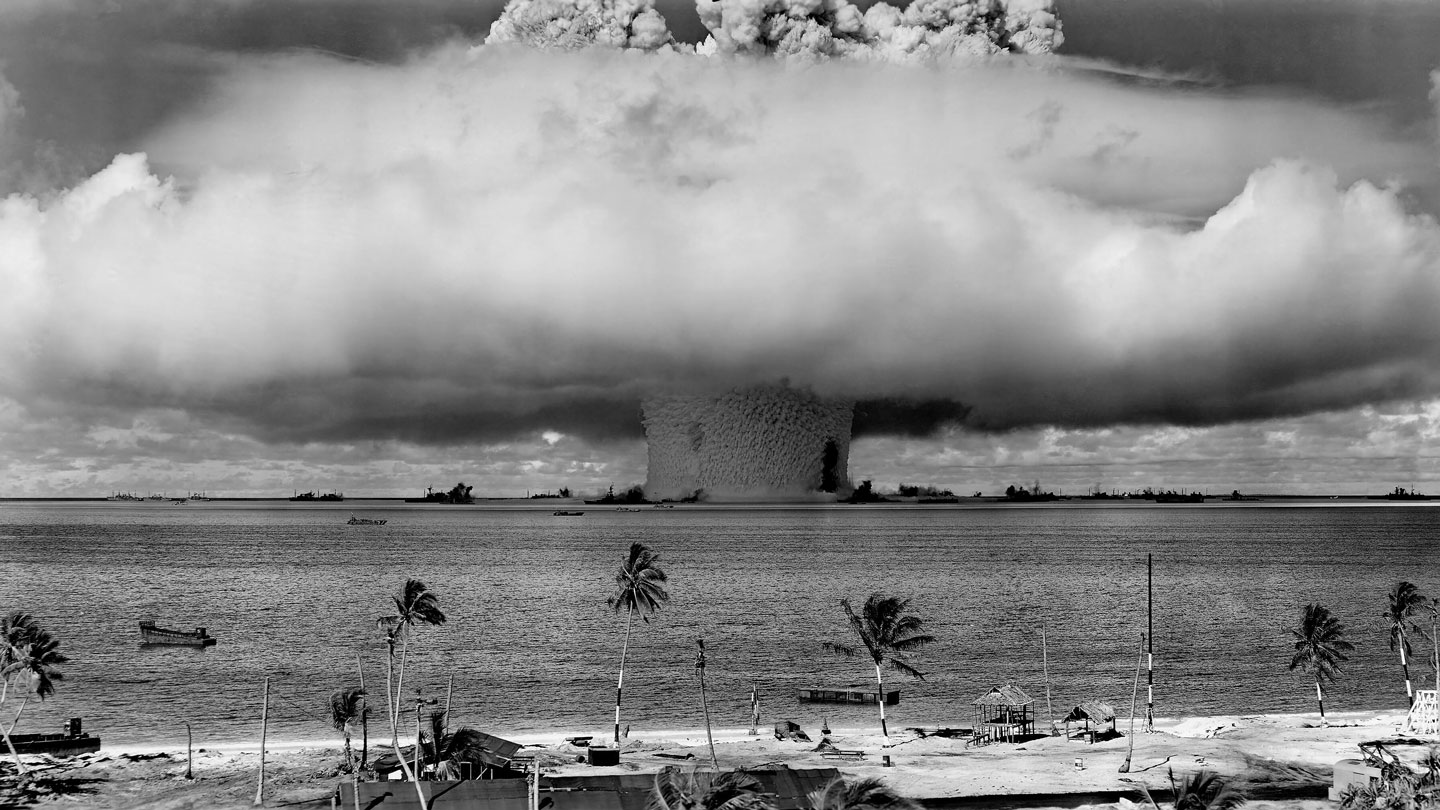
The July 25, 1948, “Baker” nuclear weapon test in the Pacific. The U.S. military conducted the detonation at the Bikini Atoll, part of Micronesia. Water blasted into the air was highly radioactive, contaminating many military ships viewing the test. Ships that could not be decontaminated were later sunk off the coast of San Francisco.
U.S. Department of Defense/Wikimedia Commons/(Public Domain)
This is a human-written story voiced by AI. Got feedback? Take our survey . (See our AI policy here .)
From the 1950s through the 1980s, the United States and Soviet Union built and tested thousands of nuclear weapons. Fallout from those tests has littered the planet with radioactive debris — a legacy that lives on.
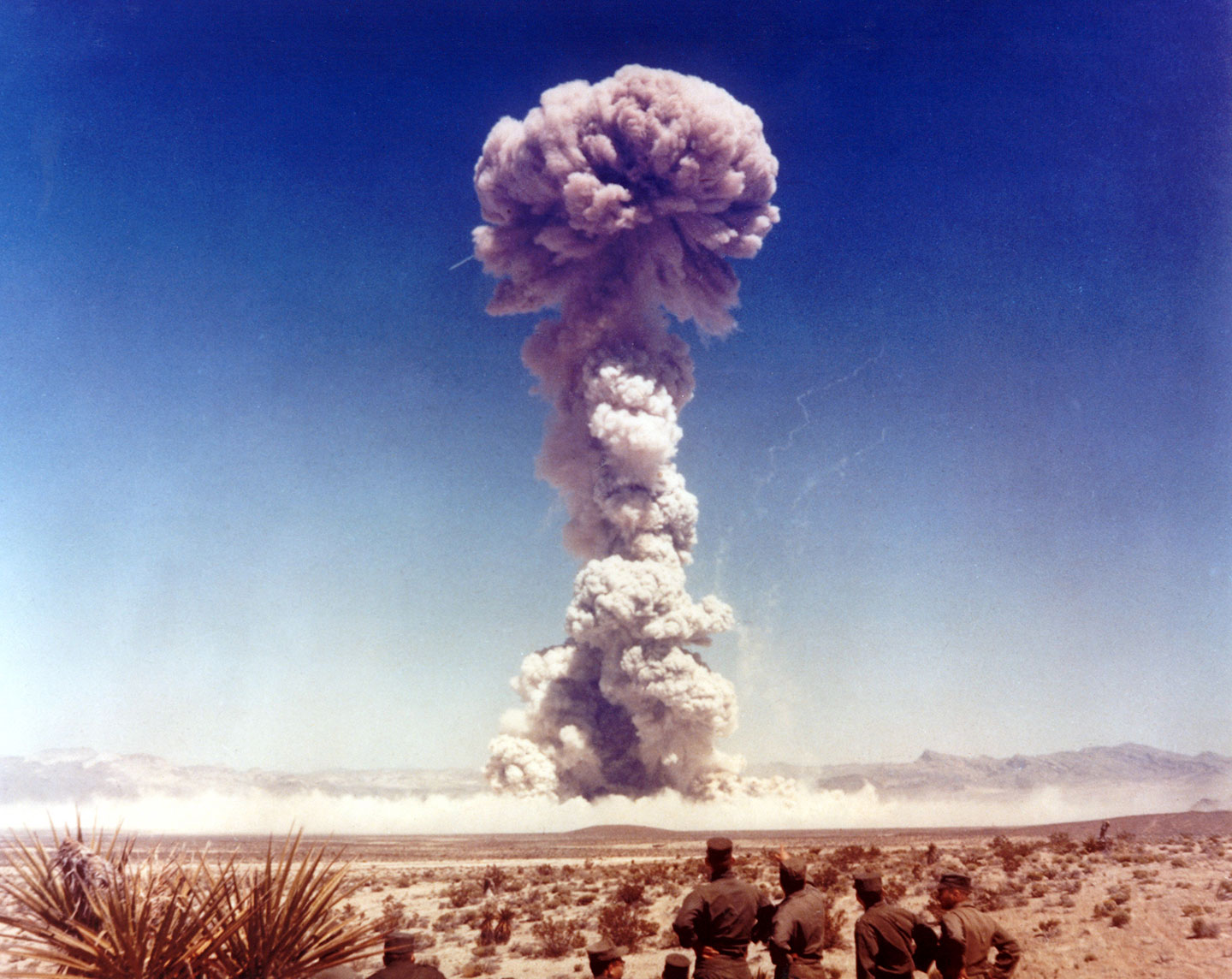
U.S. testing took place in western states and on Pacific islands. The Soviets tested their nukes at sites in what is now Russia and Kazakhstan.
People living near nuclear sites were sometimes exposed to radioactive materials, known as fallout. Winds carried this toxic dust and other stuff downwind of the sites. That’s why U.S. communities in the wind’s path became known as downwinders.
Kate Brown has studied the health of people in downwinders. She’s a historian at the Massachusetts Institute of Technology in Cambridge. Their health records from the test era “show high levels of cancer, thyroid disease and other illnesses,” she says.
Some radioactive materials decay in a few weeks or months. Others can take decades or even centuries. So their threat can linger for a very long time.
One of the main radioactive substances released by nuclear explosions is cesium-137. It has a 30-year half-life. So 50 percent of what’s present will decay every 30 years.
Such long-lived elements are helping mark a major period in human history.
“Many geographers look for signs of the Anthropocene — the era when humans have altered life on Earth,” says Brown. Such signs can include bits of plastic or evidence of fossil-fuel use. But “the most common signal they find is radioactive cesium-137,” she says. A notable layer of that isotope and others (such as plutonium) were left behind in soil and sea sediments. They now serve as a lasting record of that relatively brief era of aboveground nuclear testing.
Editor’s note: This story was updated on February 4, 2026, to correct the locations of Soviet nuclear tests.