
All Stories by Bethany Brookshire
- Ecosystems
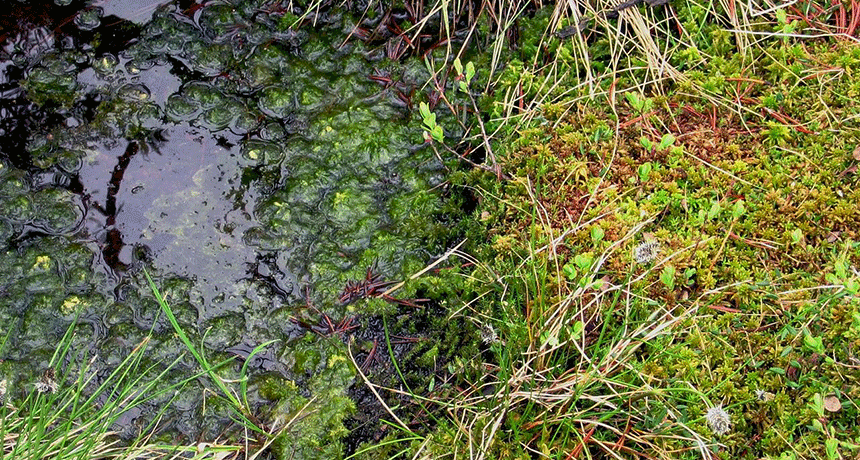
Scientists Say: Bog
Bogs are a type of wetland in which partially decayed plants sink down and form peat.
- Chemistry
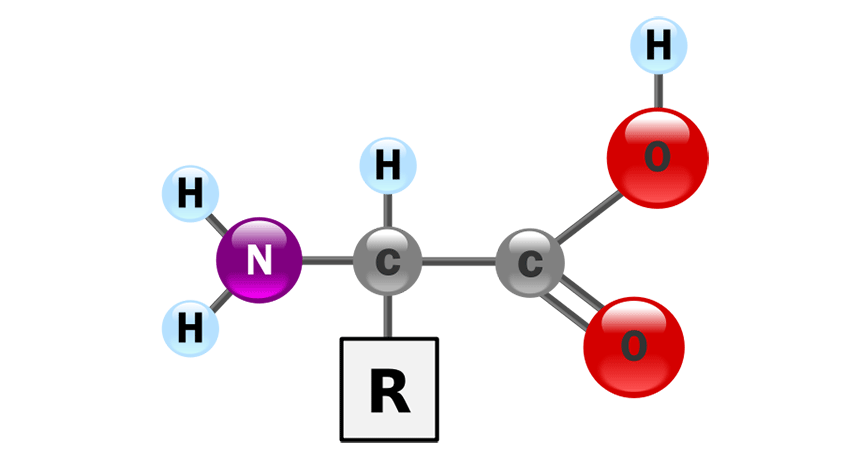
Scientists Say: Amino Acid
Amino acids are small molecules that make up proteins and serve as messengers in our cells.
- Health & Medicine
Scientists Say: Vestigial
This adjective is used to describe something — like a body part or organ — that doesn’t have a function. Often it is smaller or less developed than the functional version in another species.
- Earth
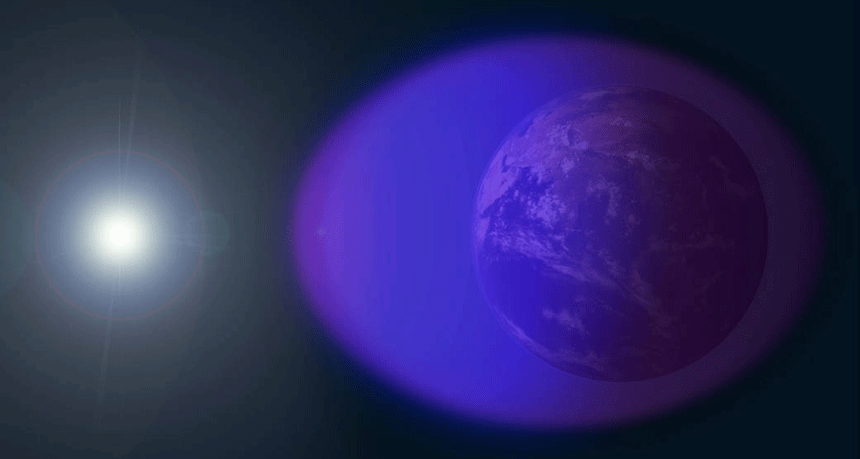
Scientists Say: Ionosphere
The ionosphere is a region of the Earth’s upper atmosphere. The molecules there absorb ultraviolet light and reflect radio waves.
- Chemistry
Knowing what you don’t know can help your grades improve
Students who don’t know much tend to be overconfident. A new study shows how bursting their bubbles can help their grades.
- Animals
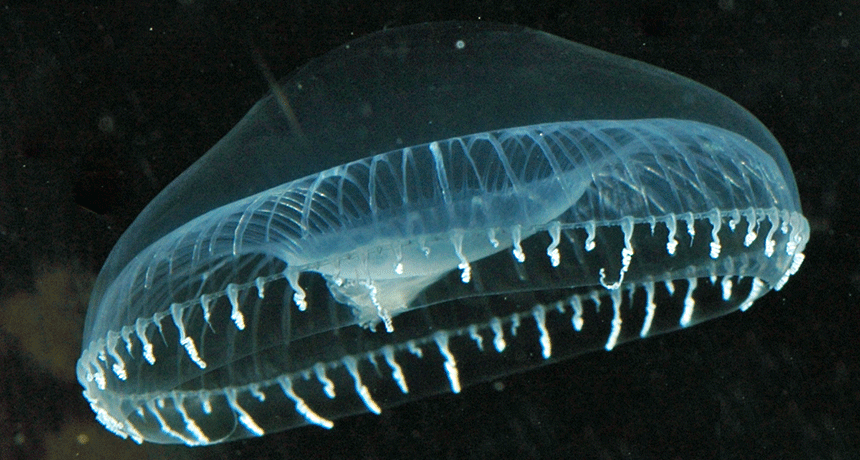
Scientists Say: Luminescence
Light and heat don’t always have to go together! Luminescence is what occurs when a substance emits light without making heat.
- Brain
A cell hookup helps the tongue tell sweet from sour
To keep your sense of taste, new taste cells need to hook up to your brain every few weeks. Now, scientists have figured out how they do it.
- Genetics
Explainer: Why scientists sometimes ‘knock out’ genes
How do we learn what a particular molecule does in the body? To find out, scientists often 'knock out' the gene that makes it. Here’s how.
- Brain
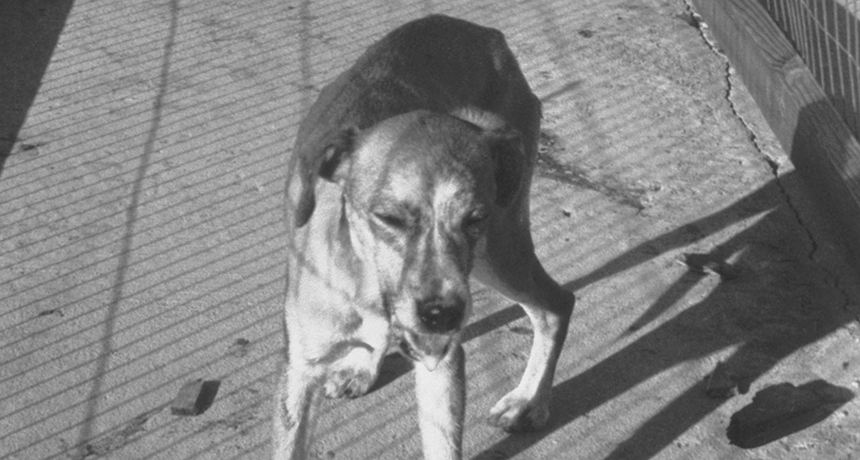
Scientists Say: Rabies
Rabies is a disease caused by the rabies virus. There is a vaccine, but without it, people and animals can die from this disease.
- Animals
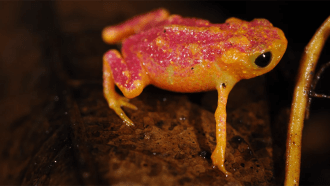
Pumpkin toadlets can’t hear themselves talk
Tiny orange frogs make soft chirping sounds in the forests of Brazil. Their ears, however, cannot hear them, a new study finds.
- Health & Medicine
Explainer: How the ears work
Most people probably think of their ears as the flaps on the sides of their heads. But there’s a lot of machinery inside that lets us hear our favorite tunes.
- Animals
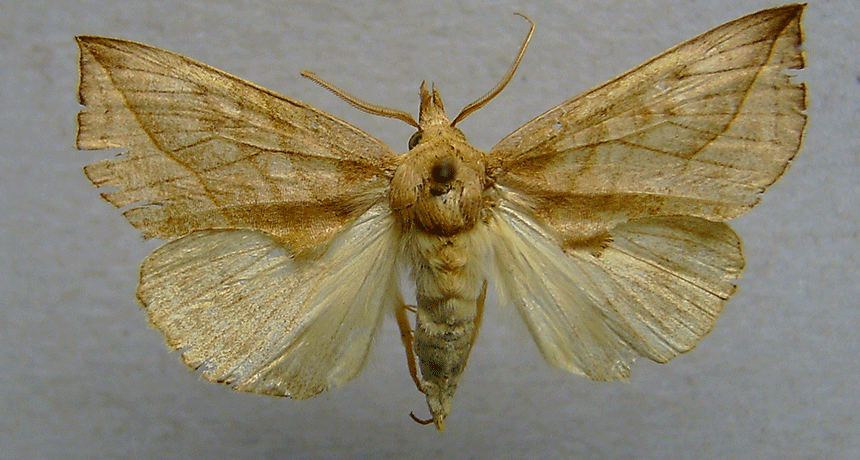
Scientists Say: Vampire
Human vampires are found only in fiction. But vampire bats and moths are the real thing. These animals love the taste of blood, and some can’t live without it.