
All Stories by Bethany Brookshire
- Computing
Scientists Say: Ampere
An ampere is a unit of electric current. It’s a base unit, meaning it’s one on which all electrical calculations are based.
- Health & Medicine
Don’t blame the rats for spreading the Black Death
Popular history says millions of people died of the Black Death in the Middle Ages after being bit by fleas living on rats. But human fleas may be the real culprits, a new study finds.
- Life
Scientists Say: Archaea
Archaea are single-celled organisms that live anywhere from hot springs to your gut. Scientists used to think they were bacteria, but now they know they are their own domain.
- Chemistry
Scientists Say: Salt
Salts in chemistry are compounds made when a positively charged acid is combined with a negatively charged base. Table salt is one example.
- Space
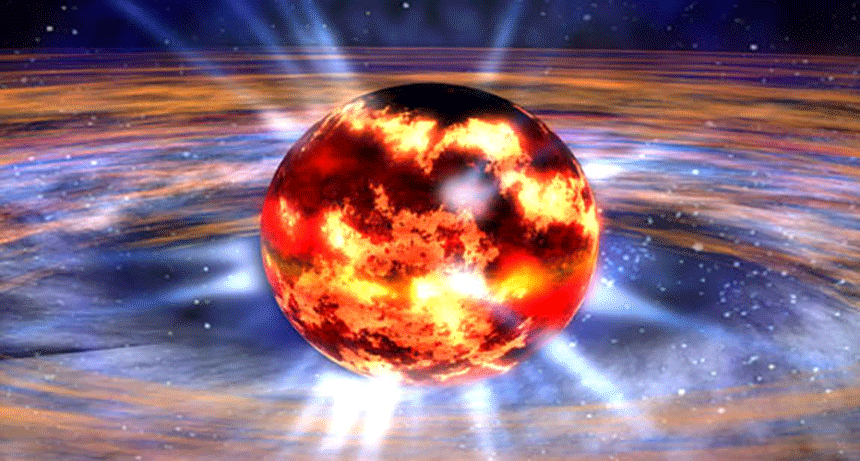
Scientists Say: Neutron star
When large, ancient stars die, they explode. But they don’t disappear. The remnants become incredibly dense neutron stars.
- Health & Medicine
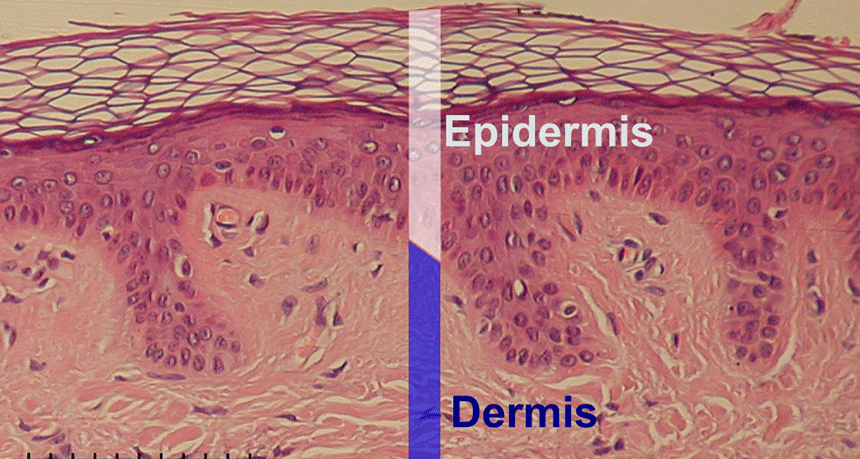
Scientists Say: Epidermis
The epidermis is the outer layer of your skin. It helps protect you from dangerous things in the environment, and helps control how much water evaporates from your body.
- Health & Medicine
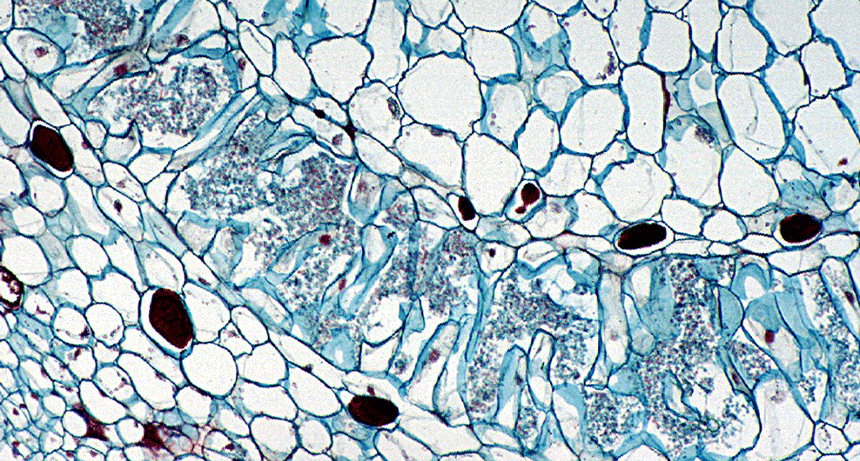
Scientists Say: Microbiome
You’ve got company. Every animal and plant has microscopic organisms living on and in them. These include bacteria, protists, archaea, fungi and viruses.
- Climate
Here’s why scientists have been fertilizing the Arctic
For more than 30 years, scientists have been fertilizing small parcels of Arctic tundra. Here’s what happens when you push an ecosystem to the brink.
- Agriculture
Explainer: The fertilizing power of N and P
Two elements — nitrogen and phosphorus — help plants grow. When the soil doesn’t have them, farmers might add them in the form of fertilizer.
- Brain
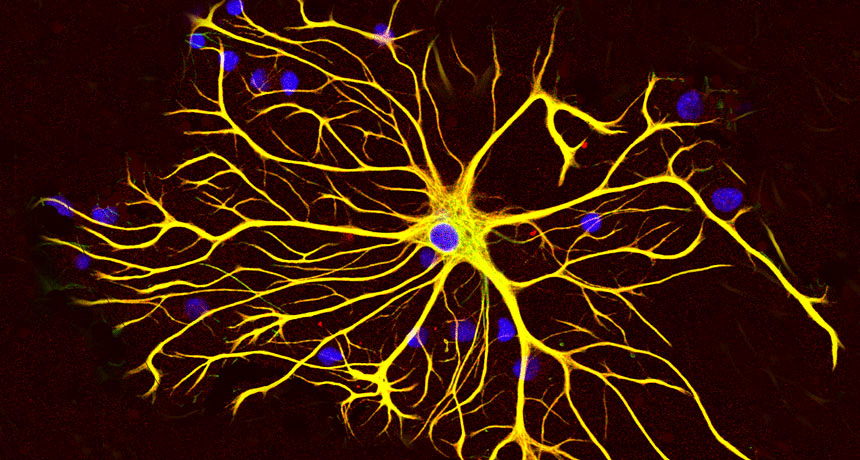
Ow! These cells might help brains remember pain and fear
The brain may learn from traumatic experiences with the help of special cells, a new study finds. Scientists used to think these cells, called astrocytes, were just there to support others.
-
Here’s the science you loved most this year
From dinosaur deaths to screen time, here’s the science stories you were reading this year.
- Physics
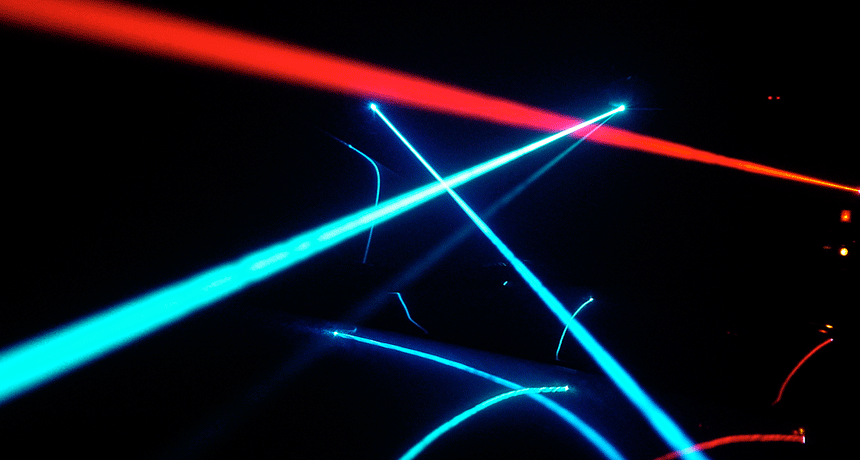
Scientists Say: Laser
A laser is a device that emits a strong, narrow beam of light. “Laser” is actually an acronym, and stands for “light amplification by stimulated emission of radiation.”