
All Stories by Bethany Brookshire
- Brain
Explainer: What are opioids?
Opioid drugs can kill pain, but they can also kill people. Here’s how.
- Brain
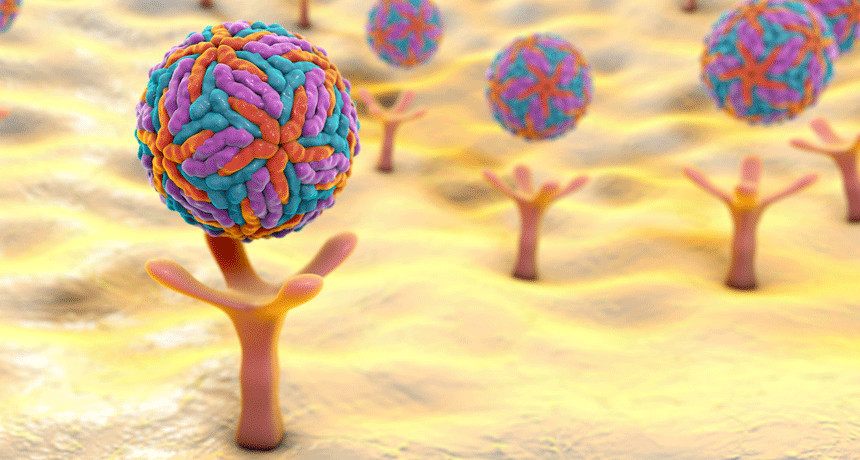
Scientists Say: Receptor
This molecule is a chemical messenger’s docking station. A receptor serves as a lock for cell activity.
- Earth
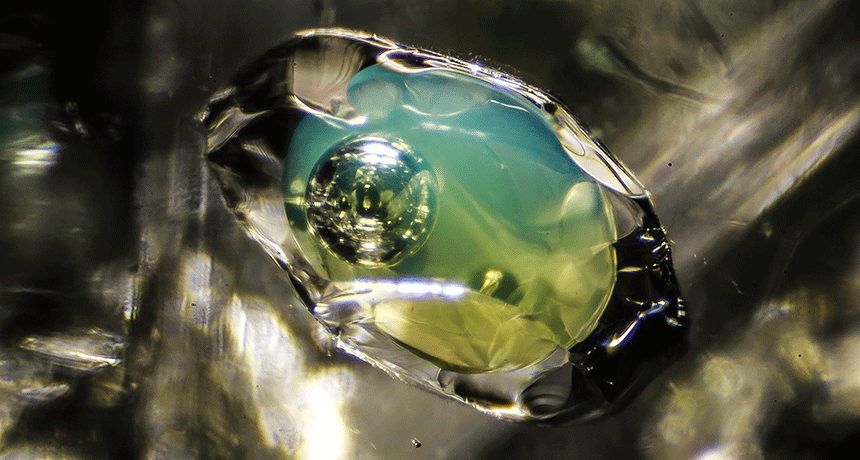
Scientists Say: Inclusion
As rocks form slowly, they can trap things in their timeless clutches. A material trapped inside a mineral is called an inclusion.
- Health & Medicine
Teens win big prizes for research on potato killer, vaping and a rare disease
The Regeneron Science Talent Search awarded more than $2 million in prizes this year. This year’s top winners tackled plant disease, vaping and more.
-
How to build your dragon — with science
Dragons are creatures of fantasy, but that doesn’t mean you can’t use science to design one.
-
These questions inspired science champs. How do you match up?
Fancy science fair projects sometimes seem like they’re only for super-geniuses. But that’s not true! Many rely on what everyone learns in school.
- Animals
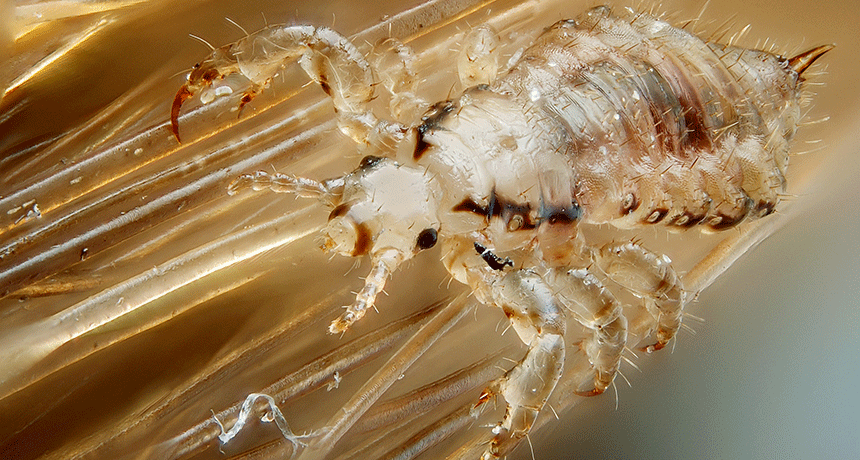
Scientists Say: Ectoparasite
Many people think of parasites as organisms that live inside their hosts. But some of them can be found on the outside instead.
- Health & Medicine
Scientists Say: CT scan
Short for computerized tomography, this technique lets scientists and doctors see insides in detail.
- Animals
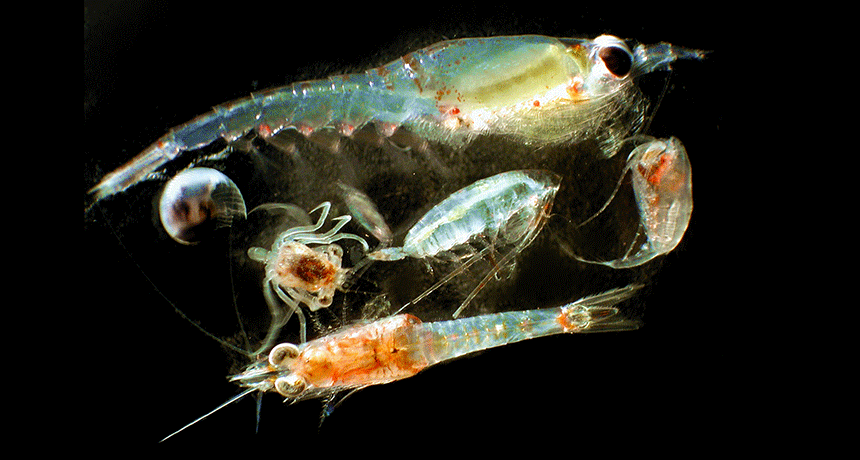
Scientists Say: Zooplankton
These plankton are tiny, but don’t let that fool you. They are predators, too.
- Health & Medicine
Why many Olympic athletes have early birthdays
When kids start out in sports, coaches tend to pick the biggest as the best. Here’s what scientists are trying to do about it.
- Health & Medicine
Scientists Say: Triclosan
This chemical is known for its bacteria-killing skills. But its use can also promote the development of dangerous, antibiotic-resistant bacteria.
- Brain
Unlike adults, teens don’t perform better when the stakes are high
Adults tend to do better on tasks that have bigger rewards. Not teens. This difference might have to do with the rewiring of the brain during adolescence, new data suggest.