Questions for ‘A protein building block may help fight viruses and cancer’ 
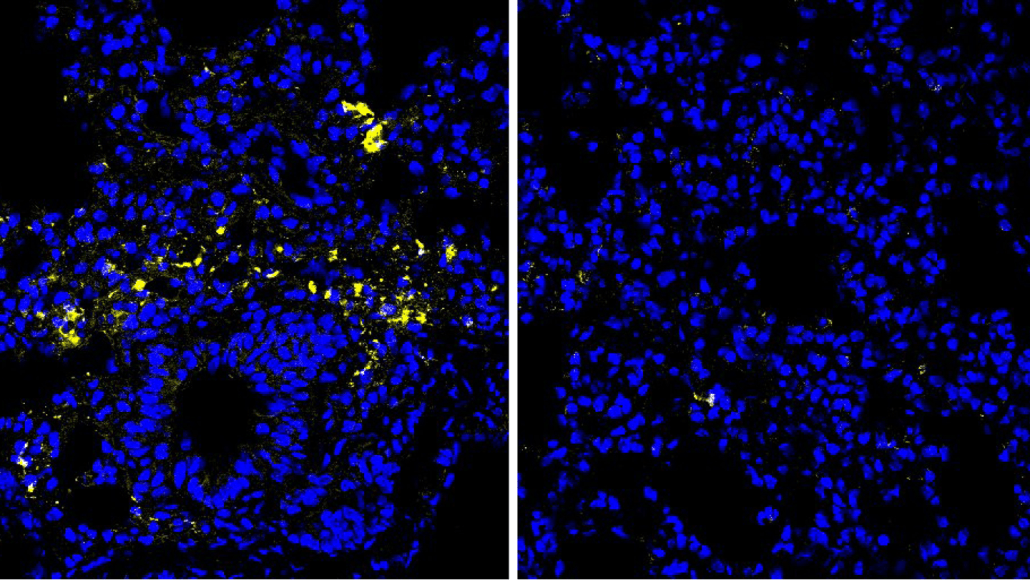
Microscopy images of lung tissue showing blue cell nuclei and yellow coronavirus in mice fed different amounts of arginine

After SARS-CoV-2 infection, mice that had been fed a low-arginine diet had more virus (yellow) in their lungs (cell nuclei shown in blue) compared with those fed a high-arginine diet (right).

Q. Wu et al/Cell 2026

To accompany A protein building block may help fight viruses and cancer’

SCIENCE

Before Reading:

  1. Scientists distinguish between two types of evidence: correlational evidence and causal evidence. Correlational evidence means that two variables tend to occur together. You can observe a correlation without doing a study that changes the variables. Instead, it can simply determine that two variables seem to move together. Imagine you want to conduct a study to determine if students who eat breakfast in the morning tend to perform better on tests. Give an example of how you might acquire correlational evidence to address this question.
  2. Causal evidence differs from correlational evidence. Causal evidence doesn’t just look at whether two factors occur together. It also works to prove that one factor causes changes in the other. This is known as cause and effect. Developing a study to test this usually requires changing the variables in some way. The experiment must show that changing one variable leads to changes in the other. Give an example of how you might develop a study to test whether eating breakfast tends to change student performance on exams.

During Reading:

  1. Research by Sohail Tavazoie’s team suggests a high-arginine diet may provide health benefits in what species? Give one specific example of a potential benefit of a high-arginine diet in this species.
  2. Does a high-arginine diet have the same health benefits in people? Explain.
  3. What is the relationship between amino acids and proteins?
  4. What makes some amino acids “essential”? How many essential amino acids are there?
  5. Point out one early observation made by Tavazoie’s group that led it to suspect arginine levels in the body might be linked to disease or disease prevention.
  6. Describe the role of MHC class1 proteins. Where on a cell would you find them?
  7. Why is arginine important for creating MHC class 1 proteins?

After Reading:

  1. Give one example of correlational evidence from this story.
  2. Give one example of evidence from this story that shows cause and effect. Explain how this evidence demonstrates one factor caused changes in the other factor.