Questions for ‘Hypnosis isn’t magic — it’s your brain at work’
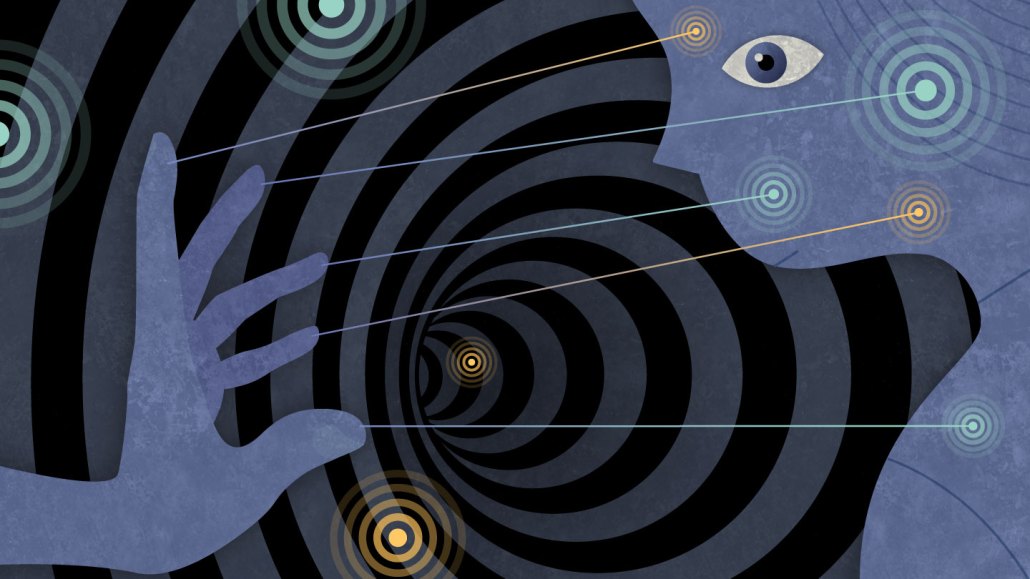
an illustration shows a hand with puppet strings extending from its fingers toward the head of a mesmerized person

In fiction, hypnosis is often portrayed as a form of mind control, but it’s not. “Hypnosis is a natural capacity. It has nothing to do with mind control, witchcraft, any type of magic,” says hypnosis researcher Gary Elkins.

Steve McCracken

To accompany Hypnosis isn’t magic — it’s your brain at work

SCIENCE

Before Reading

  1. To the best of your understanding, what is hypnosis? Have you ever been hypnotized? If yes, briefly describe the experience. If no, describe what you imagine the experience would be like. If you had the opportunity to be hypnotized by a professional, would you take it? Explain why or why not.
  2. Consider the following statement: Hypnosis is fake. To what extent do you agree with this statement?  Give one reason for your opinion.

During Reading

  1. Tina Hesman Saey recounts her middle school experience with hypnosis. To what extent did she feel that she was out-of-control of her behavior? Did Saey feel that she was capable of refusing commands at all?
  2. Write down a scientific definition for hypnosis in your own words.
  3. What is the goal of the induction stage of hypnosis?
  4. What does Devin Terhune mean by saying that a person’s “beliefs and expectations” affect how readily they can be hypnotized?
  5. In the context of this story, what is absorption?
  6. Describe how researchers have tested the extent to which people could fake being hypnotized.
  7. What finding described in the story suggests that responses to hypnotic suggestions are different from imagined experiences?
  8. Besides hypnosis, what is another psychological state associated with more theta-wave activity in the brain?
  9. Explain one chemistry-related finding that supported the conclusion that hypnosis caused an altered state of mind.
  10. According to a 2019 study investigating hypnosis-related treatment for anxiety, how might the benefits of hypnotic therapy be amplified?

After Reading

  1. List two characteristics of “hypnotizable” people. To what extent do you think that you would be hypnotizable, based on these characteristics? Explain your answer. (Be sure to relate your answer to these characteristics, even if you already know the extent to which you are hypnotizable.)
  2. After reading this story, would you be more, less or equally willing to try hypnosis than you would have been before reading? Explain your answer. Refer to at least one of the studies described in this story to support your answer.