Scientists Say: Haboob

Storms in the desert can churn up these towering, wall-like clouds of sand and dust
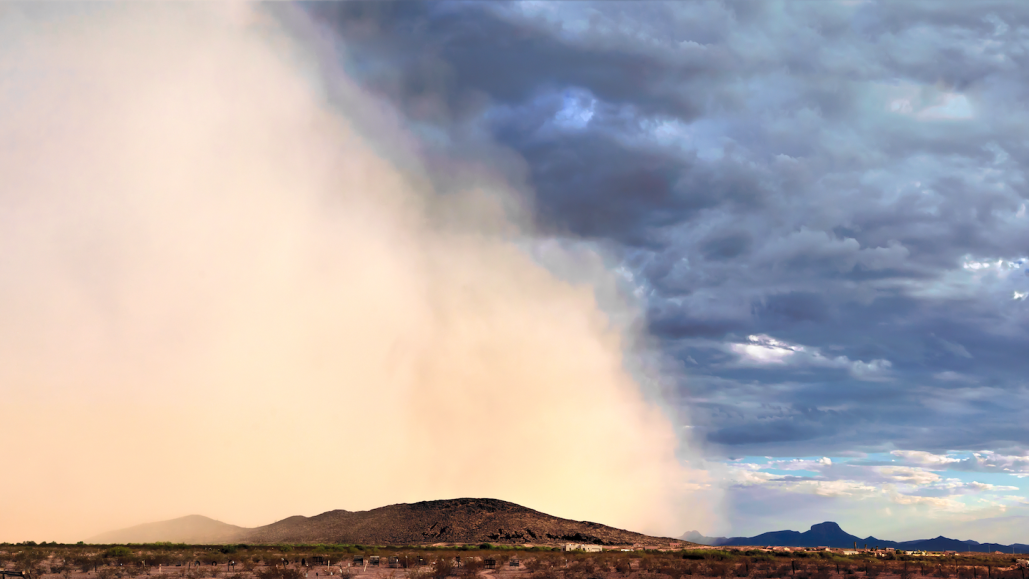
A massive dust storm — called a haboob — rolls across the Arizona desert

A massive dust storm — called a haboob — rolls across the Arizona desert.

DeepDesertPhoto/Getty Images

Haboob (noun, “huh-BOOB”)

A haboob is a kind of dust storm.

When a thunderstorm occurs in the desert, a haboob might form. These storms look like huge, sandy walls as they approach. That wall-like appearance is one thing that sets a haboob apart from other types of sandstorms. (A sandstorm is a broad term for windy storms that blow around sand and dust.)

Haboobs are common in dry places, such as the U.S. Southwest and the Sahara. They move fast and can extend for kilometers (miles). Their wind speeds vary. But they can reach speeds of more than 95 kilometers (60 miles) per hour! These storms may last only a few minutes. Or they may persist for hours.

Another thing that sets haboobs apart from other sandstorms is the way they form. Haboobs usually arise from thunderstorm downdrafts. A downdraft is when a thunderstorm quickly pushes air toward the ground in the area around the storm. This downward rush of air spreads out when it hits the ground, creating strong winds. In dry, dusty regions, those winds can pick up dust and sand. This creates a huge, moving cloud of sand and dust that can reach thousands of meters (feet) into the air.

When a haboob sweeps through, it can kick up so much sand and dust that it’s hard to see through the grit. That makes driving very dangerous. Drivers are advised to pull over and turn off their lights to avoid confusing others on the road in the poor visibility conditions. Winds can also blow sand into a person’s mouth, making it hard to breathe. As a haboob approaches, the safest thing to do is get inside and close all windows and doors.

In a sentence

While Earth has haboobs and other sandstorms, Mars is famous for its dust storms.

Check out the full list of Scientists Say.

Katie Grace Carpenter is a science writer and curriculum developer, with degrees in biology and biogeochemistry. She also writes science fiction and creates science videos. Katie lives in the U.S. but also spends time in Sweden with her husband, who’s a chef.