Questions for ‘Seeing sick faces revs up our immunity, new data show’
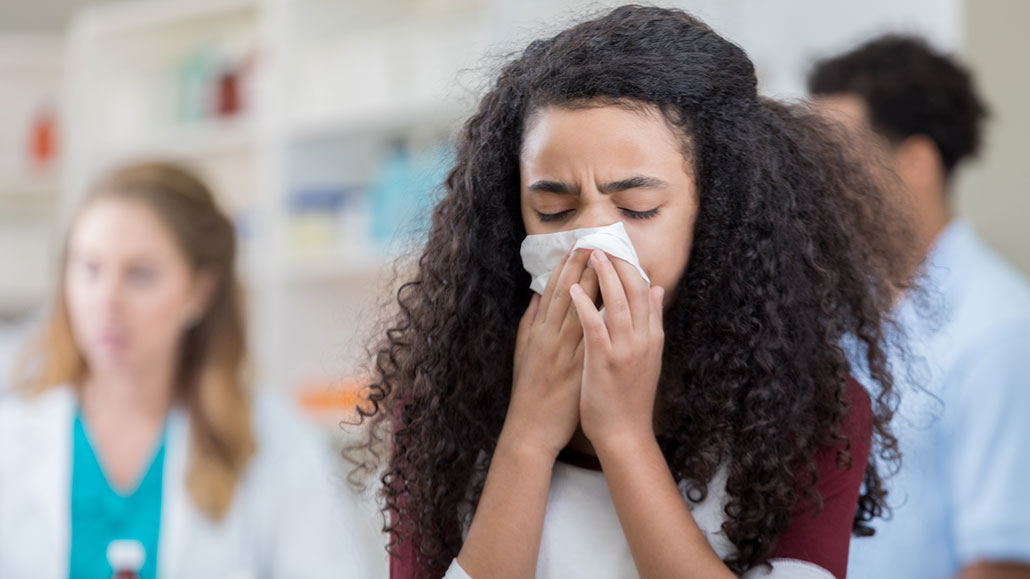
a girl with long curly dark hair blows her nose into a tissue. Medical personnel are visible in the background

Just looking at this picture of a clearly ill person could be activating your immune system.

SDI Productions/E+/Getty Images Plus

To accompany Seeing sick faces revs up our immunity, new data show

SCIENCE

Before Reading:

  1. Imagine there’s an illness going around and you want to reduce your risk of getting sick. What are three changes in behavior you might make?
  2. Describe one type of music that you enjoy. How does this music make you feel? Imagine you are a scientist who wants to study how this music generally affects our mood. Briefly describe how you might set up such an experiment. What would count as data in this experiment? Describe one challenge in this type of study.

During Reading:

  1. Explain the role of virtual reality in this study.
  2. What types of brain activity were affected by seeing sick-looking faces?
  3. How many people participated in this study? What characteristic did they have in common?
  4. How did researchers interpret that a participant was on high alert?
  5. What does the brain’s salience network do?
  6. Researchers discovered that two parts of the brain responded to avatars of sick faces: the salience network and a part of the brain responsible for monitoring personal space. What technology allowed researchers to detect these responses?
  7. What do innate lymphoid cells do?
  8. Why were researchers surprised to see increased activation of innate lymphoid cells?
  9. Describe how researchers hope to one day apply these findings to future vaccine technology.

After Reading:

  1. An independent variable is some feature of a study that researchers can change to test whether it alters any effects. In this study, what is the independent variable? Give an example of how researchers changed this variable in one of their experiments.
  2. What questions do researchers still need to answer regarding these findings? Give one example of an unanswered question mentioned in this story. Then come up with your own question about the results.