Questions for ‘Some germs ride a superhighway at the edge of space’ 
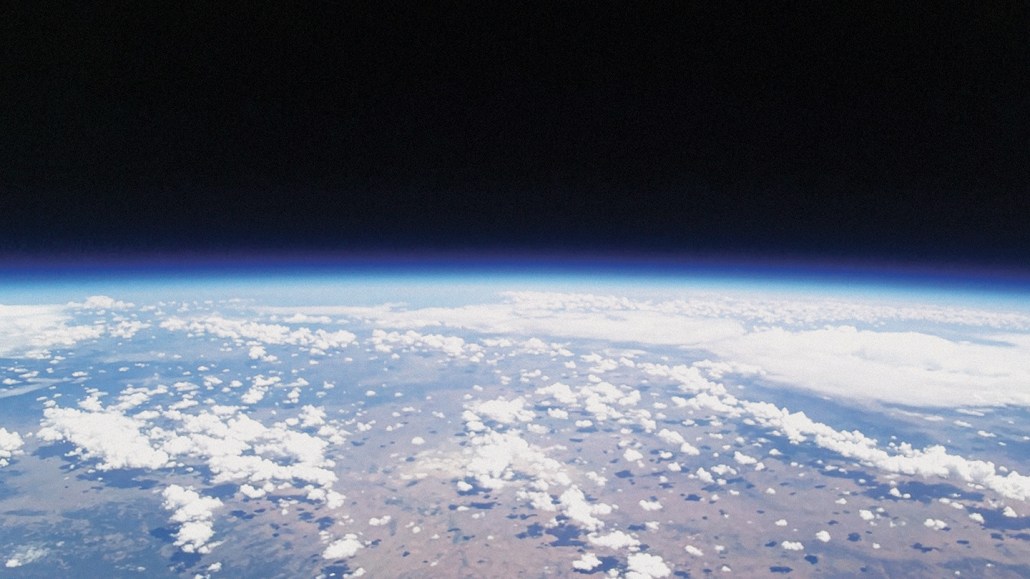
View of part of earth from outer space showing the stratosphere, which is a gray zone between Earth and space.

Seen from a scientific balloon 30 kilometers above New Mexico, the stratosphere is a gray zone between Earth and space. The air pressure at this height is one percent that at sea level and the ultraviolet radiation is intense. But scientists are learning that some microbes survive here, at least temporarily.

Elvis Andrés Ayala/Trinidad System

To accompany ‘Some germs ride a superhighway at the edge of space’  

SCIENCE

Before Reading:

  1. What is the stratosphere? Describe what and where this is, to the best of your knowledge. To what extent do you associate the stratosphere with living things? Explain your answer.
  2. Being “skeptical” means being unwilling to believe something without clear evidence. A skeptical person tends to think deeply about the available evidence, question it and consider whether data may be flawed and if they support a given conclusion. To what extent do you believe it is important for scientists to be skeptical of research findings? Briefly explain your answer.

During Reading:

  1. About how high in kilometers must you ascend to reach the stratosphere? What is this distance in miles?
  2. Despite the stratosphere’s low temperatures, the story explains that without protective gear, a person’s “blood would boil.” What causes this liquid to boil in the stratosphere?
  3. Give one example of a location besides the stratosphere where you might find the microbes described in this story.
  4. List three types of data, or measurements, collected by researchers in the 1935 helium balloon project in South Dakota.
  5. What altitude did the South Dakota helium balloon reach?
  6. Researchers dropped a sampling device from the South Dakota helium balloon. What was this device designed to collect?
  7. Where is the mesosphere relative to the stratosphere?
  8. How did gene barcoding technology inspire Peter Griffin to theorize one plausible way the discovered microbes might have ended up so high in the atmosphere? Describe his theory. Then explain the role of genetic barcoding technology in the development of this theory.
  9. On the August 21, 2013, flight of the helium research balloon, what was the highest altitude at which samples were collected?
  10. How did researchers explain the vibrant, rainbow-like colors of microbial colonies grown from high-altitude samples?
  11. List three subtypes of ultraviolet light. Which ones reach Earth’s surface?
  12. About how many species of bacteria have researchers been able to grow from the stratosphere?

After Reading:

  1. Why was Brent Christner skeptical of the Soviet scientists’ sampling techniques? Briefly explain his concerns. Search through this story for another example of a skeptical scientist taking extra steps to ensure their conclusions are valid and not based upon flawed data. Finally, refer back to your answer to Question 2 in Before Reading. To what extent would you change your answer? Briefly explain why reading this story either (a) reinforced your original opinion or (b) inspired a change in your opinion.
  2. What was L6-1, and why was it of interest to plant pathologists? How did the collaboration between the original research team and the plant pathologist team lead to the development of a new theory? Do you think this new theory is very important, somewhat important or unimportant? Briefly explain your answer.
  3. What did you find most interesting about this story? Come up with one question inspired by reading this story. This should not be a question that is answered in the story. Instead, it should be one you hope future studies will answer.