Questions for ‘The Vera Rubin Observatory is set to revolutionize astronomy’ 
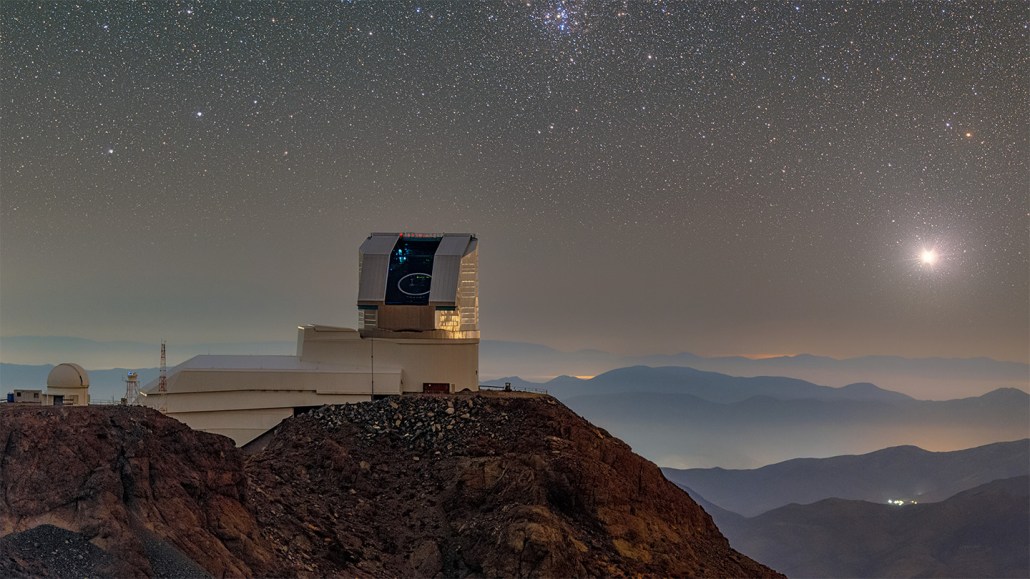
A photo of the Vera Rubin Observatory

The Vera C. Rubin Observatory perches on a flat mountaintop high in the Chilean Andes. The facility was named to honor the work of a trailblazing U.S. astronomer.

RubinObs/NOIRLab/SLAC/NSF/DOE/ AURA/P. Horálek/Institute of Physics in Opava

To accompany The Vera Rubin Observatory is set to revolutionize astronomy

SCIENCE

Before Reading:

  1. Describe what telescopes are used for. Telescopes usually involve mirrors. How do mirrors change the path of light? What role might mirrors play in the function of a telescope? (If you do not know, speculate based on your understanding of how light interacts with mirrors.)
  2. Do you think telescopes are very important, moderately important or unimportant to the field of astronomy? Explain why. What types of questions do telescopes help us answer? Give two specific examples.

During Reading:

  1. Approximately how many images do experts predict the Vera C. Rubin Observatory will capture over the next 10 years?
  2. Describe the conversion carried out by charge coupled devices, or CCDs.
  3. Why do scientists think dark matter exists (despite not being able to see it)?
  4. What is the primary role of the telescope’s third mirror?
  5. What disappointment did the writer experience when they arrived at the telescope for a tour?
  6. Why is it crucial to keep the telescope’s camera cold?
  7. Give one example of an aspect of the telescope’s design that helps keep things cold.
  8. What game did the team play while waiting for telescope testing to conclude?
  9. What environmental change did researchers suspect might be responsible for the telescope’s initial malfunctioning?
  10. Describe the telescope’s June milestone.

After Reading:

  1. Consider how scientists worked together to troubleshoot the “mystery of the camera glitch” as a series of events. What first indicated something was wrong? On what aspect of the telescope’s design did researchers focus their investigation? The telescope returned to proper function all by itself. Why did Kevin Fanning see this as a clue? Give one example of a new question presented by this clue. What experiment did Fanning propose to help solve the mystery? What was the outcome of this experiment? What did this outcome suggest to Fanning about the cause of the camera glitch?
  2. What was a second possible outcome of this experiment that Fanning worried could happen — but didn’t? What would this outcome have suggested to Fanning?
  3. The data produced by this observatory is accessible to the public. Explore the Zooniverse platform, which allows volunteers to contribute to various research projects. Pick one of these projects that you could imagine yourself contributing to. What appeals to you about this project? Read up on this project and describe what actions you could take to help contribute to this project.