Biological Evolution: Unity and Diversity
- Humans
Wiggling ears may have once helped boost human hearing
Ancient ear muscles may not help us hear today. They can, however, offer one readout of how hard someone is trying to listen.
- Animals
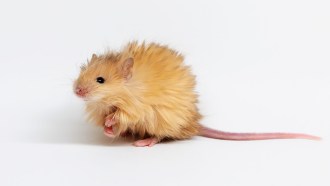
Can this ‘woolly mouse’ help bring back extinct mammoths?
Scientists created mice with woolly mammoth–like traits. But that doesn’t mean we’re close to bringing back woolly mammoths.
- Animals
Dire wolves or not, these pups could help counter extinction
Some question if these are just gene-tweaked gray wolves. Still, the tech behind the new "dire wolves" might help some living at-risk species avoid extinction.
- Animals
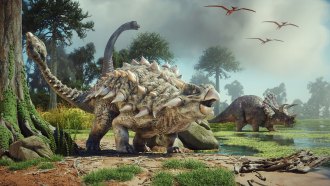
What is a dinosaur?
Scientists have named more than 1,000 species of nonavian dinosaurs. Their legacy lives on in the 11,000-plus bird species alive today.
- Animals
Dinosaurs are still alive. Today, we call them birds
Birds don’t look like the scaly giants of Jurassic World. But fossils are revealing how these modern-day dinosaurs descended from ancient reptiles.
- Fossils
This paleontologist solved a nearly 50-year-old dino mystery
ReBecca Hunt-Foster described what is now the state dinosaur of Arkansas
- Earth
Scientists Say: Lava bomb
An explosive volcanic eruption can shoot a blob of lava into the air. As that blob travels, it cools, creating a dangerous lava bomb.
- Archaeology
Let’s learn about radiocarbon dating
Through the power of radioactivity, carbon dating can reveal the age of many fossils and artifacts.
- Fossils
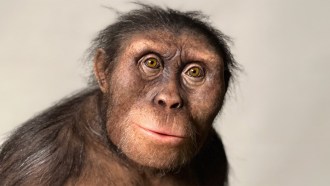
50 years on, Lucy offers lessons for achieving fossil fame
Since the discovery of Lucy's skeleton in 1974, a catchy name and ongoing scientific debates have kept this human ancestor in the spotlight.
- Fossils
Analyze This: How big was the biggest T. rex?
Only around 80 fossil Tyrannosaurus rex skeletons have been found. They probably don’t include the biggest T. rex that ever lived.
-
- Archaeology
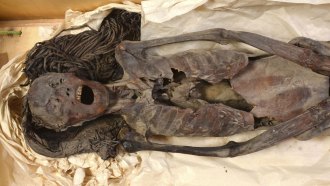
An Egyptian mummy’s silent ‘scream’ hints at her violent death
A rare muscle stiffening known as a cadaveric spasm might explain the mummy’s open-mouthed expression.