Biological Evolution: Unity and Diversity
- Animals
Elusive worm-lizards sport weird, spooky skulls
CT scans of these mysterious creatures turned up bizarre internal features. They could offer clues about amphisbaenians’ largely unknown behavior.
- Genetics
Scientists Say: Genetic Engineering
Genetic engineering involves adding, changing or removing certain pieces of DNA from a living thing to give it desired traits.
- Animals
Among mammals, males aren’t usually bigger than females
In a study of more than 400 mammal species, less than half have males that are heavier than females.
- Animals
Let’s learn about animals’ bizarre sleep schedules
From reindeer that snooze while chewing to penguins that take thousands of naps each day, the animal kingdom has some truly weird sleep patterns.
- Animals
Scientists Say: Megalodon
The extinct megalodon (Otodus megalodon) was the largest shark to ever prowl the oceans.
- Tech
Artificial intelligence helped design a new type of battery
Supercomputing and AI cut the early discovery steps from decades to just 80 hours. The process led to a new solid electrolyte.
- Animals
This frog is the world’s smallest known vertebrate
Neither fleas nor toads, Brazilian flea toads are almost flea-sized. These mini frogs are small enough to fit on a pinkie fingernail.
- Animals
Scientists still aren’t always sure why dogs wag their tails
Your dog is wagging its tail. That must mean it’s happy, right? Maybe not. Scientists know less about what’s behind this behavior than you might think.
- Life
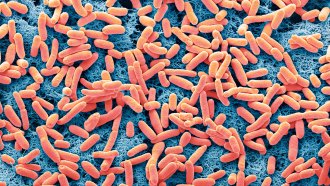
Bacterial fossils exhibit earliest hints of photosynthesis
Microscopic fossils from Australia suggest that some bacteria evolved structures for oxygen-producing photosynthesis by 1.78 billion years ago.
- Animals
A newfound type of hedgehog is small, dark and adorable
At first, this hedgehog was mistaken for a lookalike relative. But its teeth, skull shape and DNA confirmed it as a new species.
- Animals
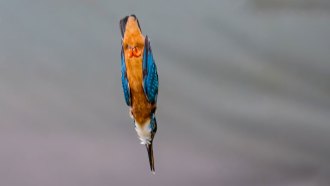
Here’s how kingfishers avoid concussions during high-speed dives
Understanding the genetic adaptations that protect the birds’ brains as they dive might one day offer clues to protecting human brains.
- Animals
Horned lizards and snakes tend to ambush their prey
The reptiles’ horns could help or hinder during foraging, depending on how they hunt. This might be why horns evolved in some species and not others.