Biological Evolution: Unity and Diversity
- Fossils
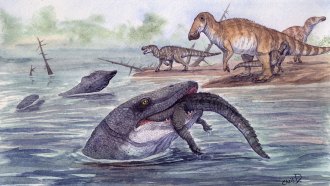
Prehistoric ‘sea’ monster also lurked in rivers, data show
A 66-million-year-old fossil tooth turned up alongside remains of a T. rex and ancient crocodile. This shows some mosasaurs roamed into rivers.
- Archaeology
Neandertals used fire-making tools 400,000 years ago
Flint, iron pyrite and fire residues found at an ancient site in England offer the earliest clear evidence of people lighting fires.
- Fossils
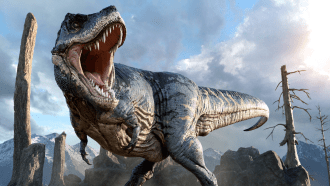
Let’s learn about Tyrannosaurus rex
These fearsome predators truly were enormous — with the bone-crushing bite power to match.
- Animals
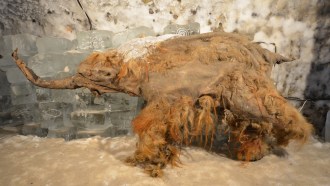
RNA from mummified woolly mammoth is the oldest ever recovered
Genetic details from the animal, named Yuka, give a snapshot into its last moments alive. The mammoth had been preserved in permafrost for 40,000 years.
- Environment
Nuclear weapons tests many decades ago have left a radioactive legacy
Decades of aboveground nuclear weapons tests, starting in the 1950s, lightly littered the planet with toxic fallout, which appears to have sickened some people.
- Fossils
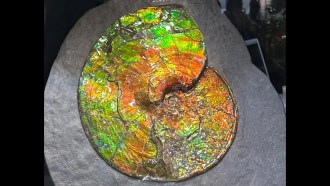
Here’s why ammolite gems have a rainbow shimmer
The fossils’ fabulous colors arise from delicate assemblies of crystal plates.
- Life
Scientists Say: Taxonomy
This field of study does more than just organize living things. It also reflects the history of life's evolution.
- Fossils
Newfound fossil is not a teen T. rex but a whole new species
Now known as Nanotyrannus, this mini dino could have roamed the late Cretaceous alongside T. rex.
- Humans
Smoke-dried mummies found in Southeast Asia are the oldest known
The corpses had been slow-dried over fires 12,000 years ago — millennia before Egyptians began mummifying their dead.
- Fossils
Baby pterosaurs likely died in violent Jurassic storms
Two hatchlings with broken arm bones point to ancient storms as the cause of mass casualties now preserved in Germany’s Solnhofen Limestone.
- Fossils
Fossil teeth reveal some dinos were fussy eaters
The type of calcium in those teeth points to what herbivores preferred to eat — whether soft leaves, rough twigs or something else.
- Archaeology
Knotted strands of 500-year-old hair tell a surprising story
Used in a device called a khipu, the hair reveals the owner’s simple diet. Those data now suggest that in Incan society, even some commoners kept records.