Earth and Human Activity
- Animals
Cougars pushed out by wildfires took more risks around roads
After an intense burn in 2018 in California, big cats in the region crossed roads more often. That put them at higher risk of becoming roadkill.
- Animals
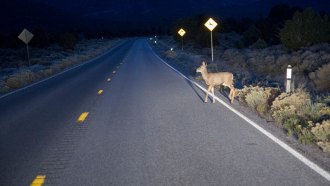
Cars hit more deer in the week after daylight saving time ends
In the days right after most Americans turn back the clock, vehicle crashes with deer increase by 16 percent, a new study shows.
- Environment
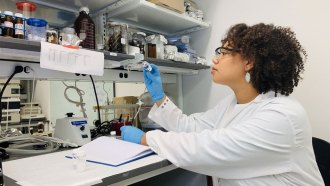
This chemist uses online videos to teach about the perils of microplastics
Imari Walker says her journey as a scientist and science communicator lets her talk about and advocate for her passion.
- Environment
Bacterial ‘living wires’ could help protect the seas and climate
Long, thin bacteria that conduct electricity may be able to help clean up oil spills and reduce emissions of methane, a powerful greenhouse gas.
- Humans
Eight billion people now live on Earth — a new record
The global population hit this milestone on November 15, according to an estimate from the United Nations.
- Agriculture
Let’s learn about eating bugs
Eating more insects, rather than pork, beef or other kinds of meat, may be better for the planet.
- Earth
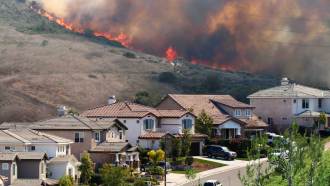
Analyze This: Wildfires are pumping more pollution into U.S. skies
Researchers wanted to study the health effects of wildfire smoke. But they realized they didn’t know where it was and how much exposure people had.
- Environment
‘Forever’ chemicals show up in students’ school uniforms
Researchers found PFAS “forever chemicals” in kids’ school uniforms and other clothing. Studies have linked these compounds to health risks.
- Health & Medicine
Should we use a genetic weapon against mosquitoes carrying malaria?
One gene drive to eliminate malaria seems to work in the lab. Now it’s time to ask local people if they want it released in the wild.
- Materials Science
Let’s learn about microplastics
Microplastics have turned up everywhere from the highest mountains to the bottom of the ocean — and even inside animals and people.
- Climate
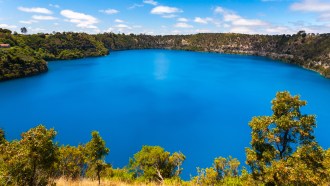
Warming temps could turn some blue lakes green or brown
Slightly warmer summers could cause thousands of blue lakes to become a murky green or brown, according to a tally of color in 85,000 lakes worldwide.
- Animals
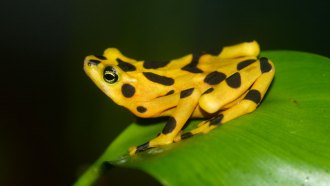
Some spikes in malaria cases may be tied to amphibian die-offs
Amphibian deaths from a fungal disease may have led to more mosquitoes — and an increase in malaria cases in Costa Rica and Panama.