Earth and Human Activity
- Humans
What does charred ancient poop reveal about early animal-raising?
Evidence from the dung may push the onset of animal raising back 2,000 years earlier than previously thought.
- Animals
Watch: This red fox is the first spotted fishing for its food
Big fish in shallow water were easy pickings for this red fox. It’s the first of its species known to fish.
- Chemistry
No trees were harmed to 3-D print this piece of wood
How clever! Scientists used print-speed adjustments to control how flat, 3-D printed shapes morph into complex wooden objects.
- Materials Science
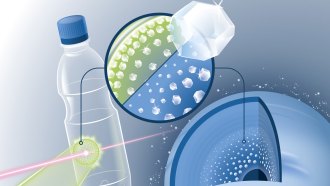
Laser light transformed plastic into tiny diamonds
The technique could be used to make nanodiamonds for quantum devices and other technology.
- Chemistry
No sun? No prob! A new process might soon grow plants in the dark
Teamwork makes green-work! Collaborating scientists came up with an electrifying farming trick that could make sunlight optional.
- Physics
Scientists Say: LED
LEDs, or light-emitting diodes, light up TV screens, traffic lights and many other devices used in daily life.
- Climate
Heat waves appear more life-threatening than scientists once thought
This is bad news as a warming planet leads to growing numbers of excessive heat waves — and millions more people facing potentially deadly temperatures.
- Health & Medicine
Wildfire smoke seems to pose its biggest health risk to kids
New studies, some of them in young monkeys, point to vulnerabilities affecting kids' airways, brains and immune systems.
- Health & Medicine
Western wildfire smoke poses health risks from coast to coast
As wildfires become more common, their hazardous smoke is sending East Coast residents — especially children — to emergency rooms.
- Health & Medicine
Let’s learn about heat waves
Heat waves often occur when a high-pressure system lingers over a certain area. These deadly events are on the rise due to climate change.
- Chemistry
Simple process destroys toxic and widespread ‘forever’ pollutants
Ultraviolet light, sulfite and iodide break down these PFAS molecules faster and more thoroughly than other methods.
- Earth
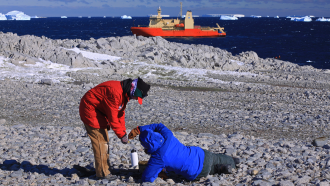
Uplifting Antarctic shores point to accelerating loss of glaciers
It appears the Pine Island and “Doomsday” Thwaites glaciers are losing ice — and shrinking faster — than at any time in the past 5,500 years.