Earth and Human Activity
- Animals
Some Greenland polar bears are surviving with very little sea ice
The ‘glacial mélange’ on which they’ve come to rely — a mix of ice, snow and slush — could be a temporary refuge for some polar bears.
- Animals
Palm-size marsupials may face extinction from wild ‘house’ cats
After surviving Australian bushfires, the Kangaroo Island dunnart is losing ground as it's targeted by hungry predators.
- Animals
Let’s learn about amphibians
Amphibians are named after the Greek word for “double life” because many transform from water dwellers to landlubbers as they grow up.
- Climate
Coastal cities around the world are sinking, satellite data show
Of 99 coastal cities studied, nearly one-third are sinking. This leaves coastal communities increasingly vulnerable to rising seas.
- Chemistry
Reusable plastic bottles release hundreds of pollutants into water
Data show the plastic ends up tainting drinking water. For now, scientists don’t know what health risks downing these pollutants might pose.
- Environment
Bubbles could help remove trash from rivers
One young engineer devised a way to make bubbles sweep away the trash floating down a creek, like the one in her backyard.
- Health & Medicine
Your bloodstream may be littered with the plastic you’ve eaten
For the first time, scientists have found plastic particles circulating in human blood. No one yet knows whether those polluting bits might pose a risk to health.
- Chemistry
Let’s learn about cellulose
The world’s most abundant natural polymer is finding all kinds of new uses, in everything from ice cream to construction.
- Earth
Scientists Say: Atmosphere
An atmosphere is an envelope of gas around a planet, dwarf planet or moon.
- Science & Society
This sun-powered system delivers energy as it pulls water from the air
The device not only produces electricity but also harvests water for drinking or crops. It could be especially useful in remote and dry parts of the world.
- Environment
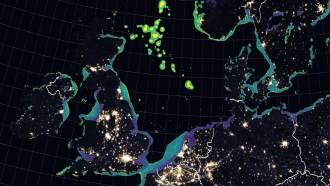
Night lights make even the seas bright
Light from coastal cities and offshore development may shine deep enough to disrupt tiny critters living dozens of meters (yards) below the surface.
- Chemistry
Ponds made to control floods can spew climate-warming gases, study finds
Younger stormwater ponds can release more carbon in gases than they absorb, a study finds. That could aggravate global warming.