Earth's Place in the Universe
- Space
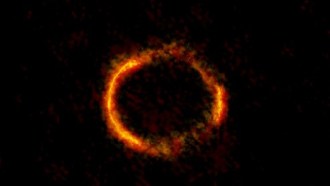
Scientists Say: Gravitational lens
A gravitational lens is an effect that occurs when a massive object lies between a viewer and something further away. The massive object’s gravity bends light arriving from the more distant object.
- Planets
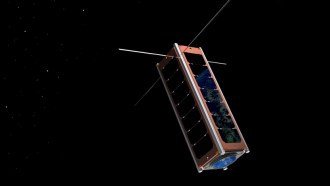
Mini-sats: The trick to spying Earth-bound asteroids?
NASA is supposed to begin nonstop screening by 2020 for all asteroids that could pose a threat to Earth. Some astronomers now think the only way to affordably meet that deadline is by using mini-satellites
- Chemistry
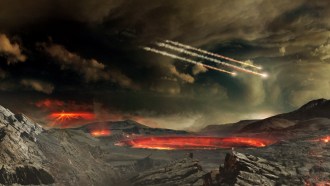
Cooking up life for the first time
The basic components for life could have emerged together nearly 4 billion years ago on the surface of Earth, chemists report.
- Earth
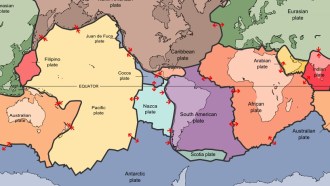
Explainer: Understanding plate tectonics
Plate tectonics is the process whereby Earth continually rebuilds itself — and causes destructive events like earthquakes and volcanic eruptions.
- Physics
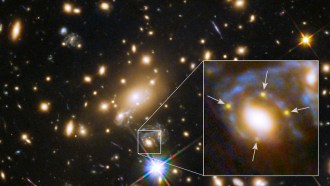
Galaxy cluster creates ‘magnifying glass’ in space
A massive galaxy’s gravity is so strong that it bends light, creating a “lens” in space. This natural magnifying glass is giving astronomers a rare view of a supernova on the other side of the universe.
- Space
Astronomers spy fastest speeding star
A few stars have been spotted departing our galaxy. The fastest of these might have been propelled by another exploding star, a new study finds.
- Physics
Dust erases evidence of primordial gravity waves
In March 2014, scientists claimed to have found the first echoes of the Big Bang — ripples in the very fabric of space. A new analysis shows the experts were mistaken. Dust appears to explain the confusion.
- Physics
Machine simulates the sun’s core
A machine heats iron atoms to temperatures that match the interior of the sun. This has helped solve a solar mystery.
- Space
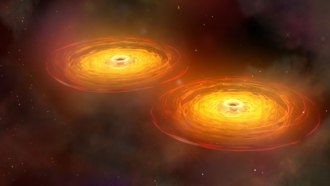
Black holes are on collision course
But be patient. The distant galactic smashup is still some million years away.
- Earth
Dino double whammy
Most scientists think an asteroid helped kill off the dinosaurs. But new calculations suggest that asteroid might have gotten some help from a long series of volcanic eruptions in what is now India.
- Physics
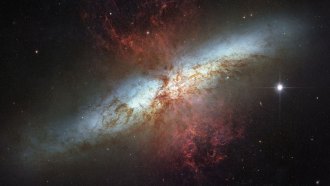
Light robs galaxy of star-making gas
Stars form from clouds of hydrogen and other gases. Astronomers have found the light from newborn stars can drive off that gas. That action can starve a galaxy of the ingredients needed to make more stars.
- Animals
Tar pit clues provide ice age news
New analyses of insects and mammals trapped in the La Brea Tar Pits point to climate surprises during the last ice age.