HS-ESS2-4
Use a model to describe how variations in the flow of energy into and out of Earth systems result in changes in climate.
- Climate
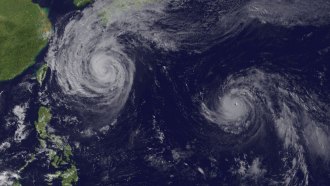
Explainer: Hurricanes, cyclones and typhoons
Hurricanes are some of the most destructive forces on the planet. Here’s how they form and why they are so dangerous.
- Climate
Arctic Sea could be ice-free by 2050
Everyone contributes to the melting of Arctic sea ice, and all are in danger of making summer ice disappear there completely by 2050, a new study finds.
- Climate
Scientists Say: Albedo
To measure how much light reflects off an object, scientists measure its albedo.
- Chemistry
Oxygen-rich air emerged super early, new data show
Scientists had thought animals were slow to emerge because they would have needed oxygen-rich air to breathe. A new study finds that plentiful oxygen may have developed early. So animals may have been late on the scene for another reason.
- Chemistry
Particles in air help fatten clouds’ water droplets
Making their own clouds has shown scientists how the fattest water droplets form. Understanding this could lead to better forecasts of climate change.
- Climate
Concerns about Earth’s fever
Burning fossil fuels is causing the planet to heat up, causing weather patterns to change, sea levels to rise and diseases to spread.
- Climate
Explainer: How scientists know Earth is warming
Scientists can calculate global temperatures, both present and past. Their findings show that the planet is rapidly heating up.
- Climate
Picture This: Biggest hurricane in the West
The hurricane that’s storming into western Mexico has had higher sustained winds than any seen in the Western Hemisphere. It’s also got the lowest atmospheric pressure, making it a monster storm.
- Climate
New El Niño coming on strong
The current El Niño event could be a record breaker, changing weather patterns worldwide and bringing rain to drought-parched California.
- Climate
Warming’s role in extreme weather
Extremes in temperature and precipitation will be more common as global temperatures rise. Human-led climate change is largely to blame, a new study finds.
- Climate
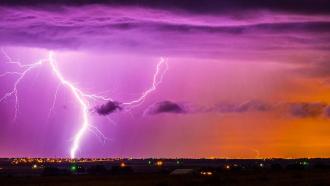
Cosmic rays offer clues about lightning
Space particles called cosmic rays pelt Earth. Scientists are using the rain of these particles to probe how lightning forms.
- Climate
Arctic warming bolsters summer heat
Rapid warming in the Arctic is sapping summer storms of their power to cool. That worsens heat waves across the Northern Hemisphere.