Climate
A ‘super’ El Niño appears to be emerging. What’s the big deal?
The climate pattern could bring “shockingly high” temps this winter, plus extreme weather. Some scientists are looking into an engineering “fix.”
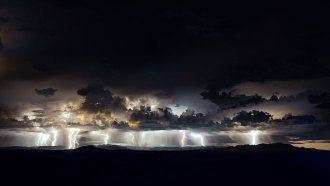
Fleeting glows collectively known as “transient luminous events” flash in the skies above powerful lightning storms.
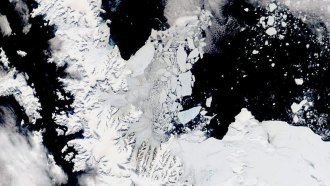
Destabilized by waves and vanishing sea ice, one of the glaciers lost 25 kilometers (15.5 miles) of ice in 16 months — a possible hint of worse to come.
Because Earth spins, airborne objects traveling far and fast — such as airplanes — experience deflections in their motion.
This dangerous trend appears relatively new — and growing. Studies also have begun linking it to our warming world.
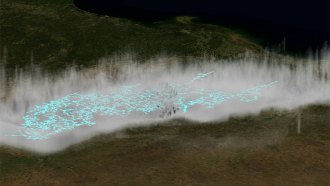
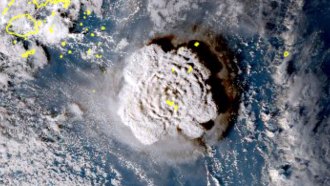
The eruption plume spawned lightning that started 20 to 30 kilometers (some 12 to 19 miles) above sea level.
These long-traveling storm systems bring moisture to many parts of the world. Here’s what scientists are learning about them.
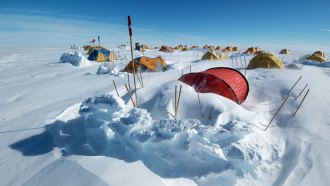
Lake Mercer may serve as a model for better understanding the birth and life of Antarctica’s hundreds of subglacial lakes.
A new study finds they can leak benzene and other harmful chemicals into homes, sometimes at very high levels.
Inland melting of the Northeast Greenland Ice Stream is accelerating — and may contribute far more to sea level rise than earlier estimates suggested.