HS-ESS2-4
Use a model to describe how variations in the flow of energy into and out of Earth systems result in changes in climate.
- Climate
Let’s learn about lightning
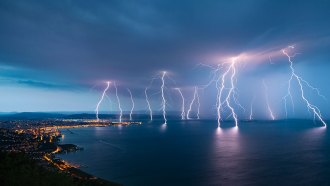
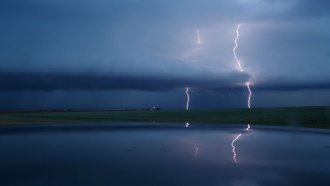
Around 100 times a second, every hour of every day, lightning strikes somewhere on Earth. It’s beautiful — and deadly.
- Earth
Here’s how lightning may help clean the air
Airplane observations show that storm clouds can generate huge quantities of air-cleansing chemicals known as oxidants.
- Climate
Can wildfires cool the climate?
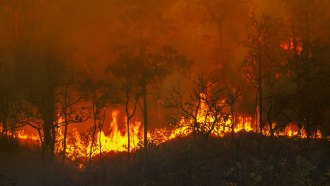
Severe wildfires are becoming more common. Science is showing that the tiny particles they release into the air can alter Earth’s temperature — sometimes cooling it.
- Earth
Explainer: What are aerosols?
We may not see them, but tiny particles and droplets cloud the air, affecting its properties. Some may be pollutants, others all-natural products.
- Climate
Analyze This: 2020 ties with 2016 for hottest year on record
Last year capped the warmest decade on record. It coincided with a growing increase of warming greenhouse gases in Earth’s atmosphere.
- Earth
Space station sensors saw how weird ‘blue jet’ lightning forms
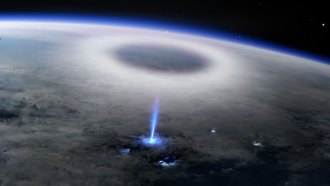
A mysterious type of lightning in the upper atmosphere has been traced to a brief, bright flash of light at the top of a storm cloud.
- Chemistry
Explainer: Our atmosphere — layer by layer
Earth’s five layers extend from the ground up and into outer space. Each has its own distinct features and serves as the site of different activities and phenomena.
- Climate
Surprising long-haul dust and tar are melting high glaciers
Dust and tar blown onto high mountains, like the Himalayas, boost the melting of snow and ice far more than scientists had realized. Here’s why.
- Computing
Explainer: What is an algorithm?
These step-by-step instructions underlie social media, internet searches and other computer-based activities. But what are they exactly? We explain.
- Agriculture
Student scientists work to help all of us survive a warmer world
From glaciers in the refrigerator to a rover in the field, here’s how young scientists are looking to help us adapt to climate change.
- Physics
Scientists Say: Gravity
Gravity is a fundamental force that attracts objects with mass to other objects with mass. It decreases with distance.
- Ecosystems
Soggy coastal soils? Here’s why ecologists love them
Coastal wetlands can protect our shores from erosion, flooding and rising sea levels.