HS-ESS2-7
Construct an argument based on evidence about the simultaneous coevolution of Earth systems and life on Earth.
- Fossils
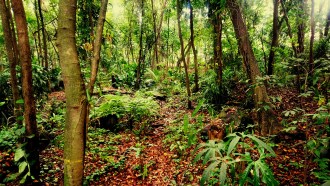
Dinosaur-killing asteroid radically changed Earth’s tropical forests
The asteroid collision initially reduced the diversity in what had been sunny tropical rainforests. In time, the forests would become permanently darker.
- Chemistry
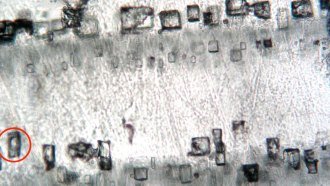
Extreme pressure? Diamonds can take it
Diamond retains its structure even at extreme pressures, which could reveal how carbon behaves in the cores of some exoplanets.
- Fossils
The challenge of dinosaur hunting in deep caves
Spelunkers aren’t the only people to find caves interesting. So do paleontologists. Though getting to work may be harrowing, they find it’s worth it.
- Animals
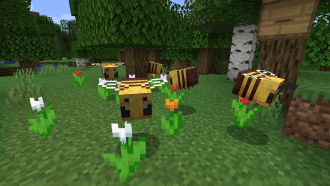
Minecraft’s big bees don’t exist, but giant insects once did
Big bees buzz in Minecraft. In our world, blocky bees might starve and be stuck on the ground. Yet long ago, giant insects did roam our planet.
- Climate
A rainforest once grew near the South Pole
A forest flourished within 1,000 kilometers of the South Pole. That was a while ago, as in millions of years ago.
- Climate
Study appears to rule out volcanic burps as causing dino die-offs
New data on when massive volcanic eruptions happened do not match when the dinosaur mass extinction took place.
- Animals
Australian fires have imperiled up to 100 species
As massive wildfires consume huge swaths of Australia’s bush, untold species — many of them found nowhere else — are now threatened with extinction.
- Earth
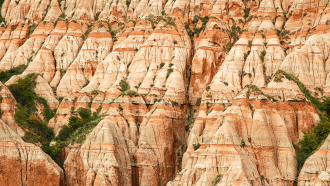
Explainer: Understanding geologic time
Geologic time is unimaginably long. Geologists puzzle it out using a calendar called the Geologic Time Scale.
- Chemistry
Oxygen-rich air emerged super early, new data show
Scientists had thought animals were slow to emerge because they would have needed oxygen-rich air to breathe. A new study finds that plentiful oxygen may have developed early. So animals may have been late on the scene for another reason.
- Climate
Clues to the Great Dying
Millions of years ago, nearly all life on Earth vanished. Scientists are now starting to figure out what happened.
- Earth
Nepal earthquake offers hints of worse to come
The magnitude 7.8 earthquake that crumbled much of Nepal’s capital city could be overshadowed by larger future earthquakes along the Himalayas, scientists say.
- Earth
Dino double whammy
Most scientists think an asteroid helped kill off the dinosaurs. But new calculations suggest that asteroid might have gotten some help from a long series of volcanic eruptions in what is now India.