HS-ESS3-5
Analyze geoscience data and the results from global climate models to make an evidence-based forecast of the current rate of global or regional climate change and associated future impacts to Earth systems.
- Animals
Study finds big drop in animal populations since 1970
But the same thing is not happening throughout the kingdom. For instance, more than half of vertebrate populations are stable or increasing.
- Animals
Some Greenland polar bears are surviving with very little sea ice
The ‘glacial mélange’ on which they’ve come to rely — a mix of ice, snow and slush — could be a temporary refuge for some polar bears.
- Climate
Coastal cities around the world are sinking, satellite data show
Of 99 coastal cities studied, nearly one-third are sinking. This leaves coastal communities increasingly vulnerable to rising seas.
- Earth
Scientists Say: Atmosphere
An atmosphere is an envelope of gas around a planet, dwarf planet or moon.
- Climate
A bold plan to save the planet turns carbon dioxide into stone
Scientists hope that capturing carbon dioxide this way will limit both further warming of our planet and an escalation of extreme weather events.
- Climate
UN report calls for two-pronged approach to slow climate impacts
The latest IPCC climate change report underscores an urgent need for action to avoid the worst consequences of global warming.
- Climate
Satellites find big climate threats — ultra-emitters of methane
Eyes in the sky show many of the worst methane emitters are in countries that produce a lot of oil and gas, such as Russia and the United States.
- Earth
El volcán de Santorini erupciona más cuando baja el nivel del mar
Los datos que demuestran esta relación entre las erupciones de este volcán griego y el nivel del mar se remontan al menos a 360,000 años.
- Climate
Nuevo informe de la ONU sobre el clima: no hay tiempo que perder
En el informe de la ONU se vinculan directamente las temperaturas extremas, lluvias e incendios en todo el mundo con el clima cambiante de la Tierra.
- Climate
World’s oceans have warmed to a ‘point of no return’
More than half the global ocean sees temperature extremes that 100 years ago were rare.
- Climate
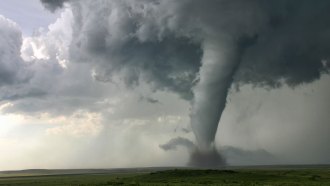
Let’s learn about tornadoes
Tornadoes are often spawned by thunderstorms — but can also emerge from hurricanes and wildfires.
- Climate
Let’s learn about the science of the Winter Olympics
From scientific innovations to climate change and weather, there’s plenty of science to be found among the feats of amazing athleticism.